
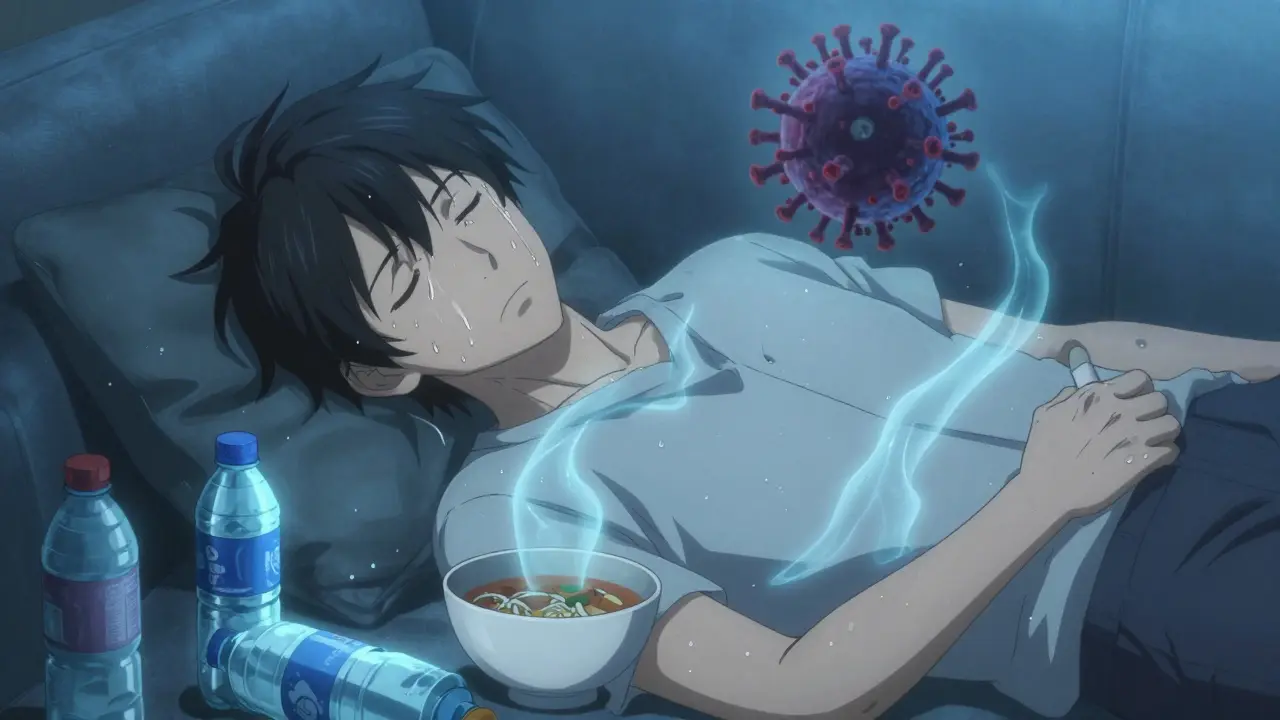
When you feel wiped out for weeks - not just tired, but like your body has been drained of all energy - it might not be a bad flu or stress. It could be mononucleosis, commonly called mono. This isn’t just a mild illness that passes in a few days. It’s a viral infection driven by the Epstein-Barr virus (EBV), and for many teenagers and young adults, it changes everything for months. You might think you’re getting better at week three, only to crash again at week five. Showering leaves you exhausted. Walking to the kitchen feels like climbing a hill. And no, antibiotics won’t fix it.
What Causes Mono, Really?
Mononucleosis is almost always caused by the Epstein-Barr virus, a type of herpesvirus. About 95% of people in the U.S. will be infected with EBV by age 35. But here’s the twist: most kids who get it don’t even know they had it. They might have a mild fever or sore throat and bounce back fast. It’s teens and young adults - especially those in college or sports - who get the full, brutal version. That’s because your immune system reacts more fiercely when it encounters EBV for the first time as an older child or adult.
The virus spreads through saliva. That’s why it’s nicknamed "the kissing disease." But you don’t need to kiss someone to catch it. Sharing a drink, a fork, or even a water bottle can do it. The scary part? You can spread the virus for weeks before you even feel sick. The incubation period - the time between getting infected and showing symptoms - is 4 to 6 weeks. So if you felt fine last month and now you’re laid up, someone you were with weeks ago might have passed it to you.
The Classic Symptoms - And the One No One Talks About
Most people with mono get the classic trio: fever, sore throat, and swollen lymph nodes. Your neck might feel like it’s full of lumps. Your throat hurts so bad it feels like strep, but antibiotics won’t help. In fact, if you take amoxicillin or ampicillin - common antibiotics for strep - you’re likely to get a rash. About 90% of mono patients who take those drugs develop a full-body rash. That’s a red flag doctors use to suspect mono.
But the real monster is fatigue. It’s not just being tired. It’s bone-deep exhaustion. Studies show 98% of people with mono report extreme fatigue. Some describe it as feeling like they’re dragging lead weights through their body. You might sleep 10 hours and still wake up drained. This isn’t normal tiredness. It’s the virus hijacking your immune system and making your body burn energy just to fight it.
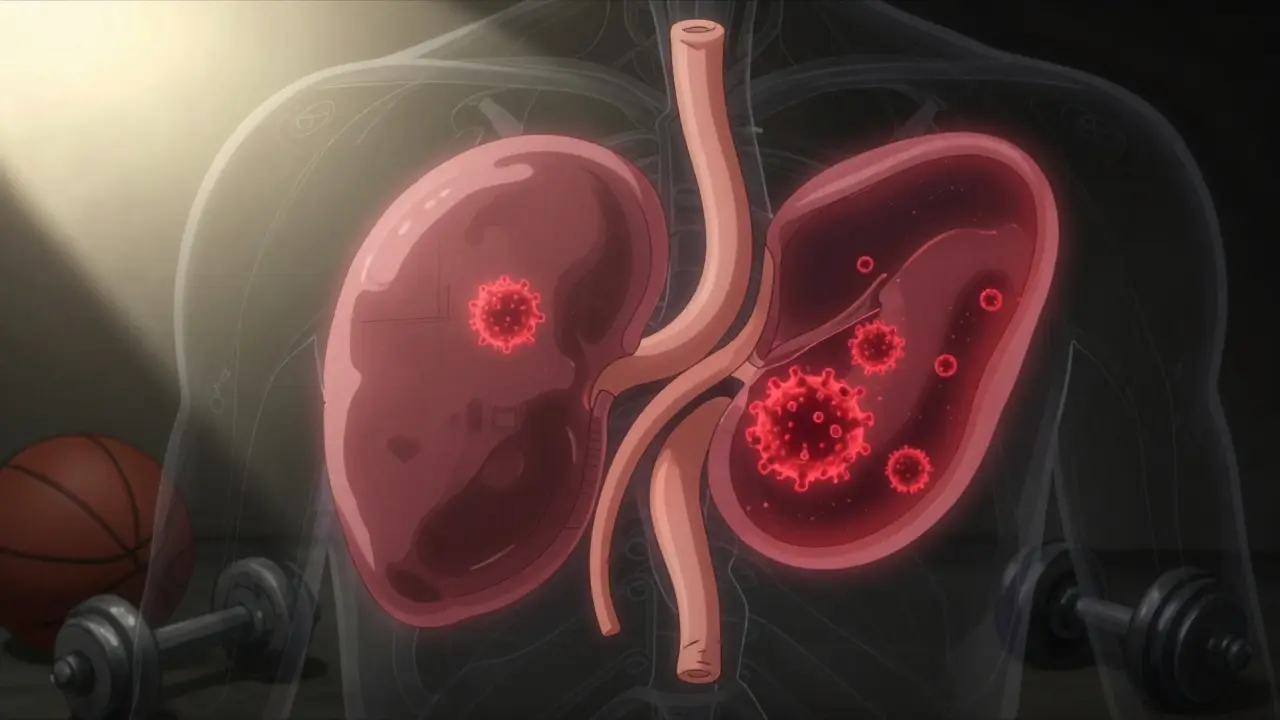
Other symptoms include swollen tonsils with white patches, headaches, muscle aches, and a loss of appetite. About half of patients develop an enlarged spleen. That’s critical. A swollen spleen can rupture - even from something as simple as a cough or a fall. That’s why doctors tell you to avoid contact sports, heavy lifting, and even roughhousing for at least four weeks.
Why It Lasts So Long - And What Science Says About Recovery
Most colds and flu last 7 to 10 days. Mono? The fever and sore throat usually fade in 2 to 4 weeks. But fatigue? That can hang on for 2 to 6 months. A 2023 survey of over 1,200 people on health forums found that 63% took 4 to 8 weeks just to return to normal school or work performance. One Reddit user wrote: "I thought I was recovered at week 3. Week 5 hit like a truck. I couldn’t even shower without needing to lie down for an hour. Took 11 weeks to go back to part-time work."
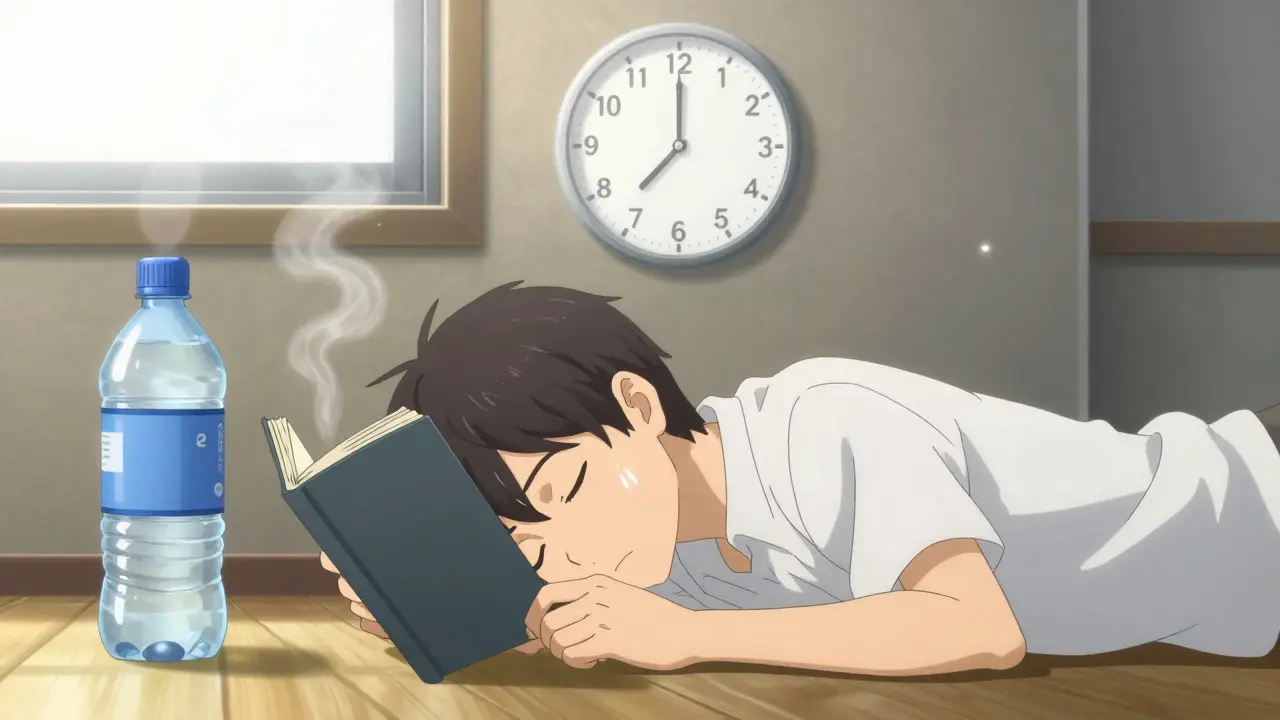
Doctors used to think you just had to wait it out. But now, we know recovery isn’t passive. How you manage your energy matters. Stanford’s Fatigue Management Clinic developed a method called "Pacing, Prioritizing, Planning." It sounds simple: start at 50% of your pre-illness energy level. Do 20 minutes of activity - walking, reading, light chores - then rest 20 minutes. Repeat. Drink water. Don’t push. If symptoms flare, you went too far. Increase activity by only 10% per week. No jumping back into sports or late-night studying.
One student told me: "The 20-20-20 rule saved my semester. I’d do 20 minutes of studying, 20 minutes of lying down, 20 ounces of water. It kept me from crashing every day."
How Doctors Diagnose It - And Why You Might Get It Wrong
Many people are first misdiagnosed with strep throat. That’s because the sore throat is so similar. But strep responds to antibiotics. Mono doesn’t. Blood tests are key. The Monospot test checks for heterophile antibodies - proteins your body makes in response to EBV. It’s 85% accurate after the second week of illness. But if you test too early, it can be negative. That’s why some people get tested twice.
The gold standard is an EBV antibody panel. It looks for three markers: VCA-IgM (shows recent infection), VCA-IgG (lifelong immunity), and EBNA (appears months later, confirms past infection). This tells doctors not just if you have mono now, but if you’ve had it before.
And yes - some people get mono without ever knowing. If you had a mild case as a kid, you’re immune. But if you’re a 19-year-old college athlete with no history of mono, you’re at high risk. And if you’re one of the 38% of patients who still get antibiotics for mono, you’re not helping - you’re risking a rash and contributing to antibiotic resistance.
Complications You Can’t Ignore
Most people recover fine. But mono can have serious side effects. The biggest danger? Spleen rupture. It’s rare - only 0.1% to 0.5% of cases - but it can be life-threatening. That’s why doctors insist on avoiding contact sports for at least four weeks. Some people need an ultrasound to confirm their spleen has returned to normal size before they can play again.
Other complications include airway blockage from swollen tonsils, liver inflammation (which can cause jaundice), and in rare cases, neurological issues like Guillain-Barré syndrome. There’s also a growing link between EBV and multiple sclerosis (MS). A 2022 Harvard study of 10 million military personnel found people with past mono had a 1.3-fold higher risk of developing MS. The absolute risk is still low - about 0.03% - but it’s one of the strongest environmental triggers we know for MS.
What’s New in Mono Research - And What’s Coming
Research is moving fast. In January 2023, the NIH started a clinical trial testing valacyclovir (an antiviral) with corticosteroids for severe throat swelling. Early results show symptom relief 35% faster. That’s promising, but it’s not a cure.
More exciting? The link between EBV and MS. In September 2023, the MS Society reported that a new monoclonal antibody called atrasentan - designed to target EBV-infected B-cells - reduced new MS lesions by 60% in a small trial. If this works in larger studies, it could change how we treat both mono and MS.
And there’s hope on the vaccine front. Moderna’s mRNA-1189, an experimental EBV vaccine, showed 92% seroconversion in early trials. That means it triggered a strong immune response. If approved, it could prevent mono and possibly reduce future MS cases.
Even fatigue itself is being studied. A 2023 University of Toronto trial found that low-dose naltrexone (LDN), a drug used for chronic pain and fatigue, reduced symptoms by 40% in patients with mono fatigue lasting over six months. It’s not FDA-approved for this use yet, but it’s a breakthrough for those stuck in long-term recovery.
How to Actually Recover - No Guesswork
Here’s what works, based on real patient data and medical guidelines:
- Rest, not bed rest. Lie down when you need to. But don’t stay in bed all day. Light movement helps blood flow and prevents muscle loss.
- Avoid alcohol and NSAIDs. Your liver is already working hard. Alcohol and drugs like ibuprofen can stress it further. Use acetaminophen (Tylenol) for fever and pain.
- No contact sports for 4+ weeks. Even if you feel fine. Get an ultrasound if you’re unsure about spleen size.
- Hydrate. Eat simple foods. Soup, toast, bananas, yogurt. Don’t force yourself to eat big meals. Small, frequent snacks help.
- Use the 20-20-20 rule. 20 minutes of activity, 20 minutes of rest, 20 ounces of water. Repeat.
- Track your energy. Keep a log: "Today I walked to the mailbox and felt fine. Then I did laundry and crashed for 3 hours." That tells you your limits.
- Don’t rush back. Returning to school or work too soon sets you back. Your brain needs rest too. Cognitive fatigue is real.
There’s no magic pill. No quick fix. Recovery is a slow climb - not a race. The virus is gone long before you feel normal again. Your body is still repairing.
Can you get mono more than once?
Most people get infected with Epstein-Barr virus once, and their immune system controls it for life. You won’t get mononucleosis again. But the virus stays dormant in your body and can reactivate - usually without symptoms. In rare cases, especially in people with weakened immune systems, reactivation can cause mild symptoms or contribute to other conditions like certain cancers or MS.
Is mono contagious after symptoms go away?
Yes. Even after you feel fine, the virus can still be present in your saliva for months - sometimes up to a year. You can pass it to others through kissing, sharing drinks, or utensils. That’s why it’s smart to avoid close contact with people who haven’t had mono, especially during the first 6 months after recovery.
Why do some people take months to recover while others bounce back in 3 weeks?
It depends on your age, immune system strength, and how well you rest. Teens and young adults have the strongest immune responses - which is why they get the worst symptoms. Older adults and children often have milder cases. People who push themselves too soon, skip rest, or don’t manage their energy use tend to have longer recoveries. Studies show those who use pacing techniques recover 30% faster than those who don’t.
Can mono cause long-term fatigue or chronic fatigue syndrome?
In a small percentage of cases - about 5% to 10% - people experience fatigue lasting more than six months. This isn’t always chronic fatigue syndrome (CFS/ME), but it can be a trigger. EBV is one of the most common viruses linked to CFS. Research now shows that elevated levels of a protein called IL-10 in the blood after mono may predict who’s at risk for long-term fatigue. This is helping doctors identify who needs extra support early on.
Should I take antivirals like acyclovir for mono?
No, not routinely. While some European studies showed acyclovir reduces viral shedding, large reviews by the Infectious Diseases Society of America show it doesn’t shorten symptoms or improve recovery in most people. The risks (cost, side effects, false hope) outweigh the benefits. Unless you’re immunocompromised or have severe complications, antivirals aren’t recommended. Focus on rest, hydration, and pacing instead.

Write a comment
Your email address will not be published.
Recent Posts
-
 How to File a Direct Complaint with the FDA as a Patient January 30, 2026
 -
 How to Use Travel Apps to Locate Pharmacies and Clinics Abroad November 20, 2025
14 Comments
been there. felt that. mono ain't no joke. i thought i was just stressed after finals, turns out i was dragging a dead weight inside me for 10 weeks. showering = nap time. walking to the fridge = cardio. no antibiotics, no magic pills, just sleep and silence. and yeah, the spleen thing? real. i got scared when i coughed too hard.
One must observe that the pathological trajectory of Epstein-Barr virus infection is, in fact, a quintessential example of immunological overcompensation. The host’s hyperactive T-cell response, while evolutionarily adaptive in ancestral environments, manifests as debilitating fatigue in modern, high-stimulus societies. One might argue that our contemporary lifestyle exacerbates the post-viral malaise.
omg yes this. i was in bed for 3 weeks straight. just stared at the ceiling. my cat judged me. 😭 i still can’t believe i thought i could go to class after 2 weeks. i cried in the bathroom because i couldn’t walk to the sink. please just rest. your body isn’t lazy, it’s fighting.
i dont know why people think they can just push through this. like bro, its not a bad day. its your immune system doing a full system reboot. i tried to work from home at week 4. ended up sleeping on the floor for 8 hours. my brain felt like it was full of cotton. now i do the 20-20-20 thing. its weird but it works. water. rest. repeat. no drama. just vibes.
THIS. THIS RIGHT HERE. 🙌 I’m so glad someone finally wrote the truth. Mono isn’t a cold. It’s not ‘just tired.’ It’s your body screaming. And yes, the spleen thing? I had an ultrasound. My spleen was the size of a grapefruit. I thought I was fine at week 5. I lifted my dog. I blacked out. 10 minutes on the floor. Don’t be a hero. Rest. Hydrate. Repeat. You’ll thank yourself later.
you people are too soft. we used to just suck it up. back in my day, we got mono and still went to practice. no one cared. now everyone’s on disability because they can’t walk to the mailbox. get over it. antibiotics don’t work? then don’t take them. rest? sure, if you want to be a snail.
of course the medical industry wants you to ‘rest.’ they don’t profit off rest. they profit off tests, ultrasounds, and LDN prescriptions. you think they’re helping you? they’re monetizing your exhaustion. the real cure? stop being weak. stop believing in ‘pacing.’ just move. your body will adapt. or die. evolution doesn’t care about your fatigue.
i read this whole thing and just sat quietly for 20 minutes. i’m not sure what to say. it made me think about how we treat illness like a glitch to be fixed, not a signal to be listened to. maybe the fatigue isn’t the enemy. maybe it’s the teacher. i don’t know. but i’m glad someone wrote this. it felt… seen.
thank you for writing this. i had mono last year and felt so alone. people kept saying ‘just push through’ like it was laziness. i started doing the 20-20-20 thing and it saved me. i still nap after lunch. i dont care. my body knows best. also, i drink water like its my job now. 💦
the 20-20-20 rule is gold. i’ve seen patients who ignored it crash for 6 months. those who stuck to it? back to class in 8 weeks. also: no NSAIDs. Tylenol only. and if you’re still tired after 3 months? LDN might help. not magic, but science. talk to your doc. not reddit. real docs.
i never knew mono could last this long. i thought it was like a cold. my brother had it last year and i didn’t understand why he couldn’t work. now i get it. i’ve been trying to be more patient with him. he still naps after tea. i leave him be. 🫖
obviously the only reason you’re still tired is because you didn’t detox properly. i did a 7-day lemon water cleanse after mine. and i don’t even drink water. i drink alkaline. also, i only eat organic kale. that’s why i bounced back in 10 days. you’re just not trying hard enough. 💅
oh wow. a 92% seroconversion rate on an mRNA vaccine? 🤯 and you people are still using the 20-20-20 rule? that’s like using a horse and buggy while Tesla’s flying. wake up. the future is here. you’re not sick. you’re just behind the curve.
i had mono in college. took 3 months. i didn’t know anything about pacing. just slept and ate rice. no drama. no tests. no ultrasound. just quiet. now i’m fine. i think the key is not to panic. your body knows what to do. just let it.