
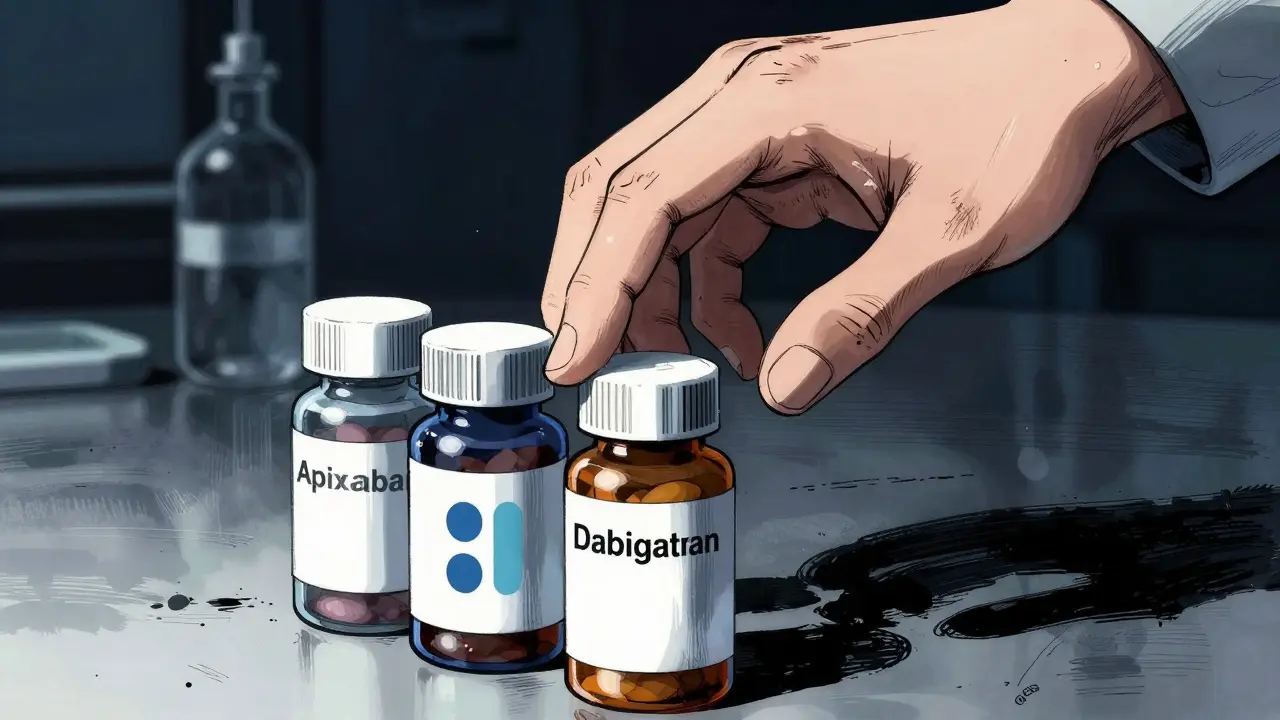
DOAC Safety Profile Comparator
Select your primary health concern to see which Direct Oral Anticoagulant (DOAC) is generally preferred.
Apixaban
Eliquis Factor Xa InhibitorRivaroxaban
Xarelto Factor Xa InhibitorDabigatran
Pradaxa Direct Thrombin InhibitorAnalysis Result
Choosing a blood thinner is rarely a simple decision. You are trading the risk of a stroke or blood clot against the risk of bleeding. For years, warfarin was the only game in town, requiring constant monitoring and dietary restrictions. Then came the Direct Oral Anticoagulants (DOACs): apixaban (Eliquis), rivaroxaban (Xarelto), and dabigatran (Pradaxa). These drugs promised easier use and fewer interactions. But they are not identical twins. They work differently, clear from your body differently, and carry distinct side effect profiles that matter deeply for your long-term health.
If you have atrial fibrillation or a history of clots, knowing the difference between these three medications can change your quality of life. One might give you stomach pain while another protects your gut but strains your kidneys. Understanding these individual risks helps you and your doctor pick the right tool for your specific body chemistry and lifestyle.
How They Work: The Mechanism Behind the Risk
To understand why side effects differ, you first need to look at how each drug stops blood from clotting. They all interrupt the coagulation cascade, but they hit different targets.
Dabigatran is a direct thrombin inhibitor. Thrombin is an enzyme that converts fibrinogen into fibrin, the mesh that holds a clot together. By blocking thrombin directly, dabigatran stops this final step. It was the first DOAC approved by the FDA in 2010.
Rivaroxaban and apixaban, on the other hand, are factor Xa inhibitors. Factor Xa is an earlier step in the chain. Blocking it prevents the formation of thrombin entirely. While they target the same factor, their binding characteristics and chemical structures differ, which leads to variations in how they interact with your body’s tissues and organs.
This mechanical difference isn't just academic. It influences everything from how often you take the pill to where you are most likely to bleed. Dabigatran requires twice-daily dosing regardless of the condition being treated. Rivaroxaban is once daily for stroke prevention but twice daily for treating existing clots. Apixaban is consistently twice daily. These schedules affect adherence, which in turn affects safety.
Gastrointestinal Bleeding: The Major Differentiator
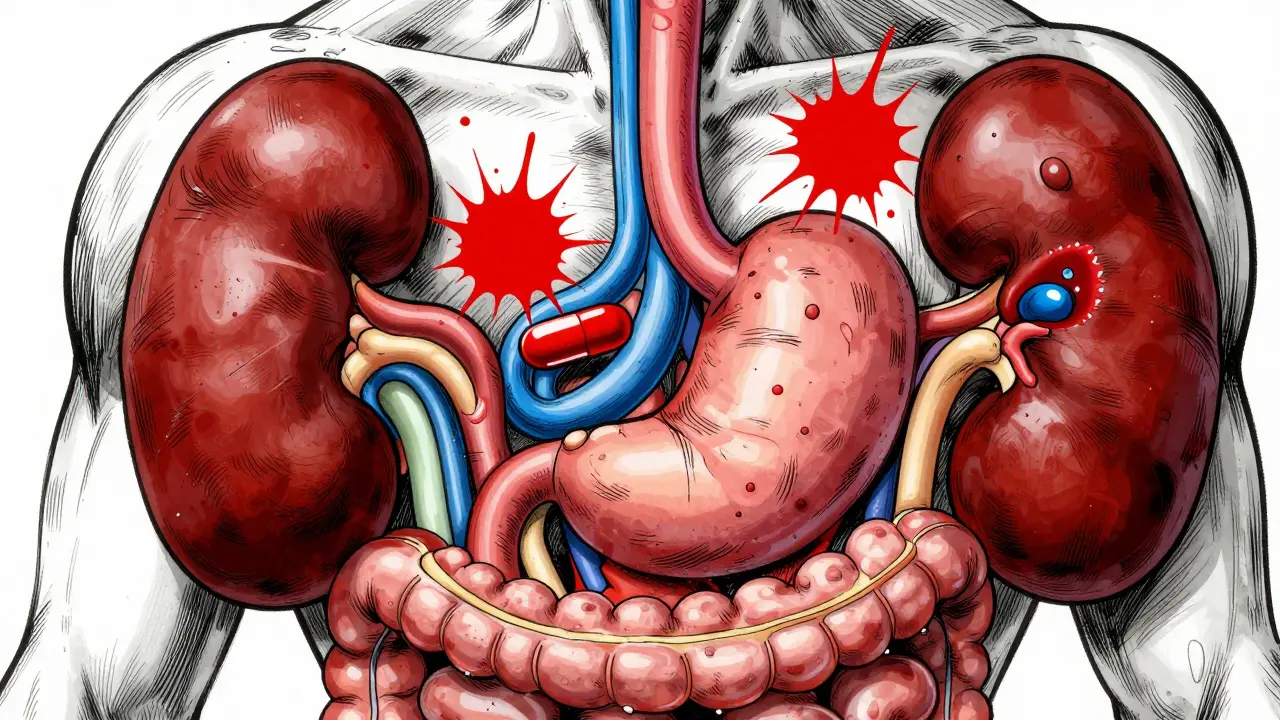
When comparing these three drugs, gastrointestinal (GI) bleeding is the single most significant divergence in side effects. This is not a minor issue; it is the primary reason clinicians choose one agent over another for patients with sensitive stomachs or a history of ulcers.
Data consistently shows that apixaban has the safest profile for the gut. A 2022 study published in JAMA Network analyzed real-world data and found that rivaroxaban resulted in 35.2 GI bleeds per 1,000 person-years, compared to just 16.3 for apixaban. That is more than double the risk. Another study in the Annals of Internal Medicine confirmed that apixaban had lower risks for GI bleeding compared to both dabigatran and rivaroxaban, even in patients over 80 years old and those with chronic kidney disease.
Dabigatran also carries a higher GI bleeding risk than apixaban. An Oxford Academic study showed event rates of 3.22 per 100 person-years for dabigatran versus 2.17 for apixaban. If you have a history of peptic ulcer disease, gastritis, or if you regularly take NSAIDs like ibuprofen or aspirin, apixaban is generally the preferred choice to minimize the chance of internal stomach bleeding.
Kidney Function and Clearance Rates
Your kidneys are responsible for filtering these drugs out of your system. How much of the drug leaves through urine determines how safe it is for people with renal impairment. This is where the differences become stark.
| Drug | Renal Excretion (%) | Half-Life (Hours) | Contraindication Threshold |
|---|---|---|---|
| Dabigatran | 80% | 12-17 | <30 mL/min (150mg dose) |
| Rivaroxaban | 33% | 5-13 | <15 mL/min |
| Apixaban | 25% | 8-15 | <15 mL/min |
Dabigatran is heavily reliant on kidney function. About 80% of the drug is excreted unchanged in the urine. If your kidneys are not working well, the drug builds up in your blood, significantly increasing the risk of bleeding. This is why dabigatran requires careful dose adjustment or avoidance in patients with moderate to severe renal impairment. It is contraindicated when creatinine clearance drops below 30 mL/min for the standard 150 mg dose.
Apixaban is the friendliest to failing kidneys. Only 25% is cleared renally. This makes it a safer option for elderly patients, who often have reduced kidney function without realizing it. Rivaroxaban sits in the middle, with about one-third cleared by the kidneys. Both apixaban and rivaroxaban are contraindicated only when creatinine clearance falls below 15 mL/min, a much lower threshold than dabigatran.
Bleeding Risks Beyond the Gut
While GI bleeding gets the most attention, major bleeding elsewhere in the body is critical. Major extracranial bleeding includes events like severe joint bleeds or internal organ hemorrhages that require hospitalization or transfusion.
Again, rivaroxaban tends to show higher rates. The JAMA Network study cited earlier reported 39.7 major extracranial bleeds per 1,000 person-years for rivaroxaban, compared to 18.5 for apixaban. This roughly doubles the risk. Dabigatran generally falls somewhere in between, though some studies suggest its major bleeding risk is comparable to apixaban.
Intracranial hemorrhage (bleeding in the brain) is the most feared complication of any anticoagulant. All three DOACs are superior to warfarin in preventing this. However, subtle differences exist. A 2022 head-to-head analysis suggested that rivaroxaban might have a slightly lower rate of intracranial hemorrhage compared to apixaban. Conversely, older analyses indicated that dabigatran (specifically the 110 mg dose) had less intracranial bleeding than rivaroxaban. Despite these nuances, the absolute risk of brain bleeding remains low for all three agents compared to older therapies.
Heart Health: The Dabigatran Concern
There is a unique concern associated with dabigatran that does not apply to the other two: the potential increased risk of myocardial infarction (heart attack) and acute coronary syndrome (ACS).
Multiple meta-analyses, including one published in PMC in 2014, have documented a statistically significant increase in MI risk with dabigatran. Some studies suggest a 48% relative increase in heart attacks compared to other anticoagulants. The leading hypothesis is that dabigatran’s mechanism-directly inhibiting thrombin-might trigger pro-inflammatory effects similar to ximelagatran, a discontinued drug known for causing liver toxicity and potentially increasing cardiovascular events. Thrombin plays a role in vascular stability, and blocking it too aggressively might destabilize plaques in arteries.
If you have existing coronary artery disease, a history of heart attacks, or high cardiovascular risk factors, your doctor will likely steer you away from dabigatran. Apixaban and rivaroxaban do not show this same association with increased heart attack risk, making them safer choices for patients with compromised heart health.

Mortality and Overall Safety
When looking at total mortality-the ultimate measure of a drug’s benefit versus harm-the data favors apixaban. The JAMA Network 2022 study showed that rivaroxaban was associated with higher adjusted total mortality (44.2 per 1,000 person-years) compared to apixaban (41.0 per 1,000 person-years). This included an increased risk of fatal ischemic or hemorrhagic events.
However, efficacy in preventing strokes is similar across all three. The Oxford Academic study showed comparable stroke and systemic embolism rates for dabigatran, rivaroxaban, and apixaban. This means that while apixaban appears safer regarding bleeding and mortality, you are not sacrificing protection against stroke by choosing it over the others.
Market Trends and Clinical Preference
The medical community reacts slowly, but market data tells a clear story. IQVIA data from 2023 indicates that apixaban captured approximately 45% of the US DOAC market, becoming the most prescribed option. Rivaroxaban holds about 35%, while dabigatran has declined to around 10%. This shift aligns perfectly with the safety data: clinicians are increasingly favoring apixaban due to its favorable GI bleeding profile and kidney safety, while moving away from dabigatran due to cardiac concerns and renal limitations.
Cost also plays a role. Brand-name Eliquis costs significantly more than generic alternatives. However, generic versions of all three drugs are now widely available, reducing financial barriers. GoodRx and other discount programs can bring the cost of generic apixaban down to a fraction of the brand price, making the safety advantage accessible to more patients.
Making the Right Choice for You
There is no single "best" DOAC for everyone. The right choice depends on your individual risk factors:
- Choose Apixaban if: You have a history of stomach issues, ulcers, or GI bleeding. You are over 80 years old. You have mild to moderate kidney impairment. You want the lowest overall risk of major bleeding.
- Choose Rivaroxaban if: Adherence is a major concern and you prefer once-daily dosing (for stroke prevention). You do not have significant GI risk factors. Cost is a primary driver and generic options are limited locally.
- Choose Dabigatran if: You have excellent kidney function. You do not have coronary artery disease or heart attack history. You prefer a medication that does not require food intake for absorption (unlike rivaroxaban, which should be taken with food for certain doses).
Always discuss your full medical history with your cardiologist or primary care provider. They can assess your creatinine clearance, bleeding risks, and cardiac history to recommend the safest option for your specific physiology.
Which blood thinner causes the least stomach bleeding?
Apixaban (Eliquis) consistently demonstrates the lowest risk of gastrointestinal bleeding among the three major DOACs. Studies show it has roughly half the GI bleeding rate of rivaroxaban and significantly lower rates than dabigatran, making it the preferred choice for patients with a history of ulcers or gastritis.
Can I take dabigatran if I have kidney problems?
Dabigatran is primarily cleared by the kidneys (80% renal excretion). It requires caution in patients with renal impairment. It is contraindicated if your creatinine clearance is below 30 mL/min for the standard 150 mg dose. Apixaban is generally safer for patients with kidney issues as only 25% is cleared renally.
Does dabigatran increase the risk of heart attacks?
Yes, several meta-analyses have shown a statistically significant increase in the risk of myocardial infarction (heart attack) and acute coronary syndrome with dabigatran compared to other DOACs. This is likely due to its mechanism of directly inhibiting thrombin. Patients with existing coronary artery disease are usually advised to avoid dabigatran.
Is rivaroxaban taken once or twice a day?
For stroke prevention in atrial fibrillation, rivaroxaban is typically taken once daily with food. However, for the treatment of deep vein thrombosis (DVT) or pulmonary embolism (PE), it is taken twice daily for the first 21 days, then once daily. Apixaban and dabigatran are always taken twice daily.
Are generic versions of these drugs as effective as brand names?
Yes, generic formulations of apixaban, rivaroxaban, and dabigatran are bioequivalent to their brand-name counterparts. They contain the same active ingredients and provide identical efficacy and safety profiles at a significantly lower cost.

Write a comment
Your email address will not be published.
Recent Posts
-
 Polypharmacy Risk Checklist: How to Spot Dangerous Medication Combos December 1, 2025



8 Comments
hey guys just saw this and wow, my mom is on xarelto and i always wondered why she has to take it with food lol. thanks for breaking it down so simply! makes me feel better about her health choices.
It is truly disheartening to observe the casual manner in which individuals discuss potent pharmaceutical interventions without a profound understanding of the ethical implications inherent in such medical decisions, as the reliance on statistical generalizations often obscures the nuanced reality of individual patient outcomes and the moral responsibility that physicians bear when prescribing agents that carry significant risks of gastrointestinal hemorrhage or renal complications, thereby necessitating a more rigorous and conscientious approach to pharmacological management that prioritizes holistic well-being over mere convenience or market trends, which unfortunately dominate contemporary clinical discourse to the detriment of truly personalized care standards.
The pharmacokinetic profile of dabigatran indeed presents a unique challenge due to its high renal excretion rate, which mandates careful monitoring of creatinine clearance levels to prevent drug accumulation and subsequent bleeding events, whereas apixaban's lower renal dependency offers a safer margin for patients with compromised renal function, thus highlighting the importance of individualized therapeutic strategies based on comprehensive physiological assessments rather than a one-size-fits-all approach to anticoagulation therapy.
i mean like... who actually reads these long boring articles? nobody. but hey if you want to bleed out from your stomach because you took the wrong pill then go ahead, its not like science matters anyway. also rivaroxaban is trash dont @ me. typos are part of life ugh.
Great point about the GI bleeding risks. I've seen several patients switch from rivaroxaban to apixaban specifically because of recurrent gastritis issues, and the improvement in their quality of life has been remarkable. It really underscores the importance of considering comorbidities like history of ulcers when selecting an anticoagulant, rather than just looking at stroke prevention efficacy alone.
While the data presented regarding gastrointestinal safety profiles is compelling, it is imperative to acknowledge that adherence remains a critical factor in therapeutic success, particularly given the twice-daily dosing requirement for apixaban compared to the once-daily option for rivaroxaban in certain indications, which may inadvertently lead to non-compliance and increased risk of thromboembolic events despite the favorable bleeding profile, thus requiring a balanced consideration of both safety and practicality in clinical decision-making processes.
another article telling us what to do with our bodies :/ like sure, big pharma wants you on eliqaus because it sells better, but hey maybe trust your own gut instead of listening to some stats. american healthcare is a scam anyway. >:(
Oh my goodness, reading this gave me such a heavy heart thinking about all the people struggling with these choices every single day, but then I realized how incredibly empowering it is to have this knowledge available to us now, transforming fear into informed action and allowing us to advocate fiercely for our own health and wellbeing in a world that often feels so chaotic and unpredictable, reminding us that we are the ultimate guardians of our own lives and destinies.