

Corticosteroid Tapering Calculator
Calculate Your Safe Taper Schedule
Enter your current corticosteroid dose and duration to get a personalized tapering plan that minimizes withdrawal symptoms.
Stopping corticosteroids like prednisone suddenly doesn’t just feel bad-it can be dangerous. If you’ve been on these meds for more than a few weeks, your body has stopped making its own cortisol. When you cut the drug too fast, your adrenal glands can’t catch up. That’s when fatigue, muscle aches, nausea, and even low blood pressure kick in. Up to 78% of patients experience withdrawal symptoms when tapering too quickly, according to the Journal of Clinical Endocrinology & Metabolism. But here’s the good news: with the right plan, you can avoid most of it.
Why Tapering Isn’t Optional
Corticosteroids suppress your body’s natural cortisol production. That’s how they work-they mimic your body’s stress hormone to calm inflammation. But when you take them for more than 2-4 weeks at doses over 7.5 mg of prednisone daily, your adrenal glands go quiet. They forget how to make cortisol on their own. Abruptly stopping the drug leaves you without enough of this vital hormone. The result? Glucocorticoid withdrawal syndrome: crushing fatigue, joint pain, headaches, low appetite, and mood swings. In severe cases, it can lead to adrenal crisis-low blood pressure, vomiting, confusion, and even shock.How Fast Should You Taper?
There’s no one-size-fits-all schedule. It depends on how long you’ve been on steroids and at what dose. For someone on high doses-say, 40 mg of prednisone daily-the first phase is faster. You can drop by 5 mg every 3-7 days until you hit 15 mg. After that, slow down. From 15 mg down to 5 mg, reduce by 1 mg every 1-2 weeks. Below 5 mg, you might need to go even slower-0.5 mg every week or more.The Australian Prescriber and Mayo Clinic both stress that symptoms usually appear when doses fall below 15 mg. That’s your signal to slow down. If you start feeling weak or achy at 10 mg, don’t push to 5 mg next week. Hold at 10 mg for another week or two. Your body needs time to restart cortisol production.
For people on long-term therapy-over a year-the taper can take 6 to 12 months. Rushing this phase is a common mistake. One patient in a Case Reports in Rheumatology study successfully tapered from 40 mg to 0 mg over 26 weeks using a strict EULAR protocol. No withdrawal symptoms. That’s possible-but only with patience.
Differentiating Withdrawal, Flare, and Adrenal Insufficiency
It’s easy to confuse three very different things:- Withdrawal symptoms: Generalized fatigue, muscle pain, nausea, trouble sleeping, low mood. No swelling, no new rashes, no joint redness.
- Disease flare: Your original condition comes back. For rheumatoid arthritis, that means swollen, hot joints. For Crohn’s, it’s diarrhea and abdominal pain. Inflammation markers rise.
- Adrenal insufficiency: Dangerously low cortisol. Signs include dizziness when standing (orthostatic hypotension), low sodium, low blood sugar, vomiting, and confusion. This is a medical emergency.
Doctors sometimes misdiagnose withdrawal as a flare and increase the steroid dose-making dependence worse. The JWatch 2024 guideline says this happens in 34% of cases. If you’re unsure, ask for a cosyntropin (ACTH) stimulation test. A cortisol level above 400-500 nmol/L after the test means your adrenals are working. Below that, you need more time to taper.

What Helps With Symptoms?
You can’t speed up your adrenal recovery, but you can ease the ride.- Movement: Daily walks or warm-water pool exercises reduce muscle and joint pain by 42%, according to a 2022 Rheumatology Network study. Physical therapy cut pain scores from 7.2 to 3.1 on a 10-point scale in just four weeks.
- Sleep: Aim for 7-9 hours a night. Poor sleep worsens fatigue and mood swings.
- Diet: A Mediterranean-style diet-rich in vegetables, fish, nuts, and olive oil-reduced symptom severity by 55% in a Mayo Clinic study of 1,247 patients.
- Caffeine: Keep it under 200 mg a day (about one strong coffee). Too much can spike anxiety and disrupt sleep.
- Therapy: Cognitive behavioral therapy (CBT) cut anxiety and depression linked to withdrawal by 68% in a trial by the American Addiction Centers.
Some people still need to go back up a little. About 22% of patients need a temporary dose increase during tapering. That’s not failure-it’s fine-tuning. Your doctor should never shame you for needing a slight adjustment.
What Patients Really Experience
Reddit’s r/Prednisone community has over 12,500 members. Over 68% say they had withdrawal symptoms even when following their doctor’s taper plan. 41% describe “crushing fatigue” lasting 3-8 weeks. A Drugs.com analysis of 3,872 reviews found symptoms lasted an average of 22.7 days-but 18% had them longer than 60 days.Why? Three big reasons:
- Doctors don’t explain it well: 76% of negative reviews say their provider didn’t warn them what to expect.
- Tapers are inconsistent: A rheumatologist might taper differently than a gastroenterologist. No standard plan = confusion.
- No support: Patients feel alone. They don’t know if their aches are normal or a flare.
Those who did well had three things: a written schedule, regular check-ins, and support from physical therapy or counseling. Satisfaction jumped to 89% with structured plans vs. 32% with “as-needed” adjustments.
What You Need to Do
Here’s your action plan:- Get a written taper schedule from your doctor. Don’t rely on memory. Include exact doses and how often to reduce.
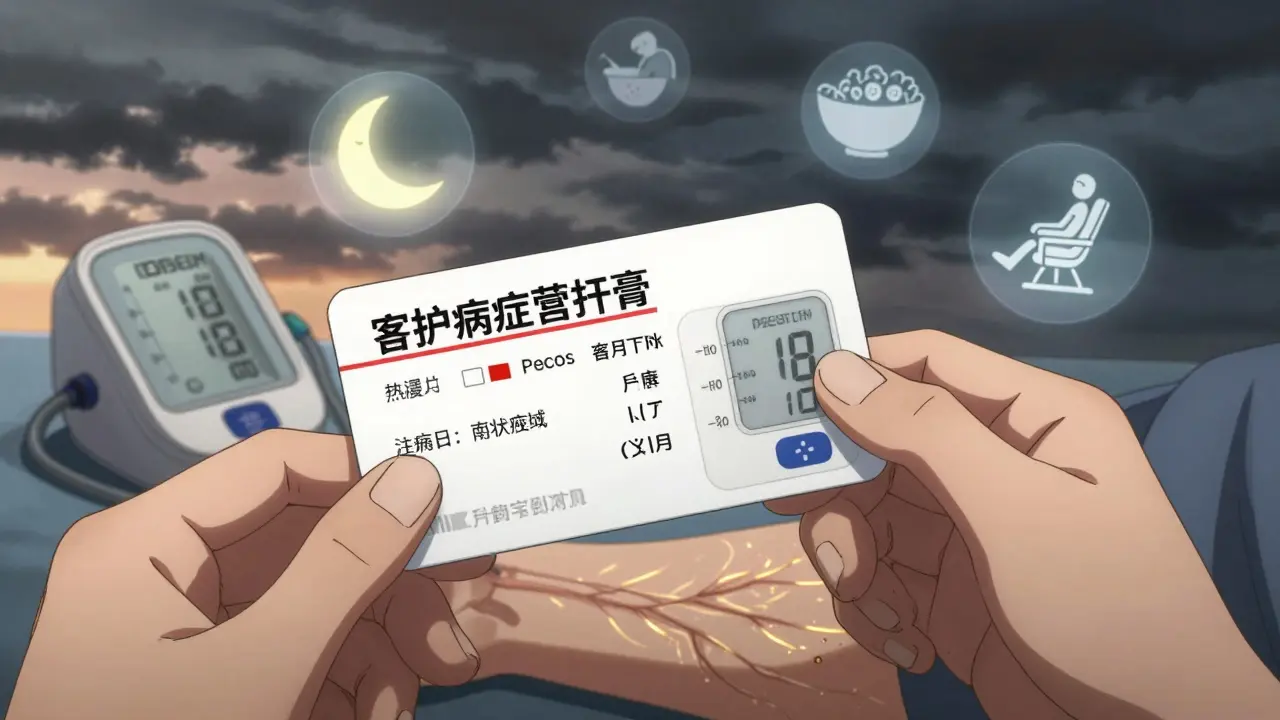
- Carry a steroid emergency card. It should list your highest dose and the equivalent of 20-30 mg hydrocortisone for emergencies. This is critical if you get sick, injured, or need surgery.
- Monitor your body. Check your blood pressure lying down and standing up. If it drops more than 20 mmHg systolic, call your doctor. That’s a red flag for adrenal insufficiency.
- Track symptoms daily. Use a simple journal: rate fatigue (1-10), pain (1-10), mood (1-10). Share it at every visit.
- Ask for a team. The best outcomes come from coordinated care-your PCP, endocrinologist, and specialist (rheumatologist, GI, etc.). Studies show this cuts complications by 58%.
What’s New in 2026
The game is changing. Mayo Clinic rolled out a digital tapering assistant in March 2024. It tracks symptoms, adjusts schedules automatically, and alerts doctors if risks rise. In a pilot of 412 patients, it cut complications by 37%.Researchers are now testing salivary cortisol awakening response as a biomarker to personalize tapers. Early results show 82% accuracy in predicting how fast someone’s HPA axis will recover. That means your taper could be tailored to your biology-not a generic chart.
AI-driven protocols are in phase 2 trials at Johns Hopkins. They’ll sync with your EHR and adjust doses based on real-time data. By 2027, these tools could prevent over 215,000 ER visits a year in the U.S. alone.
But here’s the catch: rural patients still face 2.3 times more complications than urban ones. Access to specialists is the biggest barrier. If you’re in a remote area, ask about telehealth endocrinology services. Many now offer remote monitoring and virtual check-ins.
Final Word: Be Your Own Advocate
Corticosteroid tapering isn’t just about pills. It’s about listening to your body, asking the right questions, and refusing to rush. If your doctor says, “Just cut it in half next week,” push back. Ask for the evidence. Ask about symptom thresholds. Ask if they’ve used the new digital tools.You’re not weak for needing a slow taper. You’re smart for protecting your health. The goal isn’t just to stop the drug-it’s to wake your body back up safely. And with the right plan, you can do it without the misery most people endure.
Can I stop prednisone cold turkey if I’ve only been on it for a week?
If you’ve been on prednisone for less than two weeks and at a low dose (under 7.5 mg daily), stopping suddenly is usually safe. Your HPA axis hasn’t had time to shut down. But if you were on higher doses-even briefly-talk to your doctor. It’s always better to err on the side of caution.
Why do I feel worse when I lower my dose, even though I’m getting better?
That’s withdrawal, not a flare. As your dose drops, your body’s cortisol levels fall too. You’re not getting sicker-you’re just out of synthetic hormone support. Your adrenal glands are still waking up. Symptoms like fatigue and aches are signs your body is trying to restart its own system, not that your disease is returning.
Is it normal to have withdrawal symptoms for months?
Yes, especially if you were on steroids for over a year. HPA axis recovery can take 6-12 months. Fatigue, low mood, and muscle weakness can linger for weeks or months after the last pill. This doesn’t mean you’re broken-it means your body needs time. Keep moving, sleeping well, and eating right. Progress is slow, but it’s real.
Can I use over-the-counter supplements to help with withdrawal?
No proven supplements speed up adrenal recovery. Avoid products claiming to “boost cortisol” or “repair adrenals”-they’re not regulated and can be harmful. Focus on evidence-backed strategies: sleep, nutrition, movement, and stress management. If you’re struggling with anxiety or depression, talk to a therapist. CBT works. Supplements don’t.
What should I do if I get sick during my taper?
If you have a fever, infection, injury, or surgery, your body needs more cortisol. Don’t try to power through. Double your usual dose immediately and call your doctor. If you can’t reach them, go to urgent care and show them your steroid emergency card. Skipping stress dosing during illness can trigger adrenal crisis.
Will I ever feel like myself again after stopping steroids?
Yes-most people do. It takes time, but your body will rebuild its natural cortisol rhythm. Many patients report feeling better than they did while on steroids. The fatigue, brain fog, and joint pain fade. The key is patience and sticking to your taper plan. You’re not losing ground-you’re healing from the inside out.

Write a comment
Your email address will not be published.
Recent Posts
-
 How to Create a Safe Medication Routine for Your Family April 13, 2026
 -
 How Cultural Beliefs Influence the Decision for Vaginal Surgery September 26, 2025
 -
 How Medications Cross the Placenta and Affect the Fetus November 18, 2025
9 Comments
I can't believe people still don't get this. Corticosteroids aren't candy. You don't just stop them like you stop eating junk food. If you're dumb enough to quit cold turkey after more than two weeks, you deserve every symptom you get. My cousin did it and ended up in the ER. Don't be that person.
So we're supposed to believe that a 26-week taper is the gold standard... but also that AI will soon customize it for us? 🤔
Meanwhile, my doctor gave me a one-page PDF and said 'good luck.'
At this point, I'm not sure if I'm tapering off prednisone... or the healthcare system.
Hey everyone 👋
Just wanted to say - if you're going through this, you're not alone. I was on 40mg for 18 months. Tapered over 10 months. Had days where I couldn't get out of bed. But I walked every morning. Ate avocado toast. Listened to jazz. And slowly, my body remembered how to be me again.
It's not about being strong. It's about being patient. You got this 💪🌿
Let me be perfectly clear: the fact that 76% of patients weren't warned about withdrawal symptoms is not just negligence-it's a systemic failure of medical education, and it's unethical. Furthermore, the suggestion that patients should 'track symptoms daily' is laughable without access to digital tools or consistent care. This isn't self-help-it's structural abandonment. And don't even get me started on the 'steroid emergency card'-how many people even know what that is? Or where to get one? This post reads like a pamphlet from a pharmaceutical lobby pretending to be patient advocacy.
They say 'listen to your body'... but what if your body is screaming and no one's listening? I tapered slow. Did everything right. Still ended up in the hospital. I think the doctors are lying. I think the adrenal gland thing is a myth. I think they just want us to stay on the drugs forever. They don't want us healthy-they want us dependent.
78% get symptoms? So what? Most people are lazy and quit too fast. If you can't handle a 5mg drop every week, you shouldn't have taken it in the first place.
Actually in India we just use ashwagandha and turmeric for everything. No need for all this science. My uncle stopped prednisone in 3 days and now he runs marathons. You guys overthink everything. Just chill and drink warm water
I tried walking like they said. Felt worse. Tried eating fish. Felt worse. Now I'm just sitting here wondering if I'm dying or if this is normal. Why does no one tell you it's going to feel like your bones are melting?
AI will fix this? Lol. My doctor uses fax machines. The 'digital tapering assistant' is a marketing brochure. And salivary cortisol tests? Cost $800. Not covered by insurance. So yeah, the future is bright... for rich people.