
PMI Implementation Cost Calculator
Calculate Your Pharmacy's PMI Costs
Estimate the potential first-year costs for implementing the FDA's new Patient Medication Information rule based on your prescription volume.
PMI Implementation Costs
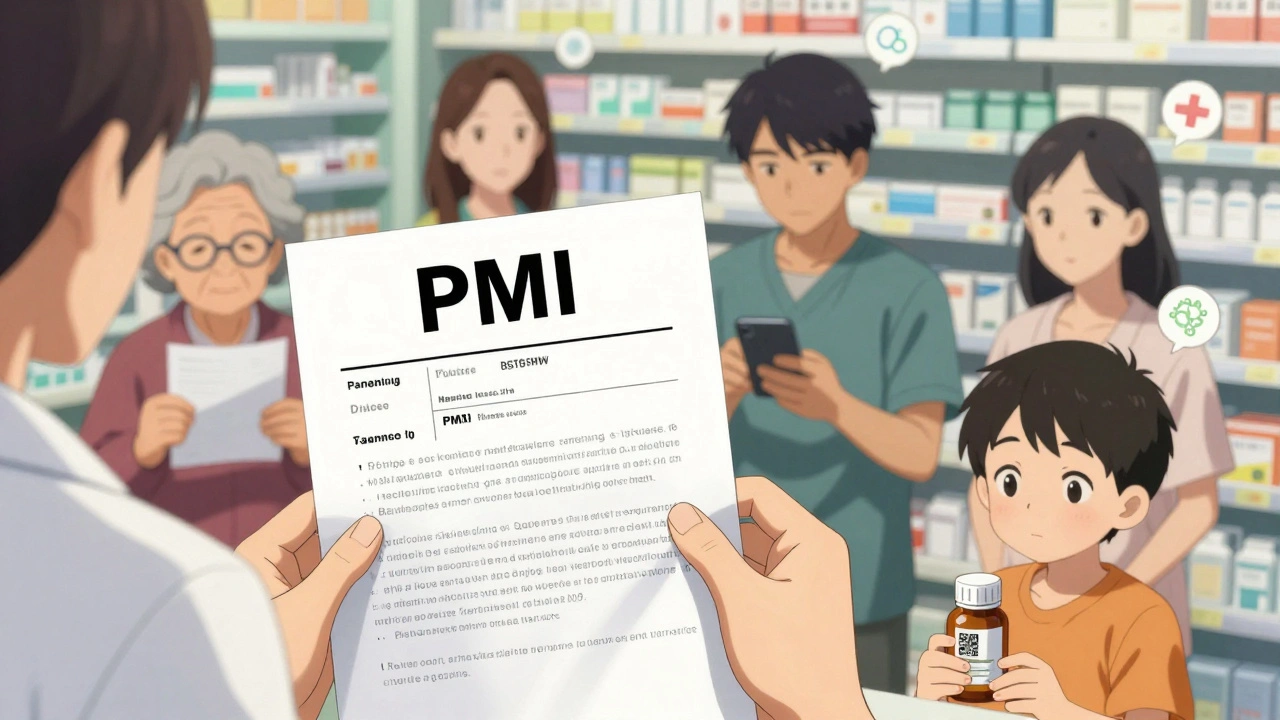
The U.S. Food and Drug Administration (FDA) is pushing forward with a major overhaul of how patients receive information about their prescription drugs. The proposed Patient Medication Information (PMI) rule would replace the current patchwork of Medication Guides with a single, standardized, one-page document for every outpatient prescription - no exceptions. This isn’t a minor tweak. It’s the biggest shift in prescription drug labeling in over 20 years, and it’s set to impact every pharmacy, manufacturer, and patient in the U.S.
Why This Change Is Happening
Right now, only about 150 out of thousands of prescription drugs come with a Medication Guide. These are reserved for drugs with serious risks - like blood thinners, opioids, or certain psychiatric medications. But what about the other 99%? Patients get a pharmacy label with their name, dosage, and refill info - but often no clear instructions on what to watch for, how to store the drug, or how to safely dispose of it. That’s a problem. According to the Institute of Medicine, medication errors cause 1.3 million injuries and 7,000 deaths every year in the U.S. Most of these aren’t due to doctor mistakes. They happen because patients don’t understand what they’re taking. The FDA’s goal is simple: reduce preventable harm by giving every patient the same clear, consistent, and easy-to-read information - no matter where they pick up their prescription. Studies show patients who get clear written instructions are 30% more likely to take their meds correctly. That’s not just a nice-to-have. It’s a life-saving tool.What the New PMI Will Look Like
The PMI won’t be a brochure. It won’t be a booklet. It’s one page. Single-sided. Printed in 12-point font. Designed for people with low health literacy - which includes about 80 million U.S. adults, according to the National Assessment of Adult Literacy. Here’s what it must include:- Start with this line: “Use exactly as prescribed.” No exceptions. No marketing fluff.
- Directions for use: How to take it - by mouth? Injection? How often? What time of day?
- Storage instructions: Keep at room temperature? Refrigerate? Keep away from children?
- Disposal guidance: How to safely get rid of unused pills - don’t flush them, don’t toss them in the trash.
- Safety warnings: What to avoid - alcohol? Other drugs? Driving?
- Common side effects: What patients might feel - nausea, dizziness, headache.
Electronic PMI Is Coming - But Paper Still Matters
The new rule allows patients to get their PMI electronically - via email, a pharmacy app, or a QR code on the bottle. That’s great for tech-savvy users. But the FDA insists paper must still be offered. Why? Because 1 in 4 U.S. adults don’t use the internet regularly. Many seniors, low-income patients, and people with disabilities rely on printed materials. The electronic version must also meet Section 508 accessibility standards - meaning screen readers, large text options, and simple navigation are required. Pharmacies will need to update their systems to handle both formats. That means training staff, printing new labels, and possibly upgrading software. The FDA estimates this will add 30-60 seconds per prescription during the first year. That might sound small, but with 6.7 billion prescriptions dispensed each year, that’s millions of extra minutes of work.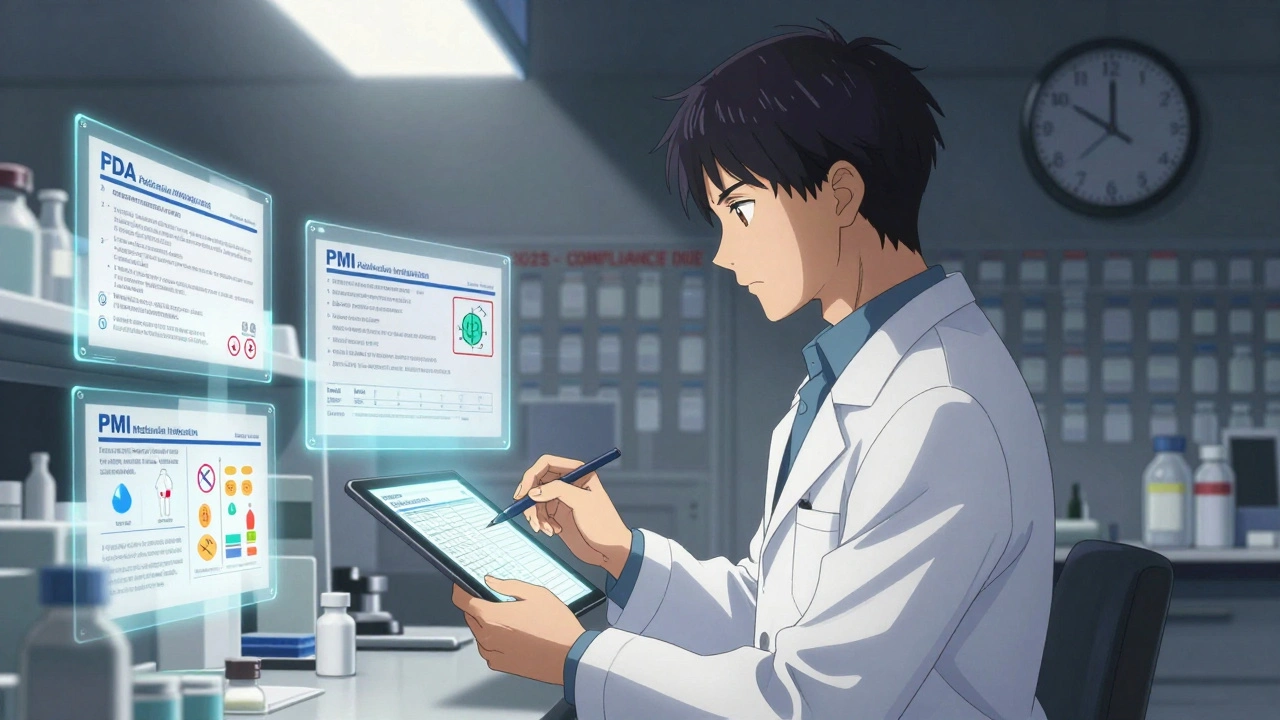
Who’s Paying for This?
The cost won’t be borne by patients. It’ll fall on manufacturers, pharmacies, and providers.- Pharmaceutical companies: They’ll have to write, test, and submit a PMI for every outpatient drug they make - potentially 10,000+ documents annually. J.P. Morgan estimates this will cost the industry $780 million over five years.
- Pharmacies: They’ll need to print, store, and hand out the PMI. That’s $300 million in system upgrades, staff training, and labor. The National Community Pharmacists Association warns that 15% of independent pharmacies may struggle to afford it without financial help.
- Doctors and clinics: They’ll need to update patient education materials and possibly train staff to explain the new format. That’s about $120 million.
What Experts Are Saying
Not everyone agrees the PMI goes far enough. Researchers at the University of Pittsburgh created a competing version called the “Decision Critical PMI.” For the drug mifepristone, instead of saying “headache is a common side effect,” their version says: “43% of patients experience headache.” That kind of specificity helps patients judge risk. One participant in their study said: “If I know that 48% of people get a fever, that helps me understand if it’s really common or just something that might happen.” The FDA’s response? They’re listening. Public meeting transcripts show they’re considering adding benefit data in a future phase. But for now, they’re sticking to safety-first. The American Medical Association supports the move but reminds doctors: “Decisions about starting opioid therapy should be made on whether the benefits outweigh the known risks.” In other words, the PMI isn’t a replacement for a conversation with your provider. It’s a backup.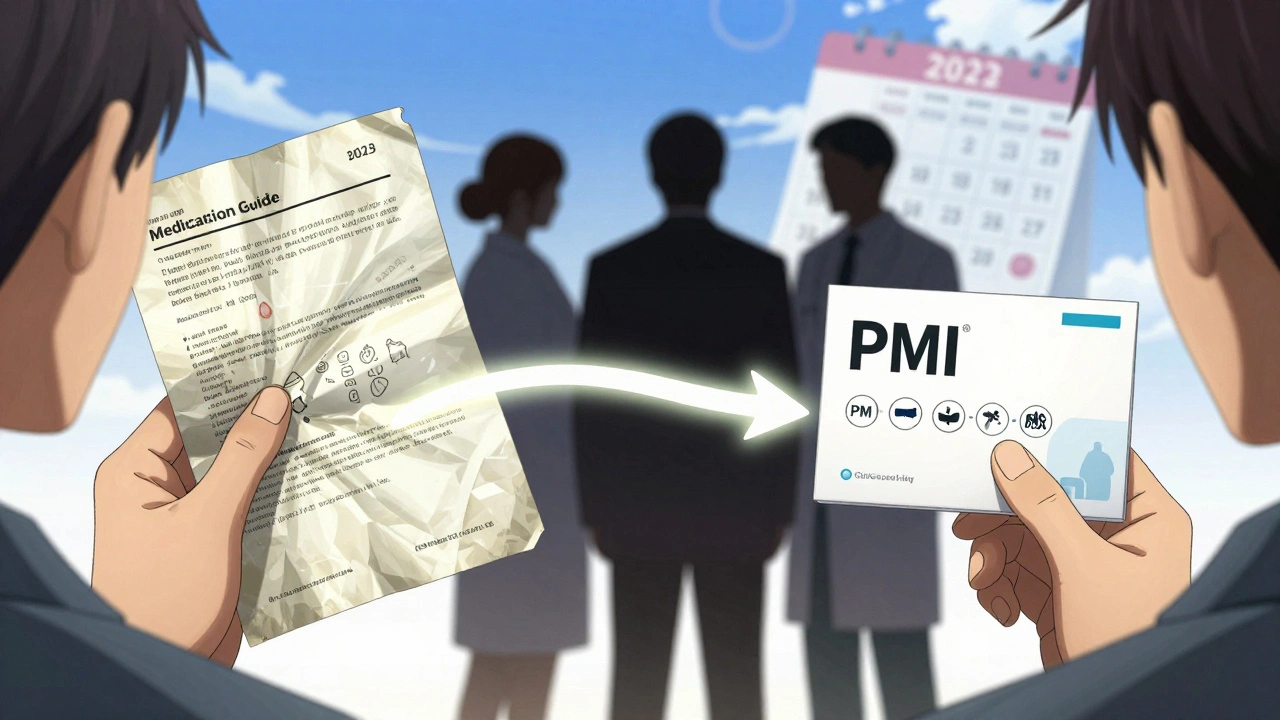
Implementation Timeline
The proposed rule was published in May 2023. The public comment period ended in November 2023. As of October 2025, the final rule is expected to be published in early 2024. Here’s what to expect:- 2024: Final rule issued. Manufacturers begin drafting PMIs.
- 2025: Large drugmakers must start distributing PMIs with new prescriptions.
- 2026: Smaller manufacturers and generics must comply.
- 2027: Full rollout. All outpatient prescriptions include PMI - paper or digital.
What This Means for You
If you’re a patient: In the next year, you’ll start seeing a new, simple sheet with your prescriptions. It won’t be fancy. But it’ll tell you exactly what you need to know to stay safe. Keep it. Read it. Ask your pharmacist if something isn’t clear. If you’re a pharmacist: Your job will change. You’ll be handing out a new document - and explaining it. That’s extra time, but it’s also a chance to build trust. Patients will appreciate the clarity. If you’re a manufacturer: Start preparing now. Drafting PMIs for hundreds of drugs isn’t a last-minute task. Test them with real patients. Use the FDA templates. Don’t wait until the deadline.What’s Next?
This isn’t the end. The FDA has signaled they’re open to expanding the PMI in the future - maybe adding benefit data, drug mechanisms, or even interaction charts. The European Medicines Agency is watching closely and may follow suit by 2025. If the PMI reduces medication errors by even 20%, it could prevent over 150,000 injuries a year. That’s the real measure of success. The old system was broken. It was inconsistent. It left patients guessing. The PMI won’t fix everything. But it’s the most practical, patient-centered step the FDA has taken in decades. And for millions of people taking prescriptions every day, that matters.Will all prescription drugs have the new PMI?
Yes - all outpatient prescription drugs, including those taken at home, blood transfusions, and injectables given outside a hospital. Inpatient drugs used in hospitals are not included. Over-the-counter (OTC) medications are also not affected.
Can I refuse to get the PMI?
You can choose to receive the PMI electronically instead of on paper, but you cannot opt out entirely. The FDA requires that every patient be offered the information. Pharmacists must make sure you receive it - whether you ask for it or not.
Will the PMI include side effect percentages?
Not in the first version. The current rule only requires listing “common side effects” without numbers. But researchers have shown that patients understand risk better with specific percentages. The FDA is reviewing feedback and may add this in a future update.
How will pharmacies handle electronic PMI?
Pharmacies will need to integrate digital delivery into their systems - via email, text, or a patient portal. The electronic version must meet accessibility standards (Section 508), including screen reader compatibility and adjustable font sizes. QR codes on pill bottles will also be allowed as a quick access option.
What if the PMI is wrong or outdated?
Manufacturers must update the PMI whenever new safety information becomes available - such as a new warning from the FDA or a study showing unexpected side effects. The FDA will review all updates before they’re released. Pharmacies are required to replace outdated paper copies with the new version.
Is this rule final yet?
No - as of December 2025, the rule is still proposed. The FDA is expected to issue the final version in early 2024. Implementation will begin in 2025, with full compliance required by 2027.

Write a comment
Your email address will not be published.
Recent Posts
-
 Heparin Sodium: Cutting-Edge Advances in Anticoagulation Therapy October 18, 2025
9 Comments
This is just more federal overreach. Who the hell asked for this? I get my meds, I take them. Why do I need a whole page of text telling me not to flush pills? I’m not an idiot. And now pharmacies are gonna charge more because of this nonsense?
They’re turning healthcare into a compliance circus.
And don’t even get me started on the ‘electronic PMI’-half the people I know can’t even check their email on their phones.
They’re solving a problem that doesn’t exist for people who don’t need it, while ignoring the real issue: drug prices.
Fix that first. Then we’ll talk about font size.
I mean… it’s cute that they think a one-page sheet will stop people from taking meds wrong. But most folks don’t even read the warning labels on their shampoo.
And now we’re spending $1.2 billion to print paper that’ll get tossed in the trash after one use?
Maybe if we stopped making people take 17 different pills at once, they wouldn’t need a manual.
But sure, let’s blame the patient.
I work in a community pharmacy and let me tell you-this is the most human thing the FDA’s done in a decade.
Patients come in confused AF-'Is this the blue one or the green one?' 'Why does my doctor say take it with food but the bottle says empty stomach?'
This PMI? It’s simple. It’s clear. It’s not perfect but it’s a start.
And the disposal info? Game changer. I’ve had people flush Xanax because they didn’t know it’s a water pollutant.
Yeah it’s gonna be a pain for small shops but we’ll figure it out.
And honestly? I’d rather spend 45 extra seconds explaining a pill than watching someone end up in the ER because they mixed their meds.
Also-thank you for including QR codes. My grandma uses them now. She’s 82 and thinks it’s magic. 😊
Ah yes, the FDA’s new philosophy: if you can’t read, here’s a bigger font.
What’s next? A pamphlet titled 'How to Not Die From Your Own Ignorance' with emojis?
Meanwhile, in the real world, people are dying because they can’t afford insulin, not because they didn’t know to store it in the fridge.
But sure, let’s fix literacy with bureaucracy.
At least they didn’t mandate a TikTok tutorial.
Progress.
This is a necessary step.
Standardization reduces errors.
Clarity saves lives.
Costs are high but manageable.
Pharmacies should be funded to adapt.
Patients deserve this.
Implementation is complex but doable.
Focus on outcomes not bureaucracy.
Wait wait wait-so you’re telling me they’re NOT gonna tell me if this pill makes me horny?
That’s the real side effect I care about.
And why is there no section on 'Will this make me gain 20 lbs and cry at 3am?'
Also-why is it called PMI? Sounds like a new crypto coin.
And who decided 12-point font? That’s basically microprinting. My eyes are 37.
This is a joke.
Also-why is the FDA writing this like a middle school health class?
Someone’s getting promoted.
The FDA’s approach is pragmatic.
By limiting the PMI to safety-critical information, they avoid overwhelming patients with clinical jargon.
Studies show patients retain more when information is chunked and prioritized.
Adding benefit percentages later is smart-risk communication is a science.
Electronic delivery with accessibility standards is non-negotiable.
Pharmacies need funding, not just templates.
Independent pharmacies are already stretched thin.
This isn’t just policy-it’s public health infrastructure.
And yes, the paper copy matters.
Not everyone has Wi-Fi.
Not everyone has a smartphone.
Not everyone can ask Google.
This is about equity, not efficiency.
I’ve been waiting for this my entire life.
Finally someone gets it.
My aunt died because she mixed her blood thinner with grapefruit juice.
She didn’t know.
She trusted the pharmacy.
She didn’t read the tiny print.
Now? Now she’s gone.
And you’re arguing about font size?
Get. Out.
My mom’s 71. She reads this sheet every morning.
She keeps it on the fridge.
She says it’s the first time she’s ever felt like someone cared enough to write it in a way she could understand.
So if you think this is overkill?
You’ve never held someone’s hand while they vomit from a drug interaction.
Try again.
I’m a pharmacist.
I’ve seen patients cry because they thought their pill was making them crazy.
Turns out they were taking it at night instead of morning.
This PMI? It’s not perfect.
But it’s honest.
It’s clear.
It’s human.
And for the first time in decades, the system is trying to meet people where they are.
Not where we wish they were.
That’s worth the cost.
That’s worth the effort.
That’s worth fighting for.
Let’s not let perfect be the enemy of life-saving.