
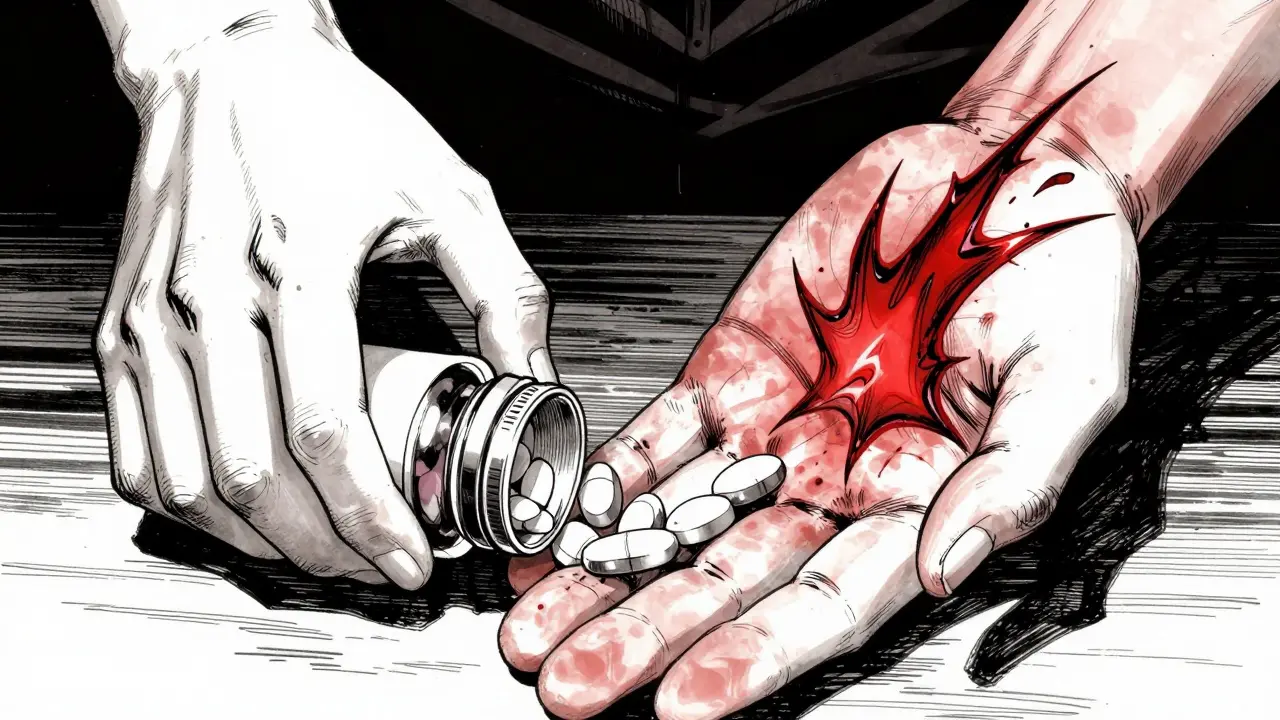
Drug Causality Assessment Tool
Answer the questions below to assess the likely relationship between a medication and a side effect.
A positive rechallenge elevates causality to "Definite" in 97% of validated cases according to WHO-UMC criteria.
Imagine you start a new medication for high blood pressure. A few days later, you develop a severe rash. Is it the pill? Or is it just a coincidence? This uncertainty plagues millions of patients and doctors every year. In the world of medicine, guessing isn't enough. We need proof.
To determine if a specific drug caused an adverse drug reaction (ADR), experts rely on two critical clinical tests: dechallenge and rechallenge. These aren't laboratory experiments in a vacuum; they are real-world observations that help establish whether a medication is truly responsible for your symptoms. Understanding these concepts can empower you to have better conversations with your healthcare provider about your safety and treatment options.
What Is Dechallenge?
Dechallenge is the process of stopping a suspected medication to see if the adverse reaction resolves. Think of it as turning off the tap to see if the water stops flowing. If you stop taking the drug and your symptoms disappear, that is called a "positive dechallenge." It suggests a strong link between the drug and the reaction.
However, a positive dechallenge doesn't always guarantee causality. Sometimes, symptoms fade because the body naturally heals itself, or because another underlying condition improved. For a dechallenge to be considered valid evidence, the resolution of symptoms must happen within a timeframe that makes biological sense. This usually aligns with the drug's half-life-the time it takes for the body to eliminate half of the substance.
- Positive Dechallenge: Symptoms improve or disappear after stopping the drug. This provides moderate evidence that the drug caused the issue.
- Negative Dechallenge: Symptoms persist or worsen even after stopping the drug. This suggests the drug might not be the culprit, or the damage was irreversible.
In practice, dechallenge is the most common first step in investigating side effects. According to data from the Indian Journal of Dermatology, approximately 85% of dermatological adverse reactions are assessed primarily through dechallenge because it is safe and non-invasive.
What Is Rechallenge?
If dechallenge is turning off the tap, rechallenge is turning it back on to see if the water flows again. Rechallenge involves deliberately giving the patient the same drug again after their symptoms have resolved. If the same side effect returns, especially at the same location or with similar severity, it provides very strong evidence of causality.
A famous case cited in medical literature involves a patient who developed a fixed-drug eruption from metronidazole. After stopping the drug, the rash healed. When the doctor prescribed metronidazole again three months later, the rash returned to the exact same spot within two days. This recurrence confirmed the diagnosis definitively.
However, rechallenge is rarely performed today. Why? Because it is often unethical and dangerous. You wouldn't want to give someone a drug again if it previously caused liver failure or Stevens-Johnson Syndrome, a life-threatening skin condition. As noted by Dr. Lisa Thompson of the FDA, deliberate rechallenge is approved in only 0.3% of serious adverse reaction investigations due to these significant risks.

The Four Pillars of Causality Assessment
Doctors don't rely on dechallenge and rechallenge alone. They use a framework known as the four cardinal principles of pharmacovigilance to assess whether a drug caused a side effect. These pillars work together to build a complete picture.
- Temporal Relationship: Did the side effect happen shortly after starting the drug? A logical timeline is essential.
- Biological Plausibility: Does the drug have a known mechanism that could cause this type of reaction? For example, some antibiotics are known to cause gut issues.
- Dechallenge: Did symptoms improve when the drug was stopped?
- Rechallenge: Did symptoms return when the drug was restarted?
While temporal relationship and biological plausibility provide theoretical support, dechallenge and rechallenge offer clinical proof. The World Health Organization-Uppsala Monitoring Centre (WHO-UMC) criteria state that a successful rechallenge elevates the causality assessment to "definite" in 97% of validated cases. Without it, the assessment often remains "probable" or "possible."
Why Rechallenge Is Rarely Used
You might wonder why doctors don't just rechallenge everyone to get a definitive answer. The short answer is patient safety. Ethical guidelines strictly limit rechallenge to situations where the risk is minimal and the benefit of knowing the truth is high.
For mild reactions like a slight headache or minor nausea, a doctor might consider switching to a different brand or formulation to test tolerance. But for severe reactions, such as drug-induced liver injury or severe allergic responses, rechallenge is contraindicated. The potential harm outweighs the diagnostic value.
Furthermore, many patients self-discontinue medications without telling their doctor. This compromises the validity of any future assessment. If a patient stops a drug on their own and feels better, but then starts another new drug, it becomes impossible to know which action caused the improvement. Proper documentation in electronic health records is crucial for maintaining the integrity of these assessments.
| Feature | Dechallenge | Rechallenge |
|---|---|---|
| Action | Stopping the drug | Restarting the drug |
| Evidence Strength | Moderate (Probable) | Strong (Definite) |
| Safety Risk | Low | High (for severe reactions) |
| Frequency of Use | Common (Standard Practice) | Rare (<1% of serious cases) |
| Ethical Approval | Usually not required | Required for deliberate cases |

Modern Tools and Future Directions
As technology advances, the way we monitor dechallenge outcomes is becoming more precise. Wearable biosensors can now track physiological parameters during drug discontinuation, providing objective data on symptom resolution. Studies show that digital monitoring captures resolution data in 78% of cases, compared to 52% with traditional patient reporting.
Researchers are also developing alternatives to physical rechallenge. In vitro lymphocyte toxicity assays can predict individual susceptibility to specific drug reactions with up to 89% accuracy. This lab-based approach reduces the need to expose patients to potentially harmful substances again. Additionally, machine learning algorithms are being piloted to predict dechallenge outcomes based on drug-reaction pairs, helping doctors make faster decisions about whether to stop a medication.
Despite these technological leaps, experts agree that clinical observation remains irreplaceable. As Dr. Elena Rodriguez of the WHO Collaborating Centre stated, no algorithm can substitute for the clinical reality of symptom resolution after drug discontinuation. Dechallenge remains the cornerstone of causality assessment.
What Should Patients Do?
If you suspect a medication is causing side effects, do not stop taking it abruptly without consulting your doctor. Sudden discontinuation can sometimes cause withdrawal symptoms or worsen your underlying condition. Instead, document your symptoms, including when they started relative to when you began the medication.
Your doctor will evaluate the situation using the principles discussed above. They may decide to stop the drug (dechallenge) to see if you feel better. If the reaction was mild and the drug is essential, they might monitor you closely while continuing treatment. Always report any adverse events to your healthcare provider and, if possible, to national pharmacovigilance systems. Your data helps protect others from similar experiences.
Can I stop my medication myself if I think it's causing side effects?
It is generally unsafe to stop prescription medications without medical advice. Some drugs require gradual tapering to avoid withdrawal symptoms. Contact your doctor immediately to discuss your concerns. They can guide you on whether to continue, switch, or stop the medication safely.
How long does it take for symptoms to resolve after stopping a drug?
The timeframe varies depending on the drug's half-life and the nature of the reaction. For many drugs, symptoms may improve within 24 to 48 hours. However, some reactions can take several days or weeks to fully resolve. Your doctor will monitor you based on the specific medication and side effect.
Is rechallenge ever safe?
Rechallenge is only considered safe in very specific circumstances, typically for mild, non-life-threatening reactions where the benefit of confirming the diagnosis outweighs the risk. It is almost never performed for severe reactions like liver failure or severe skin conditions. It requires strict medical supervision and ethical approval.
What is pharmacovigilance?
Pharmacovigilance is the science and activities relating to the detection, assessment, understanding, and prevention of adverse effects or any other drug-related problems. It includes monitoring drug safety after they are released to the public, ensuring that benefits continue to outweigh risks.
How can I report a side effect?
You can report side effects through your national health authority's website or app. In the US, this is the FDA's MedWatch program. In Europe, it varies by country but is often managed by local regulatory agencies. Reporting helps regulators identify patterns and issue warnings if necessary.

Recent Posts
-
 Natural Fever Remedies: Effectiveness, Safety & When to Use Them September 24, 2025
 -
 Authorized vs Traditional Generics: Key Differences Explained August 26, 2026
 -
 How and Where to Buy Prednisone Online Safely April 16, 2026