
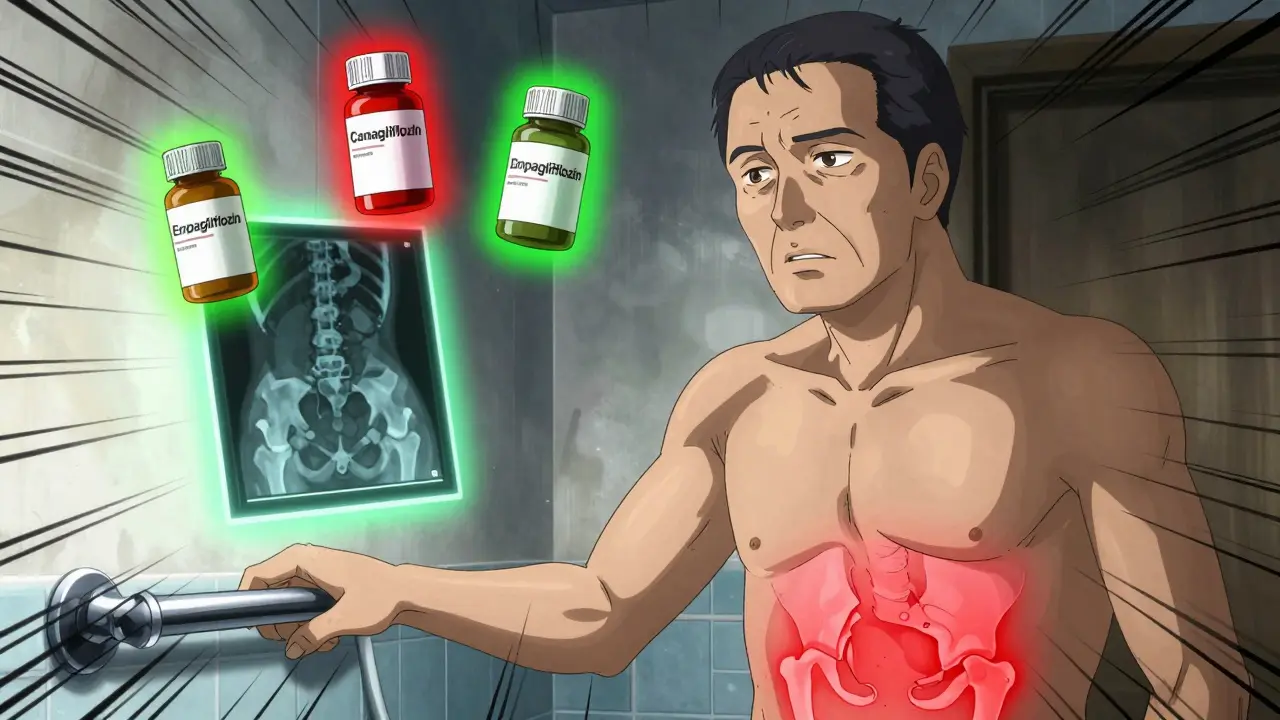
SGLT2 Inhibitor Bone Risk Checker
Fracture Risk Assessment
This tool helps determine if your SGLT2 inhibitor choice is safe for your bone health based on current medical evidence.
Results
Your current SGLT2 inhibitor choice is considered safe for bone health based on current evidence.
Recommendation
When you're managing type 2 diabetes, the goal isn't just lowering blood sugar-it's protecting your whole body. That’s why SGLT2 inhibitors became so popular. These drugs don’t just help with glucose control; they cut heart failure hospitalizations, slow kidney decline, and even help with weight loss. But for some patients, especially older adults or those with weak bones, one question keeps coming up: SGLT2 inhibitors and bone health-do they increase fracture risk?
Not All SGLT2 Inhibitors Are the Same
It’s easy to think of SGLT2 inhibitors as one group: dapagliflozin (Farxiga), empagliflozin (Jardiance), canagliflozin (Invokana). But when it comes to bone health, they’re not interchangeable. The red flag started in 2015 with the CANVAS trial. Patients taking canagliflozin 300 mg had 26% more fractures than those on placebo. Most were from minor falls-like tripping on a rug or slipping in the shower. The fractures were often in the hip, forearm, or upper arm. No other SGLT2 inhibitor showed this pattern in large trials.Empagliflozin? No increased fracture risk in EMPA-REG OUTCOME. Dapagliflozin? Nothing significant in DECLARE-TIMI 58. Even a 2023 meta-analysis of 27 trials with over 20,000 patients found no overall link between SGLT2 inhibitors and fractures-except when canagliflozin was pulled out. Then the risk jumped. The FDA updated canagliflozin’s label in 2016 to warn about fractures. They didn’t do the same for the others. That’s not an accident. It’s based on real data.
Why Does Canagliflozin Affect Bones?
It’s not just one thing. Several factors might be at play. First, canagliflozin causes more bone mineral density loss than the others. In a two-year FDA-mandated trial, people on canagliflozin lost 0.92% of hip bone density versus just 0.24% with placebo. Lumbar spine loss was nearly double too. That’s not huge, but for someone with osteoporosis, it matters.Then there’s the hormonal side. Some women on canagliflozin saw a 9.2% drop in estradiol-a hormone that helps protect bone. Lower estrogen means faster bone breakdown. Also, these drugs make you pee out more glucose and phosphate. That triggers your body to release parathyroid hormone and FGF23, which can pull calcium out of your bones. It’s a subtle shift, but over time, it adds up.
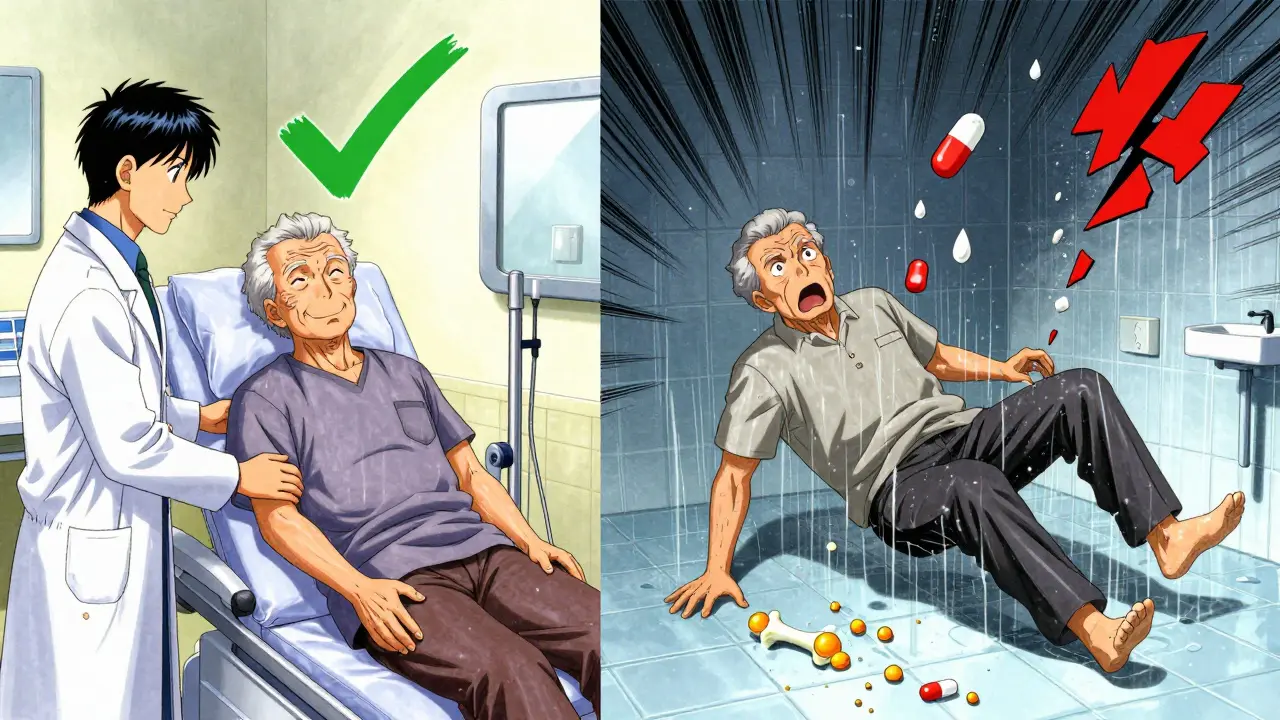
And don’t forget falls. SGLT2 inhibitors can cause low blood pressure when standing up-postural hypotension. That’s more common in older people. A sudden dizzy spell on a slippery bathroom floor? That’s how fractures start. Canagliflozin has a slightly higher rate of this side effect than its peers. Combine that with weaker bones, and the risk climbs.

What Do Experts Actually Recommend?
The American Diabetes Association’s 2023 guidelines say this clearly: SGLT2 inhibitors as a class don’t raise fracture risk-but canagliflozin might. That’s why the American Association of Clinical Endocrinologists (AACE) says: if a patient already has osteoporosis (T-score ≤ -2.5) or a past fracture, avoid canagliflozin. For empagliflozin or dapagliflozin? No such restriction.Endocrinologists are adjusting. A 2022 survey of 347 specialists showed 82% avoid canagliflozin in patients with osteoporosis. Only 34% felt the same about dapagliflozin. That’s a huge gap. The American College of Endocrinology recommends a DXA scan before starting canagliflozin in anyone with multiple fracture risk factors-like age over 65, low body weight, or steroid use. If the T-score is below -2.0, they suggest picking another drug.
The American Geriatrics Society’s Beers Criteria, updated in 2023, lists canagliflozin as a potentially inappropriate medication for older adults with osteoporosis or prior fractures. Not empagliflozin. Not dapagliflozin. Just canagliflozin. That’s not a coincidence. It’s a targeted warning.
Real-World Data vs. Clinical Trials
Clinical trials are controlled. Real life isn’t. In the ADA’s online patient forums, 78% of people discussing SGLT2 inhibitors worried about fractures. Twenty-three patients reported falls on canagliflozin. Only seven on empagliflozin. That’s not a study, but it’s real experience.One endocrinologist at Mayo Clinic says she sees about 3-4 fractures per 1,000 patient-years with canagliflozin in elderly, high-risk patients. With other SGLT2 inhibitors? 2-3. That’s a small difference-but meaningful when you’re treating someone who already broke a hip last year.
But here’s the flip side: Johns Hopkins analyzed 15,328 patients and found no difference in fracture rates between SGLT2 inhibitors once they adjusted for age and baseline risk. Why the conflict? Because most trials were designed to measure heart and kidney outcomes-not bones. Fractures are rare events. You need big, long-term data to spot small increases. That’s why experts like Dr. Robert Heaney warn we still need more time.
What Should You Do?
If you’re on an SGLT2 inhibitor and have no history of bone problems, don’t panic. Empagliflozin and dapagliflozin are safe for bone health in most people. If you’re on canagliflozin and you’re over 65, have low bone density, or have fallen before, talk to your doctor. Ask for a DXA scan. Check your T-score. If it’s below -2.0, switching might be worth considering.Don’t stop your medication on your own. These drugs protect your heart and kidneys-risks that often outweigh bone concerns. But if you’re at high risk for fractures, there are better options. GLP-1 agonists like semaglutide have no bone risk and even help with weight loss. DPP-4 inhibitors are neutral. Metformin? Also safe.
And if you’re starting a new diabetes drug? Tell your doctor about any past fractures, falls, or osteoporosis. Ask: "Is this the right SGLT2 inhibitor for my bone health?" Don’t assume they’re all the same.
What’s Changing in 2026?
The 2024 ADA/EASD consensus report is still being finalized, but early drafts suggest clearer algorithms for fracture risk assessment before prescribing any SGLT2 inhibitor. The FDA is still monitoring-but hasn’t found a signal for empagliflozin or dapagliflozin since 2018. The EMA still warns about bone effects across the whole class, but U.S. guidelines are moving toward precision: it’s not the class, it’s the drug.Canagliflozin prescriptions in the U.S. dropped 22% between 2017 and 2022. Empagliflozin and dapagliflozin rose by over 40%. That’s not because of marketing. It’s because doctors are learning. They’re reading the data. They’re listening to patients. And they’re choosing safer options for vulnerable people.
The bottom line? SGLT2 inhibitors are powerful tools. But they’re not one-size-fits-all. Bone health matters. And when it comes to fracture risk, canagliflozin stands alone. The rest? For most people, they’re safe.
Do SGLT2 inhibitors cause bone fractures?
Not all of them. Canagliflozin (Invokana) has been linked to a modest increase in fracture risk, especially in older adults or those with osteoporosis. Empagliflozin (Jardiance) and dapagliflozin (Farxiga) have not shown the same risk in large studies. The FDA only requires a fracture warning on canagliflozin’s label.
Should I stop my SGLT2 inhibitor if I’m worried about fractures?
No-not without talking to your doctor. The heart and kidney benefits of these drugs often outweigh the small fracture risk. If you’re on canagliflozin and have risk factors like osteoporosis or past falls, ask about switching to empagliflozin or dapagliflozin. Never stop abruptly.
Is a bone density scan necessary before taking SGLT2 inhibitors?
For canagliflozin, yes-if you’re over 65, have osteoporosis, or have had a fracture before. The American College of Endocrinology recommends a DXA scan in high-risk patients. For empagliflozin or dapagliflozin, it’s not routine unless you already have other risk factors for bone loss.
Which SGLT2 inhibitor is safest for bone health?
Empagliflozin (Jardiance) and dapagliflozin (Farxiga) are considered safer for bone health based on current evidence. Canagliflozin (Invokana) carries a known fracture risk and should be avoided in patients with osteoporosis or high fall risk.
Can weight loss from SGLT2 inhibitors hurt my bones?
Weight loss can slightly increase bone turnover, but it only explains about 3% of bone density changes seen with SGLT2 inhibitors. The bigger concerns are the drug’s direct effects on phosphate, hormones, and fall risk-not the weight loss itself.
Are there alternatives to SGLT2 inhibitors if I’m at risk for fractures?
Yes. GLP-1 receptor agonists like semaglutide or liraglutide have no bone risk and offer similar heart and weight benefits. DPP-4 inhibitors and metformin are also safe options. Your doctor can help you pick the best alternative based on your overall health.

Write a comment
Your email address will not be published.
Recent Posts
-
 Generic Drug Naming: USAN, INN, and Brand Name Basics Explained December 30, 2025
 -
 Inderal for Sale: Understanding its Uses and Effects March 8, 2025
 -
 How to Buy Cheap Generic Lamictal Online: 2026 Price Guide April 30, 2026


8 Comments
Okay but like… why is everyone acting like canagliflozin is the devil? I’ve been on it for 3 years, fell twice, broke nothing. My hip’s fine. My A1C’s 5.8. My doctor says I’m lucky. Stop fear-mongering. 😒
Bro in India we don’t even have canagliflozin in most rural clinics. Jardiance is the go-to. And honestly? My uncle on it for 4 years, no fractures, no drama. Just better kidneys and lost 18kg. Why make it complicated? Pick what works. 🙌
It is imperative to underscore the clinical distinction between class-wide pharmacodynamics and agent-specific adverse event profiles. The CANVAS trial demonstrated a statistically significant hazard ratio of 1.26 (95% CI: 1.04–1.52) for non-vertebral fractures with canagliflozin 300 mg, whereas EMPA-REG and DECLARE-TIMI 58 failed to reach significance for empagliflozin or dapagliflozin, respectively. The FDA’s label modification was evidence-based, not arbitrary. To conflate the agents is not only scientifically unsound-it is clinically dangerous.
My grandma’s on Jardiance. She’s 78, osteoporosis, uses a walker. Still standing. Still dancing at weddings. 🥳 Doc did the DXA scan first-T-score -2.8-so they skipped canagliflozin like it was hot. Smart move. Don’t risk a hip for a few extra pounds lost. ❤️
Just read the FDA label. Only canagliflozin has the fracture warning. The rest? Clean. If your doc prescribes canagliflozin to someone over 65 with low bone density, they’re either lazy or didn’t read the data. Time to get a second opinion.
Let’s be real. The real issue isn’t the drug-it’s the healthcare system. Doctors get paid to prescribe. Pharma reps show up with free lunches and shiny slides about ‘cardiovascular benefits.’ Meanwhile, the bone density scans? ‘Oh, we’ll get to it next quarter.’ And now people are breaking hips because nobody bothered to check T-scores before hitting ‘prescribe.’ It’s not the drug’s fault-it’s the indifference. We’ve turned medicine into a spreadsheet. And the patients? They’re just numbers with A1Cs.
And don’t get me started on how GLP-1 agonists cost $1,000 a month while Jardiance is $15 with insurance. So of course people get stuck on canagliflozin. It’s not about safety-it’s about affordability. And that’s the real fracture in this system.
Thanks for laying this out so clearly. I’ve been on dapagliflozin for a year and was worried after reading the headlines. This made me feel way better. I’ll keep my regular checkups and stay active. Small steps matter.
Actually, the meta-analysis you referenced (Zhou et al., 2023) had significant heterogeneity in fracture reporting across trials-only 4 of the 27 studies used centralized adjudication for fracture events. Furthermore, the 26% increased risk with canagliflozin was driven by non-vertebral fractures in patients with baseline eGFR <60 mL/min, which is a confounder not fully adjusted for in many analyses. The FDA’s warning is appropriate, but the blanket avoidance of canagliflozin in all elderly patients is an overcorrection. Individualized risk assessment-using tools like FRAX-is still the gold standard. Also, weight loss from SGLT2 inhibitors is not benign; it correlates with reduced lean mass, which independently increases fall risk. So yes, bone density matters-but so does muscle mass. DXA alone is insufficient. You need a BIA scan too. Just saying.