
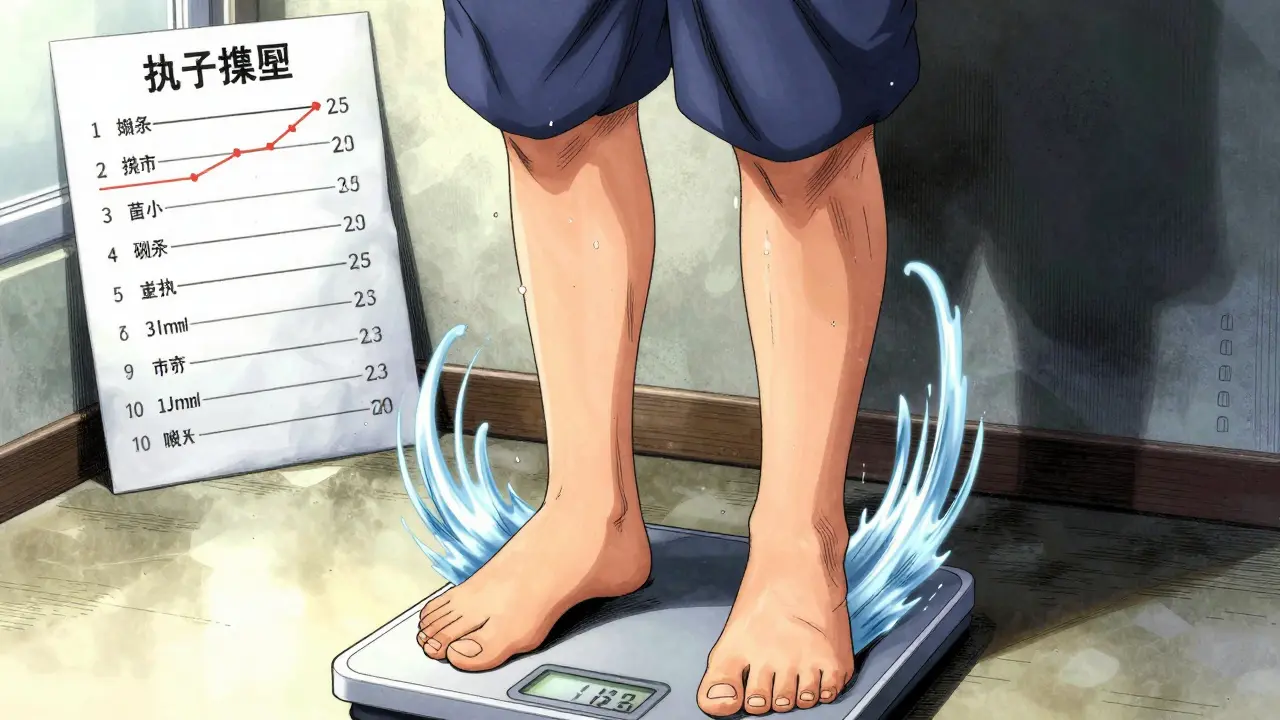
When you’re taking a diabetes medication like pioglitazone or rosiglitazone, you might notice something unexpected: your clothes feel tighter, your ankles swell, and the scale keeps climbing-even though you’re eating the same and moving more. This isn’t just bad luck. It’s a known side effect of thiazolidinediones (TZDs), a class of drugs designed to improve insulin sensitivity in type 2 diabetes. While they work well for some people, the trade-off can be real: weight gain and fluid retention (edema) affect up to 60% of users. But here’s the good news: you don’t have to just live with it. There are proven ways to reduce these side effects and still get the benefits of better blood sugar control.
Why TZDs Cause Weight Gain and Swelling
TZDs like pioglitazone (Actos) and rosiglitazone (Avandia) don’t just lower blood sugar-they change how your body stores fat and holds water. About two-thirds of the weight gain you see isn’t from extra fat. It’s from fluid building up in your tissues. That’s why your ankles puff up, your socks leave marks, and you might gain 5-7 pounds in just a few weeks without changing your diet. The science behind this is complex, but the main culprit is your kidneys. TZDs activate a receptor called PPAR-γ, which tells your kidneys to hold onto more sodium. More sodium means more water follows. This extra fluid increases your blood volume, which can lead to swelling, especially in your legs and feet. It’s not just your legs, either. Fluid can build up in your lungs if you’re at risk for heart problems, which is why these drugs carry a black box warning from the FDA. Another part of the weight gain comes from fat cells. TZDs make your body create more small, healthy fat cells under the skin. While this sounds harmless, it still adds pounds. On average, people gain 2.7 to 3 kg (6-7 lbs) on pioglitazone alone. Combine it with insulin, and that number jumps to over 5 kg (11 lbs). The fluid retention also worsens-edema rates jump from 5% with TZDs alone to over 15% when paired with insulin.Who Should Avoid TZDs Altogether
Not everyone can safely take these drugs. If you already have heart failure, especially if it’s classified as NYHA Class III or IV (meaning you’re short of breath even at rest or can’t do basic tasks without fatigue), TZDs are off-limits. The extra fluid can overwhelm your heart. The FDA banned their use in these patients back in 2007, and the warning still stands. You should also be cautious if you have kidney disease, liver problems, or a history of fluid buildup. Even mild heart issues like high blood pressure or a past heart attack increase your risk. Before starting a TZD, your doctor should check your heart function and ask about symptoms like swelling, trouble breathing when lying down, or sudden weight gain. If you’ve had heart failure before, there are safer alternatives.How to Reduce Weight Gain and Swelling
You don’t have to quit TZDs if you’re benefiting from better blood sugar control. Many people manage the side effects successfully by combining strategies. Start low, go slow. Most people get away with fewer side effects if they begin at the lowest dose. For pioglitazone, that’s 15 mg per day. Many patients do just fine at this level. Ramping up to 30 or 45 mg only makes sense if your blood sugar still isn’t controlled-and even then, the extra benefit is small compared to the added risk of swelling. Take it in the morning. While the evidence isn’t rock-solid, some small studies suggest taking TZDs in the morning helps your body process the extra fluid during the day instead of letting it pool overnight. If you notice your ankles swell more in the morning, this might be worth trying. Watch your sodium. Eating less salt is one of the simplest and most effective tricks. Aim for under 2,000 mg of sodium per day. That means skipping processed foods, canned soups, deli meats, and restaurant meals. Cook more at home. Use herbs and lemon instead of salt. One study showed this alone cut edema severity by 27%. Elevate your legs. When you’re sitting or lying down, prop your feet up above heart level for 15-20 minutes a few times a day. This helps gravity pull fluid out of your legs. It’s low-tech, free, and surprisingly helpful. Monitor your weight daily. Weigh yourself every morning before breakfast, after using the bathroom, and wearing the same clothes. If you gain more than 2-3 kg (4-6 lbs) in a week, call your doctor. Sudden weight gain is often the first sign of worsening fluid retention. One study found that patients who tracked their weight daily had 34% fewer hospital visits for heart failure.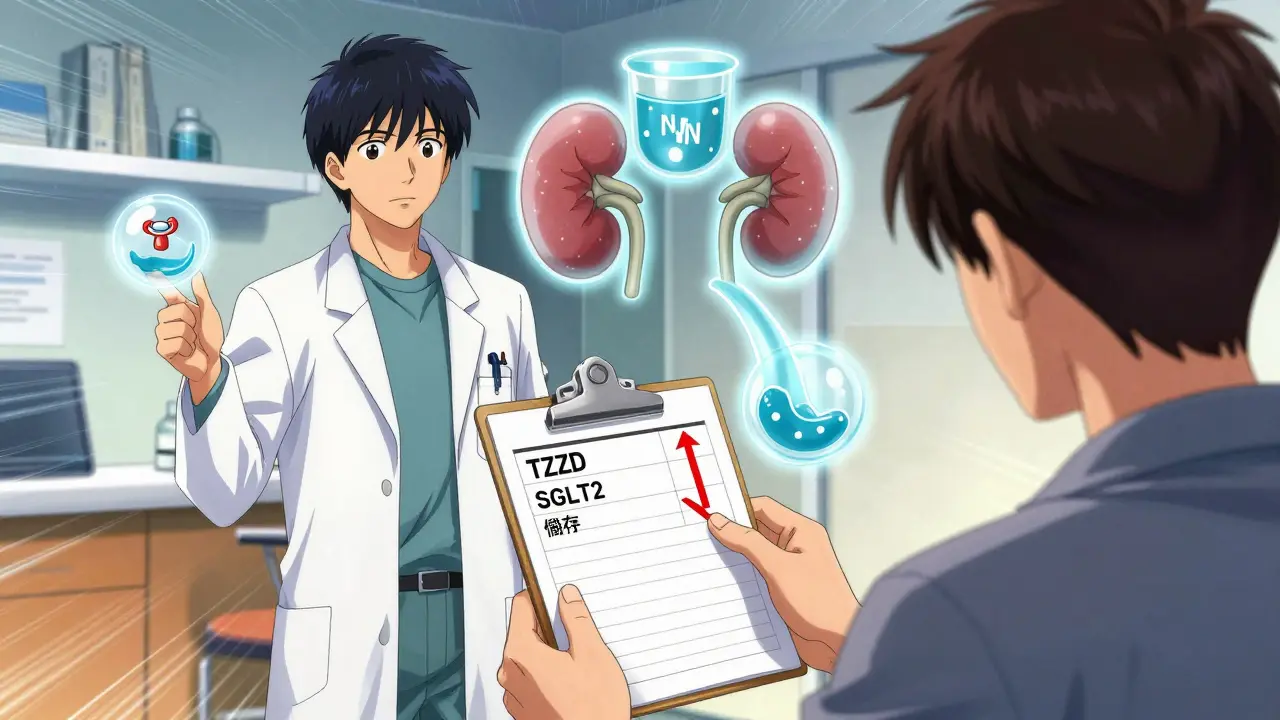
Combining TZDs with Other Drugs to Fight Side Effects
The best way to manage TZD side effects might be to pair them with another diabetes drug that does the opposite. SGLT2 inhibitors like empagliflozin (Jardiance), dapagliflozin (Farxiga), or canagliflozin (Invokana) help your kidneys flush out sugar and salt through urine. This directly counteracts the sodium retention caused by TZDs. Studies show that when you combine an SGLT2 inhibitor with a TZD, edema drops by nearly half. You also tend to lose weight instead of gaining it. Many patients who struggled with swelling on TZDs alone find this combo works beautifully. Thiazide diuretics like hydrochlorothiazide can help too, but they’re not first-choice for everyone. They help remove fluid, but they can also lower potassium and raise blood sugar slightly. If your doctor suggests one, they’ll likely monitor your electrolytes closely. Loop diuretics (like furosemide) are stronger but overkill for mild swelling and can cause dehydration or kidney stress. Don’t combine with insulin unless necessary. If you’re on insulin and your doctor wants to add a TZD, ask if you can switch to an SGLT2 inhibitor or GLP-1 agonist instead. These drugs help with weight loss and don’t cause fluid retention. Insulin plus TZD is a recipe for rapid weight gain and swelling.What to Do If Side Effects Are Too Much
If you’re gaining weight fast, your ankles are swollen, or you’re feeling breathless, don’t wait. Talk to your doctor. You might need to:- Lower your TZD dose
- Switch to a different class of drug
- Add an SGLT2 inhibitor
- Adjust your insulin dose if you’re on it

The Bigger Picture: Are TZDs Still Worth It?
Ten years ago, TZDs were widely used. Now, they make up less than 5% of type 2 diabetes prescriptions in the U.S. That’s because safer, more effective options have come along. But they’re not gone. For some people-especially those with severe insulin resistance, polycystic ovary syndrome (PCOS), or non-alcoholic fatty liver disease (NASH)-TZDs still offer benefits that other drugs can’t match. The key is smart use: low dose, careful monitoring, and pairing with drugs that offset the downsides. If you’re on a TZD and doing well with no swelling, keep going. If you’re struggling, don’t assume you’re stuck. Talk to your doctor about alternatives. You might find a combo that gives you the same blood sugar control without the puffiness.What’s Next for TZDs?
Researchers are working on new versions of these drugs that keep the insulin-sensitizing power but ditch the fluid retention. Early candidates like saroglitazar (used in India) show 60% less edema than traditional TZDs. Scientists are also studying genetic markers that might predict who’s most likely to swell. If you carry a certain gene variant (like rs1801282), you might have over twice the risk. In the future, a simple blood test could help doctors decide if a TZD is right for you before you even start. For now, the message is clear: TZDs aren’t for everyone. But if you need them, you don’t have to suffer through the side effects. With the right approach, you can manage them-and still keep your blood sugar in check.Why do TZDs cause weight gain?
TZDs cause weight gain through two main mechanisms: fluid retention and increased fat storage. About 65-70% of the weight gain comes from water buildup due to the drug’s effect on kidney sodium reabsorption. The rest comes from the formation of new, smaller fat cells under the skin. This is different from weight gain caused by insulin or sulfonylureas, which mainly come from increased appetite after low blood sugar episodes.
Is edema from TZDs dangerous?
Mild swelling in the ankles is usually not dangerous, but it can be a warning sign. If fluid builds up in your lungs or heart, it can lead to heart failure, especially in people with existing heart conditions. That’s why the FDA warns against using TZDs in patients with NYHA Class III or IV heart failure. Any sudden weight gain (more than 2-3 kg per week), shortness of breath, or worsening swelling needs immediate medical attention.
Can I take a diuretic with TZDs to reduce swelling?
Yes, but not all diuretics are equal. Thiazide diuretics like hydrochlorothiazide are preferred over loop diuretics because they’re gentler and less likely to cause electrolyte imbalances. However, diuretics aren’t a long-term fix-they don’t address the root cause. The better approach is combining TZDs with SGLT2 inhibitors, which naturally reduce fluid retention by removing sugar and salt through urine.
Should I stop TZDs if I gain weight?
Not necessarily. Weight gain alone isn’t a reason to stop if your blood sugar is improving and you have no signs of heart failure. But if you gain more than 5 kg in a few months, or notice swelling in your legs or trouble breathing, talk to your doctor. You may need to lower your dose, switch drugs, or add an SGLT2 inhibitor. Many people successfully manage the side effects without quitting the medication.
Are there better alternatives to TZDs for insulin resistance?
Yes. Metformin is still the first-line drug and often helps with weight loss. GLP-1 receptor agonists like semaglutide and liraglutide improve insulin sensitivity, promote weight loss, and protect the heart. SGLT2 inhibitors like empagliflozin also reduce insulin resistance and lower heart failure risk. For most people, these options are safer and more effective than TZDs. TZDs are now mostly used as a third-line option for those who don’t respond to other drugs and have no heart failure risk.

Write a comment
Your email address will not be published.
Recent Posts
-
 Ornithine Alpha‑Ketoglutarate: Boost Muscle, Hormones & Recovery September 21, 2025
 -
 How to Ask About Side Effects vs. Allergies with Your Care Team December 11, 2025


8 Comments
Let’s be real-TZDs are a relic from the early 2000s when pharma thought ‘more insulin sensitivity’ meant ‘ignore the side effects.’ The fact that we’re still prescribing these things while GLP-1s and SGLT2s are out here dropping weight and saving hearts is either corporate inertia or a medical community that refuses to evolve. And don’t even get me started on the ‘start low, go slow’ advice-like, why not just not prescribe it at all? If you’re gonna cause fluid retention that can trigger heart failure, maybe don’t hand it out like candy to every diabetic with insulin resistance. This isn’t science. It’s pharmaceutical archaeology.
I’ve been on pioglitazone for 3 years. Swelling was bad at first-sock marks, ankles like balloons. But I dropped my sodium to under 1500mg/day, started taking it in the morning, and now I barely notice it. I don’t care what the studies say-this works for me. My A1c’s been 5.8 for two years straight. If you’re not willing to adjust your diet, don’t blame the drug.
bro i was scared to even try this med after reading the side effects but i started at 15mg and honestly? no major puffiness. i just cut out the processed junk, drank more water, and started elevating my legs when i watched netflix. it’s not perfect but it’s way better than my old insulin regimen. also, i use a cheap digital scale every morning and it helps me catch stuff early. if you’re chill about it, it’s manageable 😅
It is imperative to note that the pathophysiology of TZD-induced edema is not merely a pharmacological artifact, but rather a systemic dysregulation of renal aquaporin channels and sodium-potassium ATPase activity secondary to PPAR-γ agonism. While lifestyle modifications may mitigate symptoms, they do not alter the underlying molecular mechanism. Therefore, any clinical decision to continue TZD therapy must be predicated upon a comprehensive cardiovascular risk stratification and should never be undertaken without documented echocardiographic baseline data. The notion that sodium restriction alone constitutes adequate management is both clinically naive and potentially hazardous.
Simple truth: if your ankles are puffing up and you’re gaining weight fast, don’t wait. Talk to your doc. You can swap TZDs for metformin or a GLP-1 like Ozempic-same blood sugar control, less swelling, maybe even weight loss. No need to suffer. Your body’s telling you something. Listen.
yo i’ve been on pioglitazone since last year and i was freakin scared about the edema but i started pairing it with Jardiance and holy crap-my ankles are normal now and i lost 4kg! the doc said it’s like the drugs cancel out each other’s bad effects. i’m from india and here we use saroglitazar sometimes-it’s way better, less swelling. also, i drink coconut water daily, it helps with electrolytes. if u got access to SGLT2i, go for it. it’s a game changer 🙌
AMERICA’S MEDICAL SYSTEM IS BROKEN. THEY’RE STILL GIVING OUT TZDS LIKE THEY’RE GIFT CARDS WHILE EUROPE AND INDIA ARE USING SMARTER DRUGS. I’VE SEEN GUYS ON THIS STUFF TURN INTO WATER BALLOONS AND NOBODY CARES BECAUSE BIG PHARMA’S PROFITING. SGLT2 INHIBITORS ARE CHEAPER, SAFER, AND MAKE YOU LOSE WEIGHT-WHY AREN’T WE USING THEM FIRST?! THIS ISN’T MEDICINE, IT’S CORPORATE GREED WITH A WHITE COAT.
My dad was on Actos for 4 years. Swelling got so bad he had to stop. Then we switched him to Trulicity and he’s lost 22 lbs, no puffiness, and his sugar’s better. I’m so glad we didn’t just ‘tough it out.’ 💪❤️ #DontSufferInSilence #GLP1Wins