Have you ever picked up a prescription and wondered why the pill looks different from the one you got last month? Or maybe your pharmacist mentioned an authorized generic is a brand-name drug marketed without the brand name on its label, containing identical active and inactive ingredients but you had no idea what that meant. It’s a common source of confusion in pharmacies today. While both authorized and traditional generics aim to lower costs, they take very different paths to get there. Understanding these differences matters because it can affect everything from your out-of-pocket expenses to how well your medication works.
The core distinction lies in their origin and composition. An authorized generic is literally the same product as the brand-name drug, just with a different label. A traditional generic, on the other hand, is a separate product made by a different company that has proven to work the same way as the brand. This isn’t just semantic pedantry; it impacts regulatory approval, market timing, and even patient trust. Let’s break down exactly how they differ so you can make informed decisions about your prescriptions.
What Defines an Authorized Generic?
To understand authorized generics, we have to look at who makes them. These drugs are produced by the original brand manufacturer. For example, if Pfizer makes a popular cholesterol drug, they might decide to sell a version of it under a different name to compete with cheaper alternatives. Because it comes from the same factory and follows the exact same recipe, the active ingredient and all the inactive ingredients (like fillers, dyes, and binders) are identical to the brand.
Regulatory-wise, this path is much simpler for the manufacturer. Since the drug is already approved through a New Drug Application (NDA), the company doesn’t need to go through the full FDA approval process again. They just notify the FDA that they intend to market it as an authorized generic. This means you won’t find authorized generics listed in the FDA’s Orange Book, which is the standard reference for therapeutic equivalence. Instead, the FDA maintains a separate list of these products. For patients, this means zero risk of formulation changes. If you tolerated the brand perfectly, you will tolerate the authorized generic perfectly, because it *is* the brand, minus the fancy logo.
How Traditional Generics Work
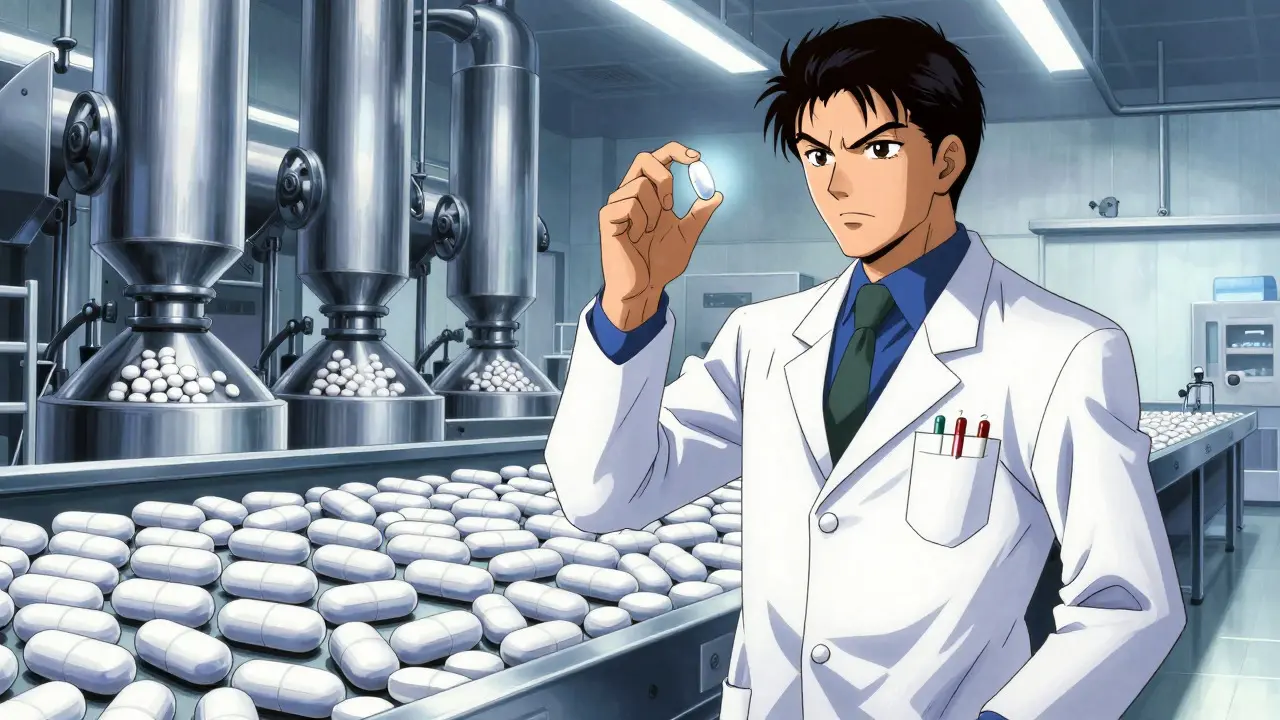
Traditional generics are drugs approved via the Abbreviated New Drug Application (ANDA) process that must demonstrate bioequivalence to the reference brand-name drug. These are made by third-party companies that don’t own the original patent. Their job is to prove to the FDA that their version delivers the same amount of medicine to your body at the same speed as the brand.
This is where the science gets interesting. To prove bioequivalence is the measure of the rate and extent to which the active ingredient reaches systemic circulation in comparison to a reference drug, manufacturers run clinical trials. However, they don’t need to repeat all the safety and efficacy tests the brand went through years ago. The FDA assumes those are still valid. But here’s the catch: while the active ingredient must be the same, the inactive ingredients can be different. A traditional generic might use a different type of cornstarch or a different dye than the brand. For most drugs, this doesn’t matter. But for complex formulations or narrow therapeutic index drugs, these minor changes can sometimes affect how the drug dissolves or absorbs.
Side-by-Side Comparison: Composition and Approval
The differences become stark when you compare the two side-by-side. Here is a quick breakdown of the key technical and regulatory distinctions:
| Feature | Authorized Generic | Traditional Generic |
|---|---|---|
| Manufacturer | Original Brand Company | Third-Party Generic Company |
| Active Ingredients | Identical to Brand | Same as Brand |
| Inactive Ingredients | Identical to Brand | May Differ |
| Approval Pathway | NDA Notification | ANDA Process |
| Orange Book Listing | No | Yes |
| Market Entry Timing | Any Time (Often Pre-Patent Expiry) | After Patent Expiry or Challenge |
Notice the row about market entry timing. This is a strategic game played by big pharma. Authorized generics can hit the shelves before the patent even expires. Why would a company do that? To capture price-sensitive customers early. If a competitor is planning to launch a traditional generic in six months, the brand company might release an authorized generic now at a slightly lower price to keep customers loyal. Traditional generics, however, usually wait until the patent wall falls, unless they are willing to fight a legal battle to invalidate the patent first.
Why Does Formulation Matter for Patients?
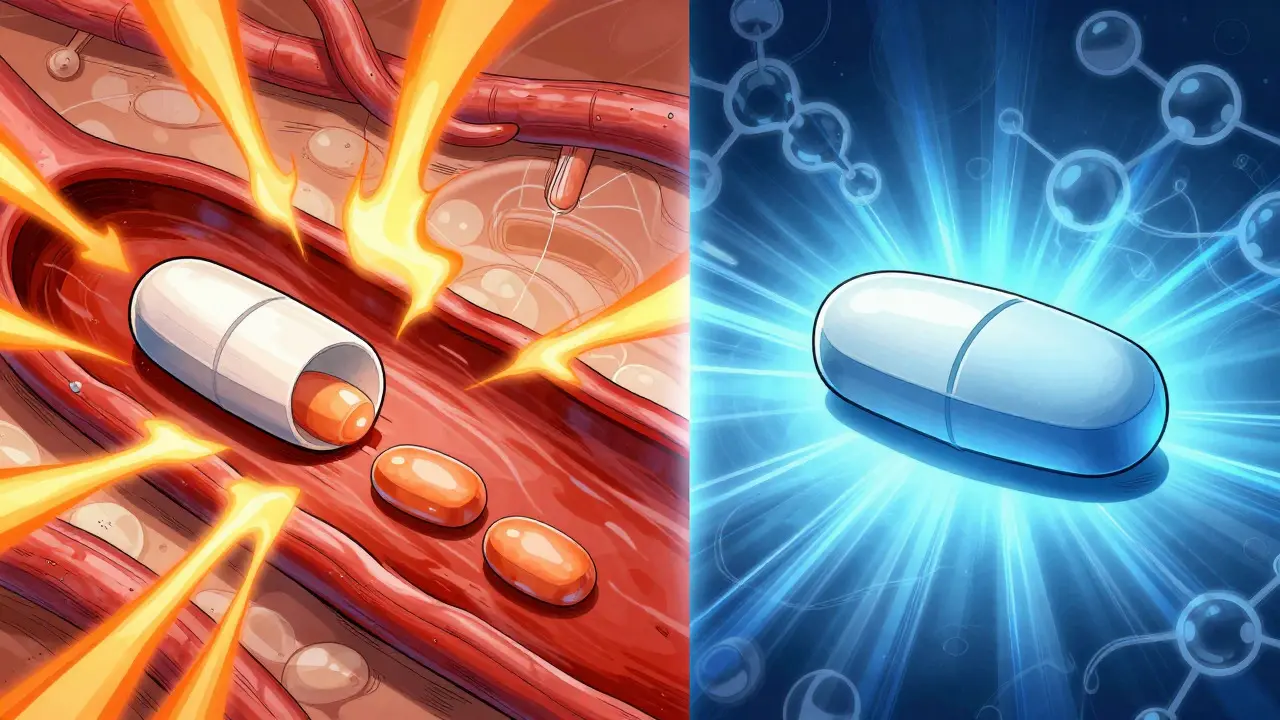
You might think, "If it works the same, why care about the fillers?" For 90% of medications, you probably wouldn’t. But for certain classes of drugs, formulation is critical. Think about inhalers for asthma or insulin injections. These are considered complex drugs. If a traditional generic uses a different propellant or a different particle size for the powder, it might not reach the lungs as effectively as the brand. In these cases, an authorized generic is often the safer bet because it guarantees the exact same delivery mechanism.
There is also the psychological factor. Many patients report feeling more confident taking a pill that looks and feels exactly like the one they’ve used for years. Even if the traditional generic is legally equivalent, the placebo effect or anxiety over a "new" pill can influence perceived effectiveness. By choosing an authorized generic, you eliminate that variable. You know the taste, the color, and the texture are unchanged. This consistency can be a huge relief for chronic conditions where routine is everything.
Pricing and Insurance Coverage
Let’s talk money, because that’s usually why we switch to generics in the first place. Both types are cheaper than the brand, but the dynamics are different. Authorized generics are priced strategically. The brand company knows they are competing against their own future potential loss of exclusivity. So, they might set the price just low enough to undercut the expected traditional generic price, but high enough to maintain good margins. Traditional generics, driven by intense competition among multiple manufacturers, often drive prices down further over time.
Insurance coverage adds another layer of complexity. Your health plan’s formulary determines which version you get. Some plans prefer authorized generics because they are therapeutically identical to the brand, reducing the risk of claims denials due to "therapeutic interchange" issues. Other plans might steer you toward the cheapest traditional generic available. It’s worth checking with your pharmacist. Sometimes, asking for the specific NDC (National Drug Code) number of the authorized generic can ensure you get the exact product you want, rather than having the pharmacy system automatically substitute the cheapest option on file.
Market Trends and Future Outlook
The landscape is shifting. Between 2010 and 2020, over 200 unique authorized generic products were launched in the U.S. This trend is accelerating. As patents expire on blockbuster drugs, brand companies are increasingly using authorized generics as a shield. It allows them to stay in the market longer without losing total control. For patients, this means more options, but also more confusion.
Looking ahead, regulators are paying closer attention to these products. The FDA updates its list of authorized generics quarterly, making it easier for healthcare providers to identify them. However, the debate continues on whether authorized generics provide true competition or just allow brands to segment their own markets. Regardless of the industry strategy, the benefit to the consumer remains clear: access to high-quality, cost-effective medication. Whether you choose the identical authorized version or the bioequivalent traditional one, you are part of a system designed to make healthcare more affordable.
Frequently Asked Questions
Is an authorized generic exactly the same as the brand-name drug?
Yes, except for the label. It contains the same active and inactive ingredients, is manufactured by the same company, and follows the same production standards. The only difference is that the brand name is removed from the packaging and labeling.
Are traditional generics less effective than brand-name drugs?
No, they are required to be bioequivalent, meaning they deliver the same amount of medicine to your body at the same speed. However, because inactive ingredients can differ, some patients may experience slight differences in side effects or absorption, particularly with complex drugs like inhalers.
How can I tell if my medication is an authorized generic?
You can check the FDA’s official list of authorized generic drugs, which is updated quarterly. Alternatively, ask your pharmacist. They can look up the National Drug Code (NDC) number and tell you if it matches the brand manufacturer's listing for an authorized product.
Which is cheaper: authorized or traditional generics?
It varies by drug and insurance plan. Authorized generics are often priced competitively to prevent brand erosion, while traditional generics may drop in price as more competitors enter the market. Check your specific copay amounts with your insurer or pharmacy.
Do I need a new prescription to switch between them?
Usually, no. Pharmacists can substitute between therapeutically equivalent products based on state laws and your doctor's instructions. However, if you want a specific version, ask your doctor to write "Dispense As Written" (DAW) on the prescription to prevent automatic substitution.

Recent Posts
-
 Buy Generic Amoxicillin Online Cheap Safely (2025 UK) September 11, 2025
 -
 Nitrofurantoin and Fertility: What You Should Know October 28, 2025