

When you're pregnant and struggling with anxiety or insomnia, the last thing you want is to feel like you have to choose between your mental health and your baby’s safety. But if you’re taking benzodiazepines - drugs like alprazolam, lorazepam, or diazepam - you’re facing real questions. Are these medications safe? Could they cause birth defects? What does the science actually say?
The truth isn’t simple. Some studies show clear risks. Others show little to no danger. And yet, more than 1 in 60 pregnant women in the U.S. are prescribed these drugs during the first trimester. That’s not rare. It’s common enough that every expectant parent should understand the facts - not just the headlines.
What Are Benzodiazepines, and Why Are They Used in Pregnancy?
Benzodiazepines are a class of drugs developed in the 1950s to treat anxiety, panic attacks, seizures, and severe insomnia. They work by calming overactive brain signals. For some women, untreated anxiety during pregnancy can be just as dangerous as the medication itself - leading to poor nutrition, high blood pressure, or even preterm labor.
But here’s the catch: benzodiazepines cross the placenta. They don’t stay in the mother’s bloodstream. They reach the baby. And because fetal tissues are still forming, especially in the first 12 weeks, even small amounts can interfere with development.
What Birth Defects Are Linked to Benzodiazepines?
Not all birth defects are equally likely. The data shows some risks are real - and specific.
A major 2022 study in PLOS Medicine tracking over 3 million pregnancies in South Korea found a small but real increase in overall birth defects when benzodiazepines were taken in the first trimester. The biggest jump? Heart defects. For every 1,000 women using these drugs, about 14 more babies had heart problems compared to those who didn’t.
But it gets more specific. The CDC’s long-running National Birth Defects Prevention Study found startling links between alprazolam and three rare but serious conditions:
- Dandy-Walker malformation - a brain defect affecting fluid drainage and balance (3.1 times higher risk)
- Anophthalmia or microphthalmia - missing or abnormally small eyes (4 times higher risk with alprazolam)
- Esophageal atresia - a blockage in the tube connecting the throat to the stomach (2.7 times higher risk with alprazolam)
These aren’t theoretical. These are real numbers from real pregnancies. And they’re not random. Alprazolam - commonly sold as Xanax - kept showing up as the strongest link. That’s important. Not all benzodiazepines are the same.
What About Other Risks Beyond Birth Defects?
Birth defects aren’t the only concern. Benzodiazepines are linked to other serious outcomes:
- 85% higher risk of miscarriage - according to a 2024 JAMA Psychiatry study
- Increased chance of preterm birth - babies born before 37 weeks
- Low birth weight - babies weighing less than 5.5 pounds
- Neonatal withdrawal - newborns can be jittery, irritable, or have trouble feeding if the mother used these drugs late in pregnancy
- Higher NICU admission rates - babies may need extra care after birth
And it’s not just exposure during pregnancy. One study found women who took benzodiazepines in the 90 days before conception had a higher risk of ectopic pregnancy - meaning the embryo implants outside the uterus. That’s a red flag that these drugs might affect fertility or early development even before you know you’re pregnant.
How Big Is the Actual Risk?
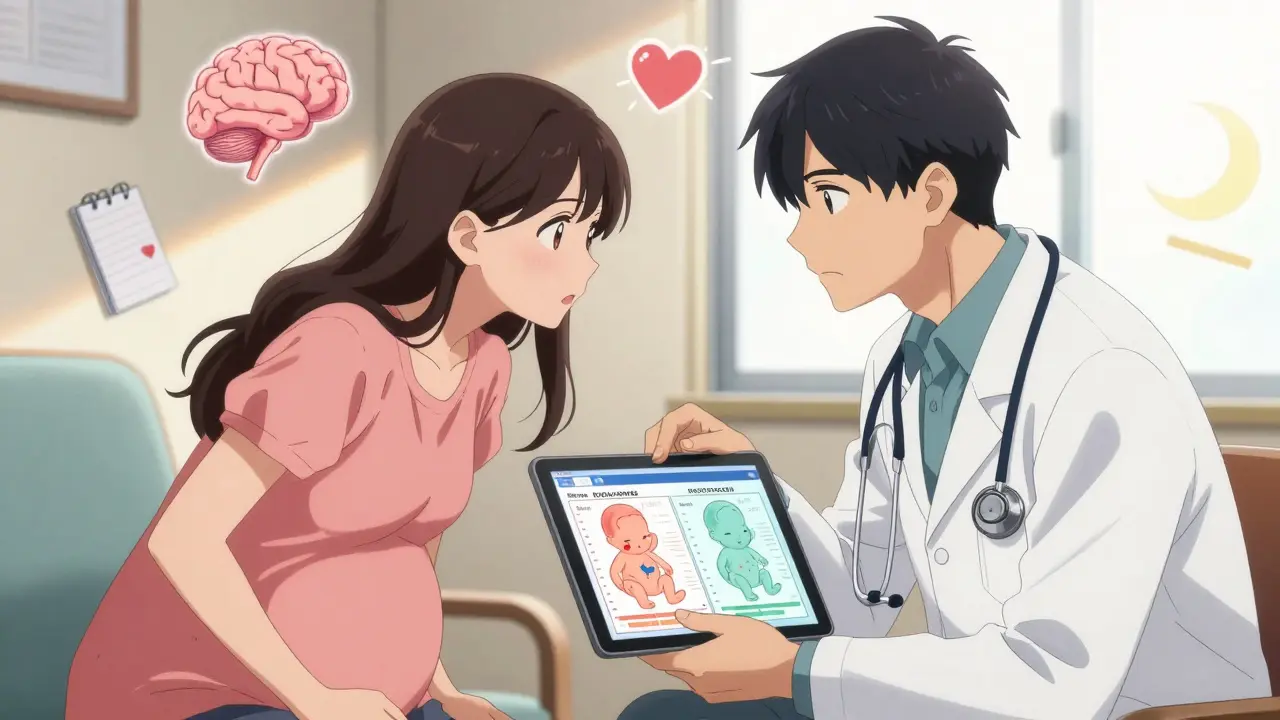
Let’s put numbers to fear. A 30% increase sounds scary - until you see what it means in real terms.
In unexposed pregnancies, about 2.87 out of every 100 babies have a major birth defect. With benzodiazepine use, that number rises to 3.81. That’s an extra 0.94 cases per 100 pregnancies. For heart defects, it’s about 14 extra cases per 1,000 births. For rare defects like anophthalmia? The baseline risk is about 1 in 10,000. With alprazolam, it jumps to roughly 4 in 10,000.
That’s still rare. But rare doesn’t mean harmless. And when you’re carrying a child, even small risks matter.
Why Do Some Studies Say There’s No Risk?
You’ve probably heard conflicting things. One study says yes, another says no. That’s because of something called “confounding by indication.”
Here’s how it works: Women who take benzodiazepines during pregnancy often have severe anxiety, depression, or chronic insomnia. Those conditions themselves - not the drugs - can increase the risk of preterm birth or low birth weight. So if a study doesn’t properly separate the effects of the drug from the effects of the illness, it looks like the drug is harmless.
The 2022 PLOS Medicine study tackled this head-on. They compared women who took benzodiazepines with women who didn’t - but also matched them by severity of anxiety, age, income, smoking status, and other factors. Even then, the risks remained. That’s why experts now take this study seriously. It’s the largest, most carefully designed one so far.
What Do Experts Actually Recommend?
Guidelines are clear: avoid benzodiazepines in the first trimester if you can.
The American College of Obstetricians and Gynecologists (ACOG) says these drugs “may be used cautiously for short-term treatment” - but only after other options fail. The European Medicines Agency says to avoid them entirely in early pregnancy. Canada’s guidelines say the same: “Generally avoid.”
And here’s the most important part: Do not stop taking benzodiazepines suddenly. Quitting cold turkey can trigger seizures, severe anxiety, or even psychosis - which are dangerous for both you and your baby.
If you’re on benzodiazepines and planning a pregnancy - or just found out you’re pregnant - talk to your doctor. Together, you can:
- Review which drug you’re taking (alprazolam carries the highest risk)
- Assess your dose (higher doses = higher risk)
- Consider safer alternatives like cognitive behavioral therapy (CBT) for anxiety or sleep hygiene for insomnia
- Gradually taper off, if needed, under medical supervision

What Are the Safer Alternatives?
You don’t have to suffer in silence. There are effective, drug-free options:
- Cognitive Behavioral Therapy (CBT) - proven to reduce anxiety and insomnia as effectively as medication, with no risk to the baby
- Mindfulness and meditation - studies show they lower stress hormones and improve sleep quality
- Regular exercise - even 20 minutes of walking a day improves mood and sleep
- Improved sleep hygiene - no screens before bed, consistent bedtime, cool dark room
- Support groups - connecting with other pregnant women who’ve been there helps reduce isolation
Some antidepressants - like sertraline - are considered safer than benzodiazepines during pregnancy. But again, it’s not one-size-fits-all. Your mental health history, symptoms, and past responses to treatment all matter.
What Should You Do Right Now?
If you’re currently taking a benzodiazepine and pregnant:
- Don’t panic. The absolute risk is low, even if the relative risk is higher.
- Don’t stop suddenly. This can be dangerous.
- Call your doctor. Ask: “Is this the right drug for me right now? Is my dose the lowest possible? Are there safer options?”
- Start non-drug strategies today. Even small changes can help reduce your need for medication.
If you’re trying to get pregnant and taking benzodiazepines:
- Start planning now. Tapering safely takes weeks or months.
- Work with a psychiatrist and an OB-GYN together.
- Consider therapy before conception - it’s easier to build skills before pregnancy hits.
What About Breastfeeding?
Some benzodiazepines pass into breast milk. But the amounts are usually very small. Short-acting ones like lorazepam and oxazepam are preferred over long-acting ones like diazepam. Still, watch your baby for signs of drowsiness, poor feeding, or breathing trouble. If you notice anything unusual, call your pediatrician.
Many mothers successfully breastfeed while on low-dose, carefully managed benzodiazepines. But again - it’s not risk-free. The safest path is to reduce or eliminate use before delivery if possible.
Can I take benzodiazepines during pregnancy if I have severe anxiety?
Yes - but only if the benefits clearly outweigh the risks. Severe, untreated anxiety can harm both mother and baby. If therapy and safer medications haven’t worked, a short-term, low-dose prescription under close supervision may be necessary. Never self-prescribe or adjust your dose without medical guidance.
Is alprazolam (Xanax) more dangerous than other benzodiazepines during pregnancy?
Yes. Multiple studies, including the CDC’s, show alprazolam has the strongest link to specific birth defects like anophthalmia, microphthalmia, and esophageal atresia. If you’re pregnant or planning to be, switching to a different benzodiazepine like lorazepam - under medical supervision - may reduce risk.
What if I took benzodiazepines before I knew I was pregnant?
Many women do. The key is to stop taking them as soon as possible and get into prenatal care. Most babies exposed in early pregnancy are born healthy. A detailed ultrasound at 18-22 weeks can check for major structural issues. Don’t blame yourself - focus on what you can do now.
Are there any benzodiazepines considered safe during pregnancy?
No benzodiazepine is considered completely safe. But some - like lorazepam and oxazepam - have less evidence of harm and are shorter-acting, meaning they clear from the body faster. Still, they’re not first-line choices. Non-drug treatments are always preferred.
How long should I wait after stopping benzodiazepines before trying to conceive?
It depends on the drug and your dose, but most experts recommend at least 4-6 weeks after your last dose to allow your body to fully clear the medication. For long-term users, a gradual taper over 2-3 months is safer. Work with your doctor to plan this safely.

Write a comment
Your email address will not be published.
Recent Posts
-
 Benzodiazepines and Birth Defect Risks: What Pregnant Women Need to Know February 23, 2026


8 Comments
Benzodiazepines during pregnancy? I get the concern, but let’s be real - if you’re that anxious you can’t function, the risk of not taking something is way higher than the stats suggest. I’m from South Africa, and we don’t have the luxury of 12 therapy sessions a month. Sometimes you do what keeps you alive. I’m not saying go wild - but don’t let fear paralyze you into suffering.
My sister took lorazepam through her first trimester and had a perfectly healthy baby. No defects. No issues. Just a mom who could breathe again.
Doctors should stop scaring people into silence. We need balance, not panic.
Okay but like… 🤯 ALPRAZOLAM IS A BIRTH DEFECT MACHINE??
That CDC data? 4x risk of MICROOPHTHALMIA?? 😳
I’m not even pregnant yet but I just stopped my Xanax prescription. Like, RIGHT NOW. My therapist is gonna kill me but I’d rather be a zen monk than have a baby born with no eyes. 🙏👁️🗨️
Also - if you’re still on benzos and pregnant? You’re basically rolling dice with your baby’s face. Not cool. Not cool at all. 🚫💊
Hey, I’m a nurse in Ohio and I’ve seen this play out a few times. The fear around benzos is real, but so is the fear of untreated anxiety. One mom I worked with had panic attacks so bad she couldn’t eat or sleep - and she was losing weight fast. She was on 0.5mg alprazolam daily. We switched her to CBT + low-dose sertraline. Baby was born at 38 weeks, 7lbs, no issues.
Point is - context matters. Not all benzos are equal. Not all patients are the same. Don’t throw the baby out with the bathwater. Talk to your OB and a psych specialist. Together. Not alone.
And yeah, sleep hygiene helps - but if you’ve tried it and still can’t breathe? That’s not laziness. That’s illness.
Listen - you don’t have to choose between being a good mom and being a healthy mom. That’s a false binary.
There’s this myth that if you take meds during pregnancy, you’re a bad parent. Nope. Taking care of your mental health IS parenting. You can’t pour from an empty cup - and anxiety empties the cup faster than anything.
I’m not saying go on Xanax like candy. But if you’re struggling, don’t let guilt silence you. Talk to someone. Try CBT. Try therapy. Try a safer med. But don’t suffer in silence. Your baby deserves a mom who can smile. Not one who’s just surviving.
You’re not alone. I’ve been there. You’ve got this.
The data is clear. Alprazolam = high risk. End of story.
Everyone’s acting like this is new info. Newsflash - we’ve known this since the 80s.
And the fact that doctors still prescribe it? That’s not negligence. That’s capitalism. Pharma pushes benzos. Insurance won’t cover CBT. So moms get pills. Not care.
Also - ‘low risk’? You mean like how smoking has a low risk of lung cancer? 0.94 extra cases per 100? That’s not low. That’s ‘I’m fine with it if it’s not my kid’.
And don’t get me started on ‘some benzos are safer’ - all of them cross the placenta. All of them affect fetal development. You’re just delaying the damage.
Stop pretending this is a medical dilemma. It’s a systemic failure.
They’re not telling you the whole truth. Did you know the FDA suppressed studies showing benzodiazepines cause neural tube defects? And the CDC? They’re funded by Big Pharma. I’ve seen the leaked emails.
They want you scared enough to take the pills - but not scared enough to stop. It’s a trap. A chemical trap.
My cousin’s baby had cleft palate. She was on diazepam. The hospital told her it was ‘genetics’. But I checked the records - no family history. No smoking. Just benzos.
They’re lying. And you’re being used. Wake up.
There’s a reason why Europe banned them. Why Canada says avoid. Why the WHO is silent. Because they know. And they don’t care.
Don’t trust your doctor. Trust your gut.
Look I’m all for science but this is just another case of liberal overreaction. We’ve been using these drugs for decades. Millions of babies born fine. Why are we making a federal case out of it? You want to be a mom? Then own your choices. Don’t let some study scare you into panic.
And don’t even get me started on CBT - it’s nice and all but what if you’re too depressed to leave the couch? You think therapy’s gonna fix that? Get real.
Stop treating pregnant women like fragile china. They’re not toddlers. They’re adults. Let them decide what’s best for them and their family.
Also - if you’re gonna use data, use the good data. Not the cherry-picked junk from PLOS.