

Cumulative Anticholinergic Burden Calculator
Select Your Medications
First-Generation Antihistamines (High Risk)
Second-Generation Antihistamines (Low Risk)
Bladder Control Medications
Antidepressants & Pain Relief
Other Common Medications
Your Score
Your current medication load poses minimal anticholinergic risk. Continue monitoring new additions.
Risk Thresholds
- 0-2 Low Risk
- 3-4 Moderate Risk
- 5-6 High Risk
- 7+ Critical Risk
You take your allergy pill in the morning. You take your sleep aid at night. Maybe you have a prescription for bladder control or depression. On paper, these seem like harmless, separate solutions to everyday problems. But inside your body, they are fighting for the same biological real estate. This collision creates what doctors call Cumulative Anticholinergic Burden, which is the combined toxic effect of taking multiple medications that block acetylcholine, a key neurotransmitter in the brain and nervous system. It is not just about one drug being too strong; it is about the quiet, compounding damage done when several weak forces add up to a crisis.
The most dangerous culprit hiding in plain sight? Over-the-counter antihistamines. Specifically, first-generation ones like diphenhydramine (Benadryl) or chlorpheniramine. We buy them because they are cheap, accessible, and familiar. We use them for sleep, for allergies, or for motion sickness. But we rarely think about their chemical fingerprint. When you mix these with other common prescriptions, you might be quietly accelerating cognitive decline, increasing your risk of falls, and setting the stage for hospital admission. Let’s look at why this happens and how to stop it before it starts.
What Is Acetylcholine and Why Does It Matter?
To understand the burden, you first need to understand the target. Acetylcholine is a critical neurotransmitter responsible for memory, learning, muscle control, and autonomic functions like heart rate and digestion. Think of it as the electrical signal that tells your brain cells to talk to each other and tells your muscles to move. In a healthy system, acetylcholine binds to receptors on nerve cells, triggering a response.
Anticholinergic drugs work by blocking those receptors. They sit in the lock so the key (acetylcholine) cannot turn. One drug doing this might cause dry mouth or mild drowsiness-side effects we often ignore. But when you take two, three, or four drugs that all block acetylcholine, the blockade becomes total. Your brain literally struggles to process information. For older adults, whose brains already have less reserve capacity, this isn't just a nuisance; it can mimic dementia.
The Silent Killer: First-Generation Antihistamines
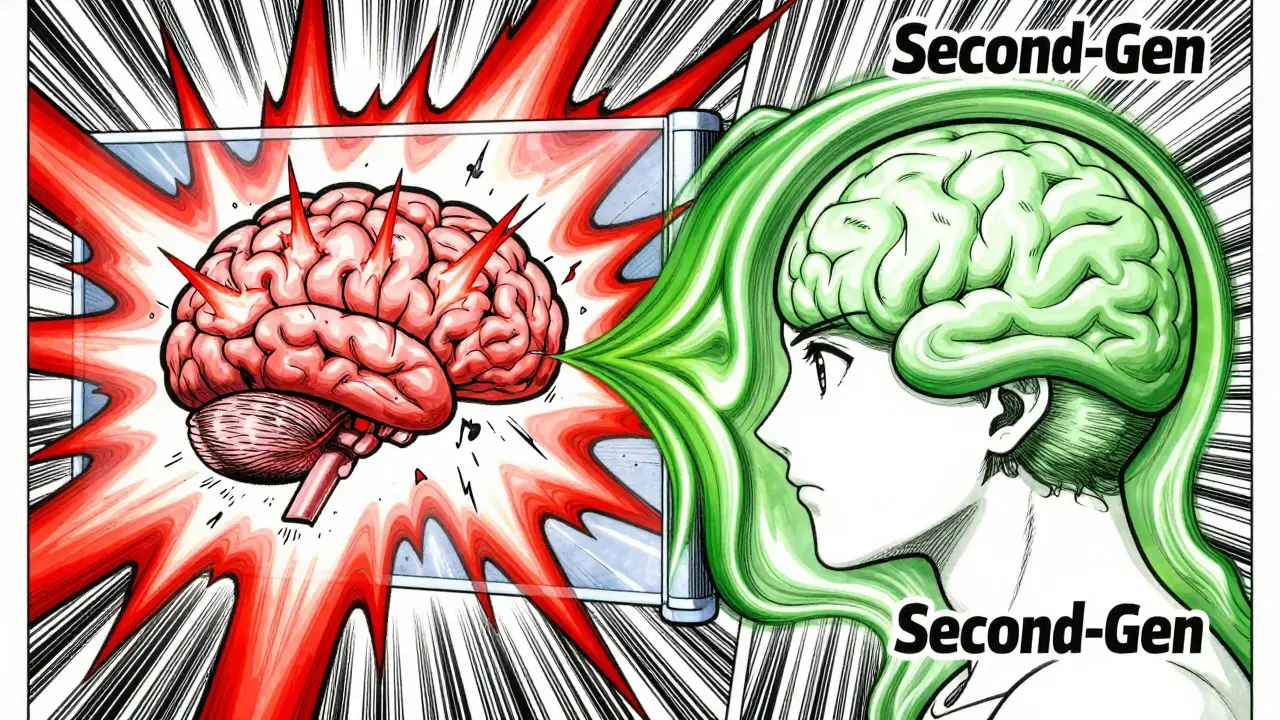
Not all antihistamines are created equal. This is where most people get tripped up. Second-generation antihistamines like loratadine (Claritin) or cetirizine (Zyrtec) were designed to stay out of the brain. They have minimal ability to cross the blood-brain barrier, meaning they treat your allergies without heavily disrupting your central nervous system. Their anticholinergic score is low (0-1).
First-generation antihistamines, however, are different beasts. Diphenhydramine (Benadryl), chlorpheniramine, and doxylamine flood the brain. They are potent anticholinergics. In clinical scoring systems like the Anti-Cholinergic Burden (ACB) Scale, developed by Dr. Malaz Boustani in 2008, these drugs carry a high score (2-3). Taking one nightly dose of Benadryl for sleep adds significant weight to your cumulative burden. If you also take an antidepressant or a bladder medication, you have crossed into danger zone territory.
| Medication Type | Common Examples | ACB Score | Brain Penetration |
|---|---|---|---|
| First-Generation | Diphenhydramine, Chlorpheniramine, Doxylamine | High (2-3) | High (Crosses blood-brain barrier easily) |
| Second-Generation | Loratadine, Cetirizine, Fexofenadine | Low (0-1) | Minimal (Stays mostly in peripheral tissues) |
How Doctors Measure the Danger
You cannot manage what you do not measure. The standard tool for this is the Anti-Cholinergic Burden (ACB) Scale. It assigns a numerical value to every medication based on its strength as an acetylcholine blocker.
- Score 0: No anticholinergic effect.
- Score 1: Mild effect (e.g., some diuretics, second-gen antihistamines).
- Score 2-3: Strong effect (e.g., first-gen antihistamines, tricyclic antidepressants, oxybutynin).
The magic number here is 3. Research from the IU Center for Aging Research shows that an ACB score of 3 or higher substantially increases risks. A study published in JAMA Internal Medicine in 2015 followed over 3,400 participants for seven years. They found that heavy cumulative use (>1,095 days) of strong anticholinergics was associated with a 54% increased risk of dementia. That is not a small correlation. That is a life-altering statistic.
Consider this scenario: A 70-year-old patient takes amitriptyline for nerve pain (Score 3) and uses diphenhydramine for sleep (Score 3). Their total score is 6. Even if they only take the Benadryl occasionally, the chronic presence of the antidepressant keeps their baseline risk elevated. Add in a bladder medication like oxybutynin (Score 3), and the score skyrockets. This is the "tipping point" where healthcare utilization spikes. Patients with high burdens are 33% more likely to be admitted to the hospital annually compared to those with no burden.
Who Is Most at Risk?
While anyone can experience side effects, the cumulative burden hits specific groups hardest.
- Older Adults (65+): Age-related changes in metabolism mean drugs stay in the body longer. The brain has fewer acetylcholine receptors to begin with, making it more vulnerable to blockade.
- Polypharmacy Patients: If you take five or more daily medications, the odds of overlapping anticholinergic effects rise sharply. The American Geriatrics Society notes that 50% of older adults take at least five prescriptions daily.
- Those with Early Cognitive Decline: If you are already noticing memory lapses, adding anticholinergics can accelerate the slide into functional impairment.
It is also worth noting that many of these drugs are available over-the-counter. You don’t need a doctor’s permission to buy Benadryl. This makes self-monitoring difficult. Many patients report that their doctors never warned them that "allergy pills could cause memory problems." The assumption that OTC means safe is a dangerous myth in geriatric care.
Symptoms You Should Not Ignore
Anticholinergic toxicity doesn't always look like a dramatic overdose. Often, it looks like "just getting old." Family members might attribute confusion to dementia, or stiffness to arthritis. But look closer. The hallmark symptoms include:
- Cognitive Fog: Trouble concentrating, short-term memory loss, or sudden delirium.
- Physical Instability: Dizziness, unexplained falls, or balance issues.
- Peripheral Effects: Dry mouth, blurred vision, constipation, urinary retention, and rapid heartbeat.
If you see a cluster of these symptoms appearing after starting a new medication-or even after years of stable use-it is time for a review. In one case study from NPS MedicineWise, a 72-year-old patient with an ACB score of 5 regained cognitive function and reduced falls by 75% after just six months of deprescribing. The change wasn't magic; it was chemistry.

How to Reduce Your Burden
Reducing anticholinergic burden is not about stopping all medication. It is about smart substitution and tapering. Here is a practical approach:
- Audit Your Meds: Write down every prescription, vitamin, and OTC drug you take. Include sleeping aids and cold remedies.
- Swap Antihistamines: If you use Benadryl for allergies, switch to loratadine or cetirizine. If you use it for sleep, try melatonin or cognitive behavioral therapy for insomnia (CBT-I) instead.
- Talk to Your Pharmacist: Pharmacists are the experts in drug interactions. Ask them: "Do any of my meds have anticholinergic properties?"
- Taper, Don't Stop: Suddenly stopping certain drugs can cause withdrawal. Work with your doctor to create a slow reduction plan. Studies show 65% of patients successfully transition within 4-8 weeks with structured support.
The goal is to keep your ACB score below 3. For many, this means eliminating one or two high-score drugs entirely. The relief can be profound. Patients often report clearer thinking, better sleep quality, and improved mobility within weeks of reducing the load.
The Future of Medication Safety
We are finally waking up to this issue. Electronic health records (EHRs) are beginning to flag high anticholinergic scores automatically. The NHS England and CMS in the US are linking reduced burden to better quality ratings for healthcare providers. By 2027, it is predicted that 80% of healthcare systems will routinely screen for this burden in patients over 65. But until then, the responsibility lies with you. Knowledge is your best defense against iatrogenic harm-harm caused by medical treatment itself.
Is it safe to take Benadryl occasionally?
For younger, healthy adults, occasional use is generally safe. However, for adults over 65, even occasional use can contribute to cumulative burden if taken alongside other medications. It is best to avoid first-generation antihistamines entirely in older age groups and opt for second-generation alternatives.
Can anticholinergic drugs cause permanent dementia?
Research suggests that long-term, heavy use of strong anticholinergics significantly increases the risk of developing dementia. While some cognitive effects may reverse upon discontinuation, prolonged exposure may lead to irreversible neuronal damage. Reducing burden early is crucial for prevention.
What are non-anticholinergic alternatives for sleep?
Alternatives include melatonin supplements, cognitive behavioral therapy for insomnia (CBT-I), and good sleep hygiene practices. Some doctors may prescribe non-anticholinergic sleep aids like ramelteon, but lifestyle changes are often the most effective long-term solution.
How do I calculate my own ACB score?
You can find online calculators based on the ACB Scale. Enter your medications, and the tool will assign a score to each. Sum the scores to get your total. If your score is 3 or higher, consult your doctor or pharmacist immediately to review your regimen.
Are second-generation antihistamines completely risk-free?
They are much safer regarding anticholinergic burden, but no drug is entirely risk-free. They can still cause side effects like headache or stomach upset. However, they do not carry the same high risk of cognitive decline or falls as first-generation options.

Recent Posts
-
 How to Use Price Transparency Tools to Compare Drug Costs December 9, 2025
 -
 Buy Cheap Generic Lisinopril Online - Safe UK Guide October 5, 2025