
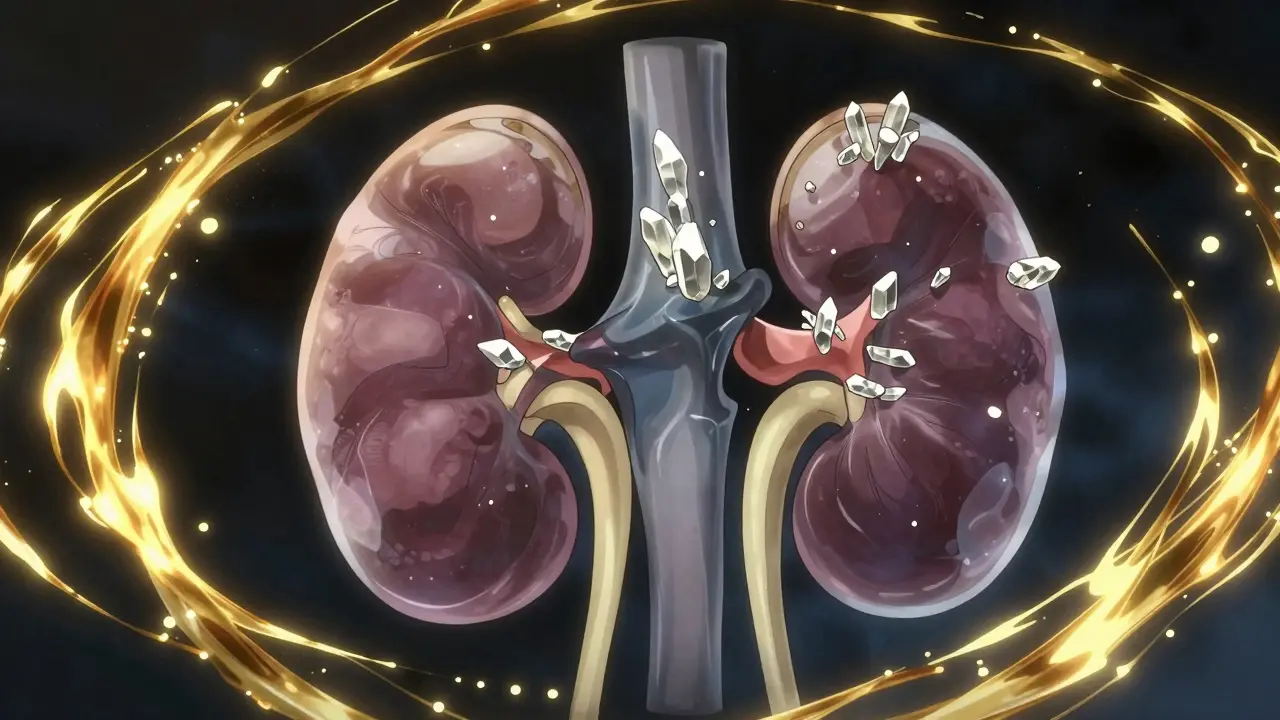
Imagine taking a medication to prevent a stroke, only to find that the very organ meant to clear that drug from your system-the kidneys-isn't keeping up. When kidneys slow down, medications like DOACs can build up in the bloodstream, turning a life-saving treatment into a dangerous bleeding risk. For millions of people with chronic kidney disease, the challenge isn't just taking the pill, but getting the dose exactly right.
Whether you are a patient or a caregiver, understanding how renal function changes the way blood thinners work is critical. The goal is a delicate balance: enough medication to stop a clot, but not so much that you risk a major bleed. Because these drugs are cleared by the kidneys, a "standard dose" for one person could be an overdose for someone with impaired renal function.
The Basics of Modern Blood Thinners
For decades, warfarin was the only real option for long-term anticoagulation. However, it required constant blood tests and strict diet restrictions. Enter Direct Oral Anticoagulants is a class of medications that provide predictable blood thinning without the need for routine monitoring. Commonly known as DOACs, these drugs target specific clotting factors in the blood to prevent strokes and systemic embolism.
Today, these drugs have largely replaced older options. In fact, recent data shows they now account for about 87% of oral anticoagulant prescriptions for stroke prevention in atrial fibrillation. While their predictability is their biggest selling point, that predictability relies on the kidneys working correctly. When renal function drops, the drug stays in the body longer, increasing the risk of side effects.
Why Your Kidney Function Matters for Dosing
Not all blood thinners are handled by the body the same way. Some are cleared entirely by the liver, while others rely heavily on the kidneys. In the case of DOACs, renal elimination pathways are central to how the drug leaves your system. If your kidneys are impaired, the drug "stacks up," which can lead to supratherapeutic levels-meaning there is too much medicine in your blood.
This is why doctors don't just look at a general health chart; they need a specific number. Most clinicians use Creatinine Clearance is a measurement of the rate at which the kidneys clear creatinine from the blood, used to estimate the glomerular filtration rate. This is typically calculated using the Cockcroft-Gault formula.
Crucially, you'll often see another number on your lab report called eGFR (estimated Glomerular Filtration Rate). While eGFR is great for staging kidney disease, it is not the gold standard for dosing DOACs. Following FDA guidelines, the Cockcroft-Gault formula is the required method because it accounts for age, weight, and serum creatinine more accurately for these specific medications.
Breaking Down the Different DOACs and Their Adjustments
Each blood thinner has its own set of rules. Using the wrong dose can lead to "grim consequences," ranging from a missed stroke (under-dosing) to life-threatening gastrointestinal bleeding (over-dosing). Here is how the most common options are handled when kidney function declines.
Apixaban (Eliquis) is often seen as the most flexible option for those with kidney issues. It uses a set of specific criteria for dose reduction. You usually move from 5 mg twice daily to 2.5 mg twice daily if you meet at least two of these: you're 80 or older, weigh 60 kg or less, or have a serum creatinine level of 1.3 mg/dL or higher.
Rivaroxaban (Xarelto) is another popular choice, but it's generally not recommended for patients in Stage 5 Chronic Kidney Disease or those on dialysis. It requires a dose reduction as renal function dips, and it's typically contraindicated if creatinine clearance falls below 15 mL/min.
Dabigatran (Pradaxa) is heavily dependent on the kidneys. If your CrCl is between 15 and 30 mL/min, the dose is often slashed to 75 mg twice daily. Below 15 mL/min, it is generally avoided entirely.
Edoxaban (Savaysa) also requires a lower dose (30 mg daily) when CrCl is between 15 and 50 mL/min. Interestingly, some studies have shown that it can actually be less effective in people with very poor renal function compared to those with normal function.
| Medication | Standard Dose (AF) | Renal Adjustment Trigger | Contraindicated At |
|---|---|---|---|
| Apixaban | 5 mg twice daily | 2 criteria met (Age, Weight, Creatinine) | CrCl < 15 mL/min (mostly) |
| Rivaroxaban | 20 mg once daily | CrCl 15-50 mL/min | CrCl < 15 mL/min |
| Dabigatran | 150 mg twice daily | CrCl 15-30 mL/min | CrCl < 15 mL/min |
| Edoxaban | 60 mg once daily | CrCl 15-50 mL/min | CrCl < 15 mL/min |
The ESRD Dilemma: Dialysis and Blood Thinners
End-Stage Renal Disease (ESRD) is where the medical community is most divided. For a long time, warfarin was the only choice, but it's often linked to higher rates of intracranial hemorrhage and vascular calcification in dialysis patients. This has led many doctors to look toward DOACs, specifically apixaban.
Some evidence suggests apixaban may be safer than warfarin for those on hemodialysis. For example, some clinical reports have shown major bleeding rates as low as 1.8% with low-dose apixaban compared to 3.7% with warfarin. However, the data isn't perfect. The AXIOS trial had to be stopped early due to poor enrollment, leaving a gap in our high-quality evidence.
Because of this, you might find that a cardiologist in the US is more comfortable prescribing a DOAC for an ESRD patient than a doctor in Europe, where guidelines tend to be more restrictive. The key is frequent monitoring. If you are on dialysis, your "safe zone" for dosing is much narrower than for someone with mild kidney disease.

Avoiding Common Pitfalls and Side Effects
Dosing errors are surprisingly common. One study found that nearly 37% of DOAC prescriptions for people with kidney disease contained some form of dosing error. This usually happens when doctors rely on eGFR instead of the Cockcroft-Gault formula or fail to account for a patient's low body weight.
To avoid these mistakes and the resulting side effects-like sudden bruising, blood in the urine, or severe GI bleeding-keep these rules of thumb in mind:
- Update Your Weight: Since the dosing formula uses your weight, a significant drop in weight (common in advanced kidney disease) can change your required dose.
- Annual Checks: Your renal function can change over a year. Ensure your doctor checks your creatinine levels at least once a year, or more often if you're feeling unwell.
- The "ABCs" of Apixaban: Remember the triggers for dose reduction: Age (>=80), Body weight (<=60kg), and Creatinine (>=1.3 mg/dL).
Many health systems are now using "anticoagulation clouds"-virtual clinics that monitor patient kidney function in real-time and alert doctors when a dose needs to be adjusted. This technology has been shown to reduce adverse events by over 20%.
Can I take DOACs if I am on hemodialysis?
It depends on the medication and your doctor's preference. Apixaban is the most commonly used DOAC in ESRD patients and some evidence suggests it may be safer than warfarin. However, rivaroxaban and dabigatran are generally not recommended. You must have a specific dosing plan managed by a specialist.
Why can't my doctor just use my eGFR?
eGFR is a general estimate of kidney function. However, the clinical trials that determined the safe doses for DOACs used the Cockcroft-Gault formula to calculate creatinine clearance. To ensure the dose matches the evidence used for FDA approval, doctors must use the same formula.
What are the signs that my dose is too high?
The most critical sign is unexpected bleeding. This includes frequent nosebleeds, blood in the stool (which may look like coffee grounds or be bright red), bruising easily without a known cause, or blood in the urine. If you notice these, contact your provider immediately as your kidneys may be clearing the drug too slowly.
Does weight affect my blood thinner dose?
Yes, significantly. For medications like apixaban, weighing 60 kg or less is one of the three primary criteria used to determine if a dose should be reduced from 5 mg to 2.5 mg. Because weight is a variable in the Cockcroft-Gault equation, any major weight change can trigger a need for a new dose calculation.
Are DOACs safer than warfarin for kidney patients?
For most patients with a CrCl above 30 mL/min, DOACs are considered at least as safe and effective as warfarin. In advanced kidney disease, apixaban may offer a lower risk of major bleeding compared to warfarin, though some experts still prefer warfarin for very specific ESRD cases due to a larger historical data set.
Next Steps for Patients and Caregivers
If you have been diagnosed with kidney impairment and are taking a blood thinner, your first step is to ask your doctor: "Was my dose calculated using the Cockcroft-Gault formula?" Knowing this ensures that the most accurate method was used.
For those with fluctuating kidney health (such as those with heart failure who may experience acute kidney injury), a more frequent monitoring schedule is necessary. Instead of annual checks, your doctor might suggest labs every three months to ensure you haven't crossed into a new dosing category.
Finally, keep a simple log of your weight and any new bruising. Since these are the two most practical indicators of how a DOAC is interacting with your renal function, providing this data to your pharmacist or cardiologist can prevent a dosing error before it becomes a medical emergency.

Write a comment
Your email address will not be published.
Recent Posts
-
 Montelukast: Tackling Asthma-Related Fatigue Effectively March 11, 2025
 -
 How to Prevent Accidental Medication Poisoning in Kids and Toddlers January 11, 2026



9 Comments
cockcroft-gault is old school but still the standard here
It is frankly amusing that we are still debating the merits of the Cockcroft-Gault formula in the modern era. While the post correctly identifies it as the FDA standard, anyone with a rudimentary understanding of nephrology knows that its reliance on total body weight is fundamentally flawed for obese or cachectic patients. The discrepancy between eGFR and CrCl is a known variable, yet the medical establishment clings to these outdated calculations because they are baked into the original trial designs. One must realize that the pharmacological evidence is only as robust as the methodology used to categorize the cohorts. If the trial used an outdated formula, the dosing remains tethered to that antiquity regardless of our current physiological insights. It is a systemic failure of clinical trial design that we now pass on to the patient as a "gold standard."
who cares about formulas when the whole system is rigged anyway?? its all just a way to keep us dependant on pills while the real causes of kidney failur are ignored... basically we are just numbers in a spreadsheet for big pharma to play with. why do we trust a formula from the 1970s just becaus some gov agency says so?? its just a loop of mediocrity and we just follow along like sheep lol
This is such a great guide!!! Everyone should really double check their weights!!! It's so easy to miss those little details but they make a huge difference in staying safe!!! Keep it up!!!
The mention of "anticoagulation clouds" is a huge red flag. Imagine giving a software program total control over your medication dosage based on "real-time" data. It is the perfect setup for a massive systemic error or, worse, a way for companies to remotely adjust doses to see how much a patient can take before they bleed out. They want us tracked and monitored 24/7 under the guise of safety.
It is truly exhausting to see how many people ignore the spiritual connection between the body and the kidneys... The physical manifestation of toxicity is often just a mirror of our internal chaos!!! If you are simply relying on a table of doses without addressing the vibrational frequency of your healing process, you are merely putting a bandage on a void!!! Precision in dosing is fine, but the lack of holistic awareness in these medical discussions is just... disheartening!!!
The duality of medicine is quite fascinating. We seek certainty in a number like CrCl, yet we accept that the number itself is an estimation. It is a paradox where the map is mistaken for the territory. Most people just follow the prescription without questioning the philosophy of the treatment. One must wonder if the obsession with avoiding a bleed outweighs the existential dread of a stroke. In the end, we are all just managing the decay of our biological machines with varying degrees of mathematical precision.
Please remember to be kind to yourself during this process. Monitoring your health is a brave step toward longevity. You've got this!
I've been through a similar struggle with my dad's meds. It really helps to have a dedicated folder with all the latest lab results so you can show the doctor exactly where the numbers are trending. It takes a lot of the stress out of those quick clinic visits.