
Imagine spending millions of dollars and years of work to prove a brand-name drug’s patent is invalid. You win the legal battle. The FDA U.S. Food and Drug Administration, the federal agency responsible for protecting public health by ensuring the safety and efficacy of drugs tentatively approves your generic version. But instead of rushing to sell it, you wait. Why? Because under current law, that delay might actually protect your profits longer than launching immediately would.
This counterintuitive strategy is at the heart of the FDA's 180-day exclusivity provision. It is one of the most powerful-and controversial-incentives in the pharmaceutical industry. For first generic applicants, this rule offers a temporary monopoly on selling a cheaper alternative to a blockbuster brand-name drug. But for patients and insurers, it can mean delayed access to affordable medication.
What Is 180-Day Exclusivity?
To understand why this matters, we have to look back at the Hatch-Waxman Act Officially known as the Drug Price Competition and Patent Term Restoration Act of 1984, legislation designed to balance innovation incentives for brand-name companies with accelerating generic competition. Signed into law in 1984, this act created a pathway for generic manufacturers to get their drugs approved without repeating expensive clinical trials. They do this by filing an Abbreviated New Drug Application (ANDA) An application submitted to the FDA seeking approval to market a generic version of a previously approved drug product.
The catch? Many brand-name drugs are still protected by patents. To launch a generic before those patents expire, a company must file a Paragraph IV Certification A statement in an ANDA asserting that a listed patent is invalid, unenforceable, or will not be infringed by the generic product. This certification essentially tells the brand owner: "We think your patent is weak, and we’re going to challenge it in court."
If the FDA accepts the ANDA and no other applicant has challenged the patent first, the filer becomes the "first applicant." If they succeed, they earn 180 days of marketing exclusivity. During this window, the FDA cannot approve any other competing generic versions of that same drug. It is a pure financial reward for taking the risk of a patent lawsuit.
How the Clock Starts (And Why It Gets Complicated)
You might expect the 180-day clock to start ticking the moment the FDA says "yes" to your application. In reality, the rules are far more complex, and often manipulated.
Under Section 505(j)(5)(B)(iv) of the Federal Food, Drug, and Cosmetic Act, the exclusivity period begins on the earliest of two events:
- The date the first applicant begins commercial marketing of the generic drug.
- The date of a court decision finding the patent invalid, unenforceable, or not infringed.
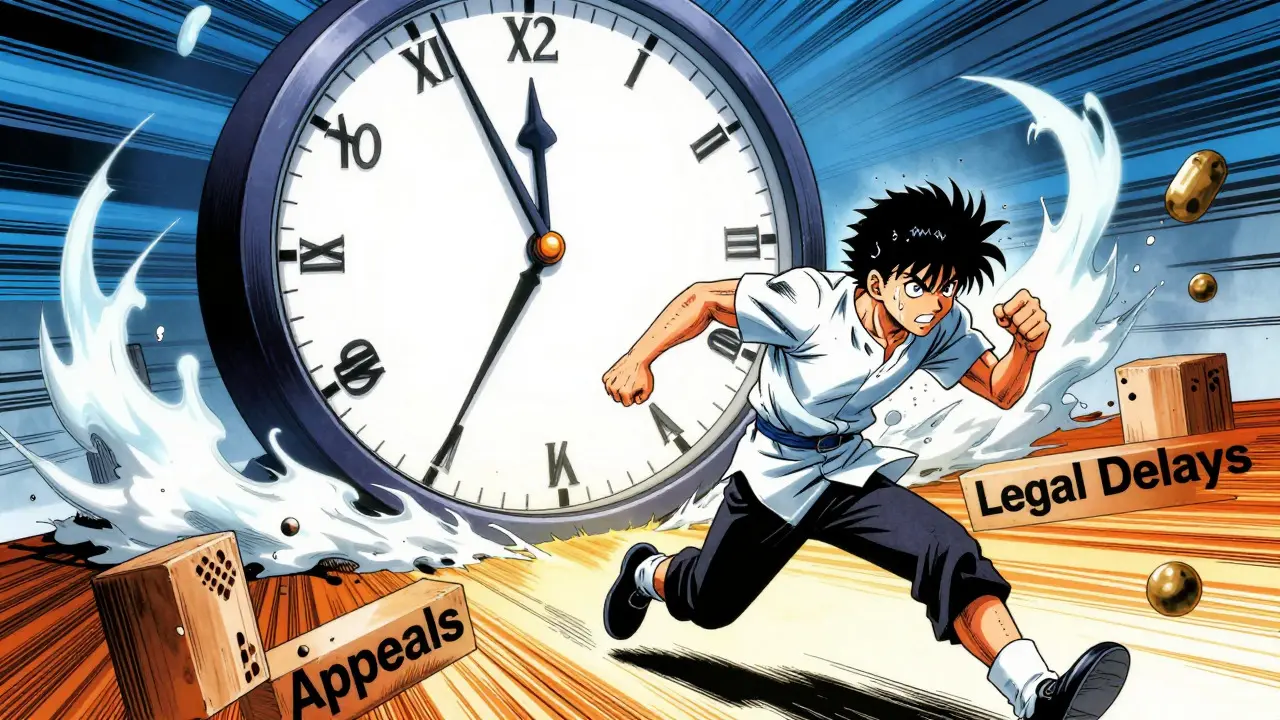
This second trigger is where things get messy. If a court rules in favor of the generic manufacturer, the clock starts running-even if the brand-name company appeals the decision. Since appeals can take years, the 180-day exclusivity period can effectively run out while the legal battle is still ongoing. By the time the appeal is resolved and the generic is finally allowed to hit shelves, the exclusivity window may have already expired.
So, savvy generic manufacturers often choose not to launch immediately after winning a court case. They wait. They let the clock tick during the appeal process. This strategy, documented extensively by legal analysts, allows them to block competitors from entering the market while preserving their own right to be the sole generic seller once the dust settles.
The Risk of Forfeiture
It is not all free money. The Medicare Modernization Act of 2003 Legislation that introduced forfeiture provisions to the 180-day exclusivity system to prevent abuse and ensure timely market entry added teeth to the regulation. If a first applicant wins the patent challenge but fails to bring the drug to market within specific timeframes, they lose their exclusivity rights. This is called forfeiture.
Forfeiture happens if:
- The first applicant fails to market the drug within 75 days of receiving a Notice of Commercial Marketing (NOCM).
- The applicant fails to obtain tentative approval within 30 months of submitting the patent challenge.
Data from the Generic Pharmaceutical Association shows that approximately 35% of first applicants forfeit their exclusivity. When this happens, the exclusivity does not vanish; it passes to the next eligible applicant who is ready to launch. This creates a high-stakes game of chicken among generic manufacturers.
| Feature | Current System (Paragraph IV) | Proposed CGT Model |
|---|---|---|
| Trigger Event | Court ruling OR commercial marketing | Commercial marketing only |
| Duration Control | Can be manipulated via delays/appeals | Fixed 180 days from launch |
| Incentive Structure | Rewards litigation speed, not necessarily sales | Rewards actual market entry |
| Patient Impact | Often delays generic access due to strategic waiting | Accelerates availability of lower-cost options |
Why Manufacturers Love It (And Critics Hate It)
For generic companies like Teva One of the world's largest specialty generic pharmaceutical companies, Viatris A global healthcare company formed by the merger of Mylan and Upjohn, or Sandoz The generic and biosimilar division of Novartis, 180-day exclusivity is a goldmine. During this period, they face no direct competition from other generics. While prices drop significantly compared to the brand name-often to 15-20% of the original cost-they remain much higher than the 9-12% seen when multiple generics flood the market later.
However, critics argue the system is broken. Dr. Aaron S. Kesselheim from Harvard Medical School testified that the current setup is "gamed" by both brands and generics to delay competition. The Federal Trade Commission found nearly 150 instances between 2015 and 2020 where the exclusivity was used strategically to block entry rather than accelerate it. Patients end up paying billions in excess costs because the cheap generic isn’t available as soon as it legally could be.
The Future: Moving Toward the CGT Model
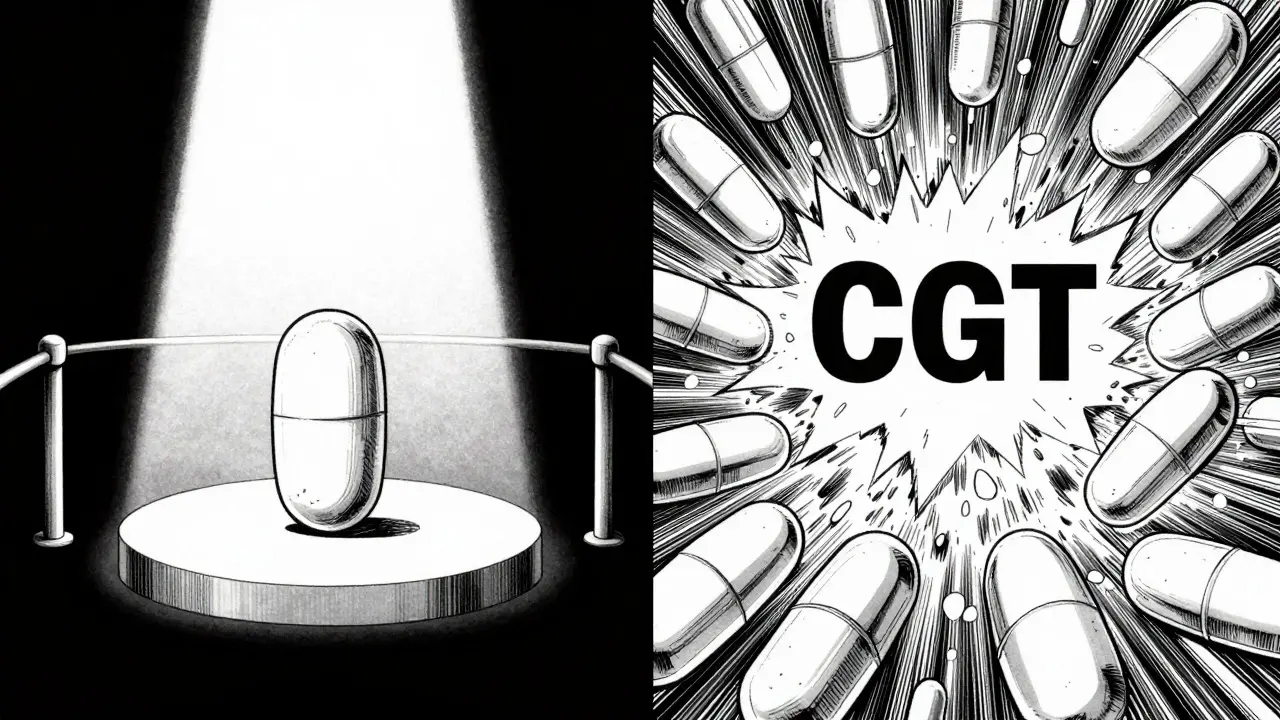
Recognizing these flaws, regulators are looking to change the rules. The FDA has proposed adopting the Competitive Generic Therapy (CGT) A regulatory framework established by the FDA Reauthorization Act of 2017 that grants exclusivity based on commercial marketing rather than patent litigation outcomes model for all Paragraph IV challenges. Under the CGT regime, the 180-day clock only starts when the drug is actually sold to patients. This eliminates the loophole of letting the clock run during appeals.
If implemented, this change could accelerate generic entry by over eight months per drug, saving consumers billions annually. However, smaller generic manufacturers worry this might reduce the incentive to take on risky patent challenges in the first place. Currently, 63% of small generic firms cite 180-day exclusivity as their primary reason for pursuing these high-risk cases.
Strategic Takeaways for Stakeholders
Whether you are a generic manufacturer, a brand-name company, or a policy maker, understanding the mechanics of 180-day exclusivity is crucial. Here is what you need to keep in mind:
- Timing is Everything: Being the first to file a Paragraph IV certification is just the first step. Managing the timeline between tentative approval, court rulings, and commercial launch determines whether you keep or lose your exclusivity.
- Monitor Forfeiture Triggers: If you are a second-in-line applicant, watch closely. If the first applicant misses the 75-day marketing window after an NOCM, your chance to enter the market opens up.
- Watch Legislative Changes: With proposals like the Preserve Access to Affordable Generics and Biosimilars Act moving through Congress, the rules governing how the clock starts may shift dramatically in the coming years.
- Price Dynamics Matter: Understand that pricing during the exclusivity period is significantly higher than post-exclusivity. Plan your supply chain and marketing budgets accordingly.
The 180-day exclusivity provision remains a cornerstone of the U.S. generic drug landscape. It rewards boldness but punishes hesitation. As the regulatory environment evolves, the ability to navigate these complexities will separate the successful players from the rest.
Who qualifies for FDA 180-day exclusivity?
The first generic applicant to file an Abbreviated New Drug Application (ANDA) containing a Paragraph IV certification challenging a listed patent qualifies. If multiple applicants file on the same day, they share the exclusivity. To maintain it, they must commercially market the drug within specific statutory timeframes.
When does the 180-day clock start ticking?
Under current law, the clock starts on the earliest of two dates: the date the first applicant begins commercial marketing of the generic drug, or the date of a court decision finding the patent invalid, unenforceable, or not infringed. This dual trigger often leads to strategic delays by manufacturers.
What causes a generic manufacturer to forfeit exclusivity?
Forfeiture occurs if the first applicant fails to market the drug within 75 days of receiving a Notice of Commercial Marketing (NOCM) or fails to obtain tentative approval within 30 months of the patent challenge. Approximately 35% of first applicants currently forfeit their rights.
How is the 180-day exclusivity different from the CGT model?
The traditional 180-day exclusivity can start based on court rulings, allowing manufacturers to delay launch and let the clock run during appeals. The Competitive Generic Therapy (CGT) model, used for certain therapies, triggers the exclusivity only upon actual commercial marketing, ensuring the 180 days represent real market access.
Does 180-day exclusivity guarantee lower drug prices?
Not immediately. During the exclusivity period, the single generic seller faces no competition, so prices typically settle at 15-20% of the brand price. Significant price drops to 9-12% usually occur only after the exclusivity period ends and multiple generic competitors enter the market.

Recent Posts
-
 How Fatty Foods Boost Absorption of Lipid-Based Medications November 16, 2025
 -
 Montelukast: Tackling Asthma-Related Fatigue Effectively March 11, 2025