

Imagine buying a life-saving medication, only to find out later it was fake. This isn't just a scary movie plot; it is a real danger that costs lives and billions of dollars every year. Track-and-trace systems are the primary defense against this threat. By using lot numbers and batch numbers, along with unique serial codes, the pharmaceutical industry creates an unbreakable chain of custody from the factory floor to your medicine cabinet.
You might wonder why a simple number on a box matters so much. The answer lies in precision. Without these identifiers, a single contaminated batch could mean recalling every product a company ever made. With them, you can isolate the problem instantly. This article breaks down how these tracking methods work, why they are legally mandatory, and how they protect you from counterfeit drugs.
The Anatomy of a Drug Identifier
To understand track-and-trace, you first need to know what you are looking at. Most people glance at a barcode and move on, but those numbers tell a specific story about your medication's journey.
A lot number (or batch number) groups together products made under identical conditions. Think of it like a loaf of bread baked in the same oven at the same time. If one slice goes bad, you know the whole loaf is suspect. In pharmaceuticals, this lot includes raw materials, manufacturing dates, shift times, and facility locations. According to industry standards, over 89% of perishable and sensitive goods integrate expiration dates directly into this lot scheme to ensure safety.
Serial codes, however, are different. They identify individual units. While a lot number tracks a group of 10,000 pills, a serial code tracks that specific bottle sitting on your shelf. This distinction is crucial for high-value medications or complex medical devices where warranty history and individual service records matter.
| Feature | Lot Number (Batch) | Serial Code |
|---|---|---|
| Scope | Group of identical items | Single unique item |
| Primary Use | Recalls, quality control, expiration tracking | Warranty, anti-counterfeiting, individual asset management |
| Data Included | Production date, facility, material specs | Unique ID, manufacturing timestamp, destination |
| Industry Adoption | Mandatory in 92% of pharma/food chains | High in luxury goods, aerospace, and regulated meds |
Why Track-and-Trace Fights Counterfeit Drugs
The global fight against counterfeit drugs relies heavily on visibility. Fake medicines often enter the supply chain through unauthorized distributors or stolen shipments. Without a digital trail, it is nearly impossible to prove whether a drug is genuine once it leaves the manufacturer.
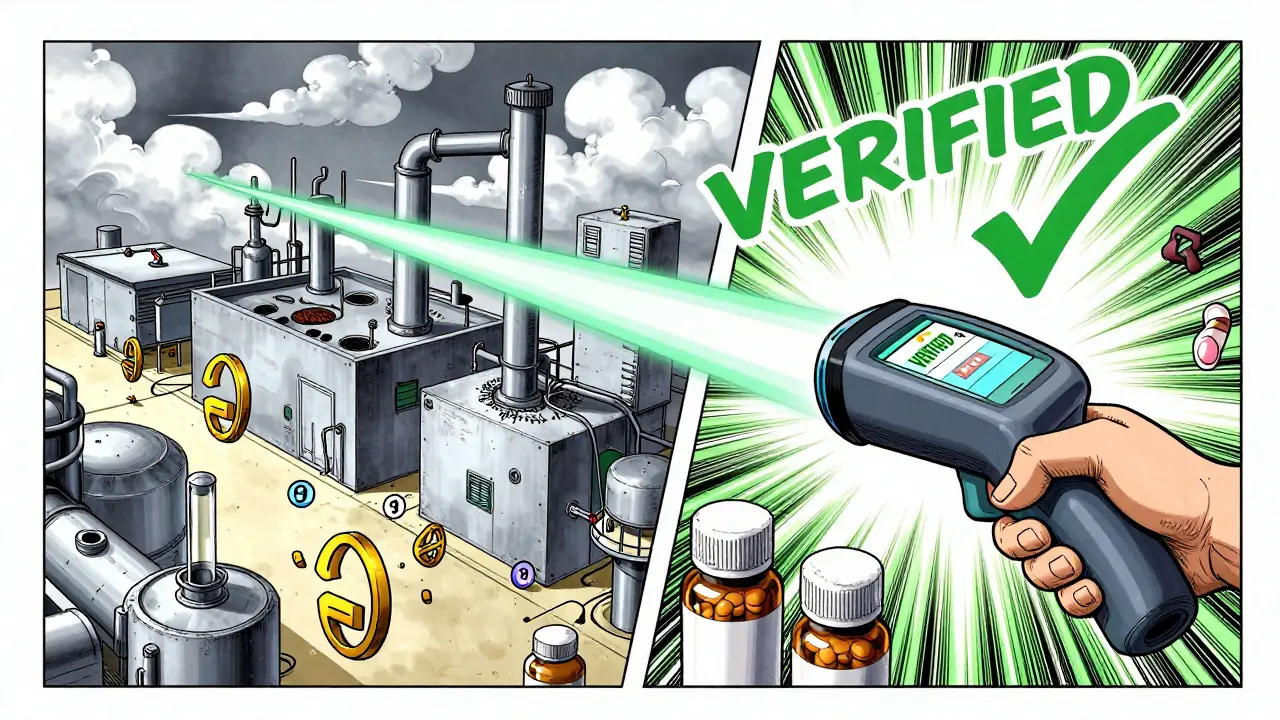
Modern track-and-trace systems use QR codes and barcodes linked to secure databases. When a pharmacy receives a shipment, they scan the serial code. The system checks if that code exists, if it has been sold before, and if it matches the expected destination. If a scanner flags a duplicate serial number or a code from a wrong region, red lights flash. This immediate verification stops fakes from reaching patients.
In 2023, a major pharmaceutical company reduced batch investigation time from 72 hours to just 18 minutes by implementing robust serial tracking. That speed difference means faster removal of dangerous products and less disruption to legitimate sales. For consumers, this means higher confidence that the pill you take is exactly what the doctor prescribed.
Regulatory Pressure: The Law Behind the Labels
This isn't just good business practice; it is the law. Regulations have tightened significantly over the last decade. In the United States, the Drug Supply Chain Security Act (DSCSA) requires full traceability of prescription drugs. Similarly, the European Union’s Falsified Medicines Directive mandates serialization for all medicinal products.
The Food Safety Modernization Act (FSMA) also plays a role, especially for supplements and over-the-counter medications. FDA warning letters citing inadequate lot traceability increased by 217% between 2018 and 2023. Companies that fail to comply face massive fines and reputational damage. For example, non-compliance can lead to shutdowns during audits, which halts production entirely.
These regulations force manufacturers to invest in technology. Cloud-based inventory systems now dominate because they offer real-time data sharing across borders. On-premise systems are becoming obsolete due to their inability to provide instant global visibility required by modern laws.
How It Works: From Factory to Patient
The process begins long before you see the drug on a shelf. Here is the step-by-step flow of a typical track-and-trace implementation:
- Raw Material Receipt: Suppliers send lot numbers for ingredients. The manufacturer scans these into their inventory system, linking them to future batches.
- Manufacturing: As pills are pressed and coated, the system assigns a new lot number based on the production run. Each unit gets a unique serial code printed on its packaging.
- Aggregation: Individual boxes are packed into cases, and cases into pallets. Scanners link the parent containers to the child items. This "parent-child" relationship allows companies to track thousands of units by scanning just one pallet label.
- Distribution: When shipped to wholesalers, the serial data transfers digitally. The receiver verifies the shipment against the expected order.
- Dispensing: At the pharmacy, the final scan decommissions the serial number, marking it as sold to a patient. This prevents resale and ensures the drug cannot be re-entered into the legitimate supply chain illegally.
This end-to-end visibility creates an audit trail that regulators can inspect at any time. If a contamination issue arises, the manufacturer can pinpoint exactly which hospitals received the affected lot within minutes, not weeks.

Challenges in Implementation
Despite the clear benefits, setting up these systems is not easy. Small manufacturers often struggle with the complexity. Implementation timelines typically range from three to six months, with average costs around $18,500 for basic setups. However, cloud solutions have reduced these costs by 42% compared to older on-premise models.
Data discipline is another major hurdle. A 2023 case study revealed that a medical device manufacturer faced FDA warnings simply because different departments recorded lot numbers inconsistently. Human error remains the biggest weakness. To combat this, leading companies enforce mandatory barcode scanning policies. Systems with integrated QR code scanning reduce human error rates from 13% to under 0.5%, according to recent supply chain analyses.
Training staff is essential. The learning curve usually spans two to four weeks. Employees must understand not just how to scan, but why accuracy matters. One user noted on G2 that the steep learning curve required three weeks of dedicated training, highlighting the need for comprehensive onboarding programs.
Future Trends: AI and Blockchain
Technology is evolving rapidly. By 2027, experts predict that 65% of lot tracking systems will incorporate AI-driven anomaly detection. This means software will automatically flag suspicious patterns, such as unusual shipping routes or temperature deviations, before humans even notice them.
Blockchain integration is also gaining traction. Projects like QR Inventory’s 2024 blockchain update create immutable audit trails. Once data is entered, it cannot be altered without detection. This adds a layer of security that is virtually unhackable, providing ultimate trust in the supply chain.
Furthermore, the EU’s Digital Product Passport initiative, effective in 2027, will expand serialized tracking beyond pharmaceuticals to electronics and textiles. This suggests that the infrastructure built for drug safety will eventually become the standard for all consumer goods.
Can I check the authenticity of my medicine at home?
In many countries, yes. Look for a QR code or scratch-off panel on the packaging. Scan it with your smartphone camera or a dedicated app provided by the manufacturer or national health authority. If the code does not verify or shows previous scans, do not use the medication and report it immediately.
What is the difference between a lot number and a serial number?
A lot number identifies a group of products made together under the same conditions, used primarily for recalls and quality control. A serial number is unique to each individual item, used for precise tracking, warranty management, and preventing counterfeiting.
Why are track-and-trace systems mandatory for pharmaceuticals?
They are required by laws like the DSCSA in the US and the Falsified Medicines Directive in the EU to prevent counterfeit drugs from entering the supply chain and to enable rapid, targeted recalls in case of safety issues.
How does track-and-trace help during a product recall?
It allows companies to identify exactly which batches are affected and where they were distributed. This reduces waste by 63% compared to full product line recalls and speeds up investigation times by up to 72%, ensuring safer and more efficient responses.
Are there risks associated with poor track-and-trace implementation?
Yes. Inconsistent data entry, lack of training, and manual processes can lead to errors that compromise the entire system. This can result in regulatory fines, failed audits, and potentially unsafe products reaching consumers if anomalies go undetected.

Recent Posts
-
 Generic Drug Naming: USAN, INN, and Brand Name Basics Explained December 30, 2025