

Every winter, millions of people reach for OTC cold and flu combinations thinking they’re making things easier. One pill for fever, one for cough, one for congestion - all in a single box. But here’s the problem: you’re not taking one pill. You’re taking three, four, or even five different medicines without realizing it. And one of those ingredients - acetaminophen - could be quietly damaging your liver.
Why OTC Cold and Flu Pills Are Trickier Than They Look
OTC cold and flu products aren’t magic pills. They’re chemical cocktails. Most contain at least three active ingredients: a pain reliever, a cough suppressant, and a decongestant. Some add an antihistamine for runny nose or sleep. The problem isn’t the ingredients themselves - it’s that the same ones show up in half a dozen other products you might be taking. Take acetaminophen. It’s in Tylenol. It’s in DayQuil. It’s in Theraflu. It’s in NyQuil. It’s in store-brand cold formulas. You take one caplet of Tylenol Cold & Flu for your headache. Later, you grab a bottle of NyQuil because you’re coughing and feel feverish. You don’t think twice. But now you’ve taken 650mg of acetaminophen in under six hours. Do that again tomorrow? You’re at 1,300mg. Do it for three days? You’re at 3,900mg - almost at the 4,000mg daily limit. One extra pill, and you cross into dangerous territory. The American Association of Poison Control Centers recorded over 14,000 cases of acetaminophen overdose linked to cold and flu meds in 2022. That’s not because people are trying to hurt themselves. It’s because they didn’t know acetaminophen was hiding in their nighttime cough syrup.What’s Actually in Those Pills? (And Why It Matters)
Let’s break down the most common ingredients in OTC cold and flu products and what they do:- Acetaminophen (APAP) - Reduces fever and relieves pain. Found in 73% of combination cold products. Safe at 325-650mg per dose, but toxic over 4,000mg in 24 hours.
- Dextromethorphan (DM) - Suppresses cough. Usually 10-30mg per dose. Can cause dizziness or nausea at higher doses.
- Phenylephrine - Decongestant. Commonly 10mg per dose. But here’s the catch: multiple studies, including a 2022 FDA advisory panel review, found it doesn’t work well at this dose. The FDA proposed removing it from OTC lists in November 2024.
- Doxylamine - Antihistamine that causes drowsiness. Found in NyQuil and similar nighttime formulas. 12.5mg per dose. Can make you groggy the next day.
- Chlorpheniramine - Another antihistamine. Used in some daytime formulas. Less sedating than doxylamine, but still causes dry mouth and drowsiness.
- Ibuprofen - Alternative to acetaminophen. Found in Advil Multi-Symptom Cold & Flu. 200mg per tablet. Easier on the liver, but harder on the stomach and kidneys.
The Real Cost of Convenience
It’s tempting to buy a combo pack. It’s cheaper than buying three separate bottles. It’s easier than reading five different labels. But here’s what most people don’t realize: you’re paying for ingredients you don’t need - and risking side effects you didn’t sign up for. A 2022 survey of 1,200 pharmacists found that 68% recommend single-ingredient products over combinations. Why? Because they see the fallout. Patients come in with elevated liver enzymes after taking Tylenol Cold & Flu + regular Tylenol. Others wake up disoriented after NyQuil because they didn’t know doxylamine lasts 8-10 hours. And it’s not just adults. Teens and young adults - the biggest users of combo cold meds - are especially at risk. A Kaiser Family Foundation survey found 68% of people aged 18-34 prefer combination products. But they’re also the least likely to read the label. One Reddit user wrote: “I took NyQuil for my cough, then took Advil for my headache. Didn’t realize Advil Cold & Flu had acetaminophen too. Ended up in the ER.”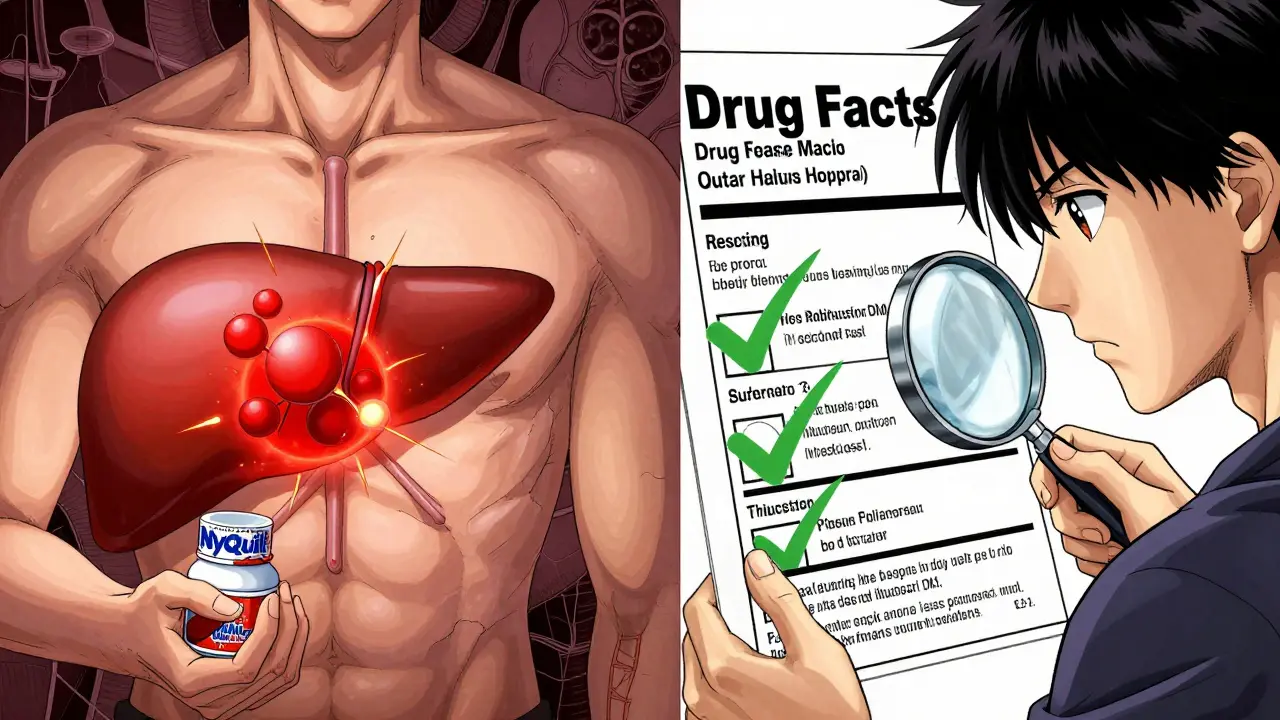
How to Read the Drug Facts Label (And What to Look For)
Every OTC medicine has a Drug Facts label. It’s not fine print. It’s your lifeline. Here’s how to use it:- Look for “Active Ingredients” - That’s the only section that matters. Ignore “Uses,” “Warnings,” and “Directions” until you’ve identified what’s in the pill.
- Write down every ingredient and its dose - Example: “Acetaminophen 325mg.” Don’t assume “APAP” means something else - it’s acetaminophen.
- Check for duplicates - If you’re taking two products, do they both have acetaminophen? If yes, stop. Pick one.
- Watch for hidden names - “Paracetamol” is acetaminophen in some imported products. “DM” means dextromethorphan. “PE” means phenylephrine.
- Compare dosing schedules - DayQuil says take every 4 hours. NyQuil says every 6. Don’t mix them unless you’re sure you’re not doubling up.
What to Do Instead of Using Combination Products
You don’t need a multi-symptom pill to feel better. Here’s a smarter approach:- For fever or pain - Use plain acetaminophen (Tylenol) or ibuprofen (Advil). Pick one. Stick to the dose.
- For congestion - Use pseudoephedrine (Sudafed) - it works better than phenylephrine. But you’ll need to ask the pharmacist for it. Or try a saline nasal spray - no chemicals, no risk.
- For cough - Use plain dextromethorphan (Robitussin DM). No antihistamine. No acetaminophen.
- For runny nose or sneezing - Use a non-drowsy antihistamine like loratadine (Claritin) during the day. Save diphenhydramine (Benadryl) or doxylamine for nighttime if you need sleep.
- For sore throat - Gargle salt water. Or use a throat spray with benzocaine. No pills needed.

When Combination Products Might Be Okay
There’s one situation where combination products make sense: when you’re sick with multiple symptoms and can’t manage multiple pills. For example, if you’re bedridden with fever, cough, congestion, and a runny nose - and you’re too tired to take four different pills - then a nighttime combo like NyQuil (with doxylamine) might be acceptable… if you don’t take anything else with acetaminophen or dextromethorphan. But even then, be careful. Don’t take NyQuil and then take a sleep aid with diphenhydramine. Don’t take Theraflu and then take extra Tylenol. One combo product is fine. Two? Not worth the risk.What’s Changing in 2026
The FDA’s proposed removal of oral phenylephrine isn’t just bureaucracy - it’s a wake-up call. If approved, manufacturers will have to reformulate their products by mid-2026. That means fewer combo products with useless ingredients. Some brands are already testing guaifenesin as a replacement. Meanwhile, sales of single-ingredient products are rising. In 2023, standalone acetaminophen sales jumped 12.7%. Combination products? Only 2.3% growth. People are catching on. Pharmacists are also pushing digital tools. The American Pharmacists Association’s “Medication Checkup” tool helps you scan all your meds and flags overlaps. It takes 8-10 minutes - but it catches 92% of double-dosing risks.Final Rule: One Active Ingredient at a Time
The safest cold and flu strategy isn’t about buying the right brand. It’s about taking the fewest ingredients possible. If you’re not sure what’s in your medicine - don’t take it. Ask a pharmacist. Call Poison Control at 1-800-222-1222. Download the FDA’s “Safe Use of Acetaminophen” guide. Use the American Lung Association’s Cold Medication Safety Checklist. You don’t need a miracle pill. You just need to know what’s in it.Can I take a cold medicine with acetaminophen and also take Tylenol?
No. If your cold medicine already contains acetaminophen, do not take additional Tylenol or any other acetaminophen product. The combined dose can easily exceed 4,000mg in 24 hours - the maximum safe limit - and cause serious liver damage. Always check the active ingredients on the Drug Facts label.
Is phenylephrine still safe to use in cold medicines?
The FDA has proposed removing phenylephrine from OTC cold medicines because studies show it doesn’t work as a decongestant at the standard 10mg dose. While it’s still on shelves in early 2026, manufacturers are expected to reformulate products by mid-2026. For better congestion relief, consider pseudoephedrine (available behind the counter) or saline nasal sprays.
What’s the difference between doxylamine and diphenhydramine in cold meds?
Both cause drowsiness, but doxylamine (found in NyQuil) lasts longer - up to 10 hours - and can leave you groggy the next day. Diphenhydramine (in Benadryl or some store brands) wears off faster, usually in 4-6 hours. Never take both together. Mixing them increases sedation and risk of confusion or falls, especially in older adults.
How do I know if I’ve taken too much acetaminophen?
Early signs of overdose include nausea, vomiting, sweating, and loss of appetite. These can appear within 24 hours. But liver damage may not show symptoms until it’s advanced. If you suspect you’ve taken too much - even if you feel fine - call Poison Control immediately at 1-800-222-1222. Don’t wait for symptoms.
Are store-brand cold medicines safer than name brands?
No. Store brands contain the same active ingredients as name brands - often in identical doses. A CVS cold medicine with acetaminophen is chemically the same as Tylenol Cold & Flu. Always compare the Drug Facts label, not the brand name. The cheapest option isn’t always the safest if it contains ingredients you don’t need.

Write a comment
Your email address will not be published.
Recent Posts
-
 Authorized vs Traditional Generics: Key Differences Explained August 26, 2026




13 Comments
So let me get this straight - you’re telling me I’ve been poisoning my liver for years because I thought ‘NyQuil’ and ‘Tylenol’ were different things? I took both last winter and didn’t even blink. Now I’m Googling ‘liver damage symptoms’ at 3 a.m. Thanks, I guess.
In India, we don’t have these fancy combo packs - we just buy one paracetamol tablet and a cough syrup, and that’s it. No mystery ingredients. No confusing labels. Just simple, honest medicine. Maybe the West needs to go back to basics instead of inventing chemical cocktails disguised as ‘convenience’.
I used to buy those multi-symptom pills because they looked like a deal - you get everything in one box! But then I started reading the labels and realized I was taking three medicines I didn’t need. Now I just get plain acetaminophen and a saline spray. I feel better, honestly. Less groggy, less weird side effects. It’s not glamorous, but it works.
This is the kind of post that makes you pause and rethink everything you thought you knew about medicine. I’ve never read a Drug Facts label in my life - not once. But after reading this, I’m going to start. Not because I’m scared, but because I care about my body. Thank you for writing this.
It is imperative, as a responsible consumer and a member of a highly regulated pharmaceutical ecosystem, to acknowledge the profound public health implications of polypharmacy in over-the-counter cold remedies. The aggregation of acetaminophen across multiple formulations constitutes a latent, systemic risk that has been systematically under-communicated by manufacturers and regulatory bodies alike. One must, therefore, advocate for standardized labeling protocols, mandatory dosage warnings in bold font, and public education campaigns led by the CDC and FDA.
Oh wow, you mean the ‘magic’ cold pills don’t actually work? Who knew? I guess the $12 bottle of ‘SuperCold Max’ that makes me feel like a zombie isn’t worth it. Maybe next time I’ll just drink tea and sleep. But hey - at least the packaging has a nice color.
Have you considered that this entire post is a distraction? The real issue is Big Pharma’s manipulation of FDA regulations. They’ve known phenylephrine doesn’t work for years - but they keep it in because it’s profitable. The acetaminophen thing? Just a sideshow. They want you to panic about liver damage so you don’t ask why the FDA lets them sell placebo decongestants. Wake up.
As a pharmacist with over two decades of experience, I can confirm that 70% of ER visits for unintentional acetaminophen overdose involve patients who took two or more combination products. The Drug Facts label is not ‘fine print’ - it is your legal right to understand what you are ingesting. I encourage every individual to print and keep a copy of the FDA’s Medication Safety Checklist in their medicine cabinet. Knowledge is not optional - it is survival.
You think this is bad? Wait till you see what’s in those ‘natural’ supplements. People take ‘herbal immunity boosters’ that have hidden steroids and banned substances. At least with Tylenol, you know what you’re getting. Stop complaining - take responsibility. Your body, your dumb choices.
Hey - I used to do the same thing. Take NyQuil, then take Advil because my head hurt. Then I started asking myself: ‘Do I really need all this?’ Now I just get one thing for one symptom. It’s not harder - it’s just more mindful. You don’t need to be a doctor to read a label. You just need to care enough to try.
Just read the label. That’s it. No magic. No conspiracy. Just stop being lazy and look at the words on the bottle. I do it every time. Takes 10 seconds. Saves your liver. Easy.
Actually, the liver can regenerate. You’re acting like one extra 500mg of acetaminophen is a death sentence. It’s not. And most people who overdose on it are either alcoholics or trying to kill themselves. This post is fearmongering disguised as public health. Chill out.
Listen up. This isn’t about being careful - it’s about being smart. Stop buying junk medicine. Stop trusting marketing. Take one thing. One. That’s it. You don’t need five pills to feel better. You just need to stop being a slave to convenience. Your body will thank you. Now go read that label.