
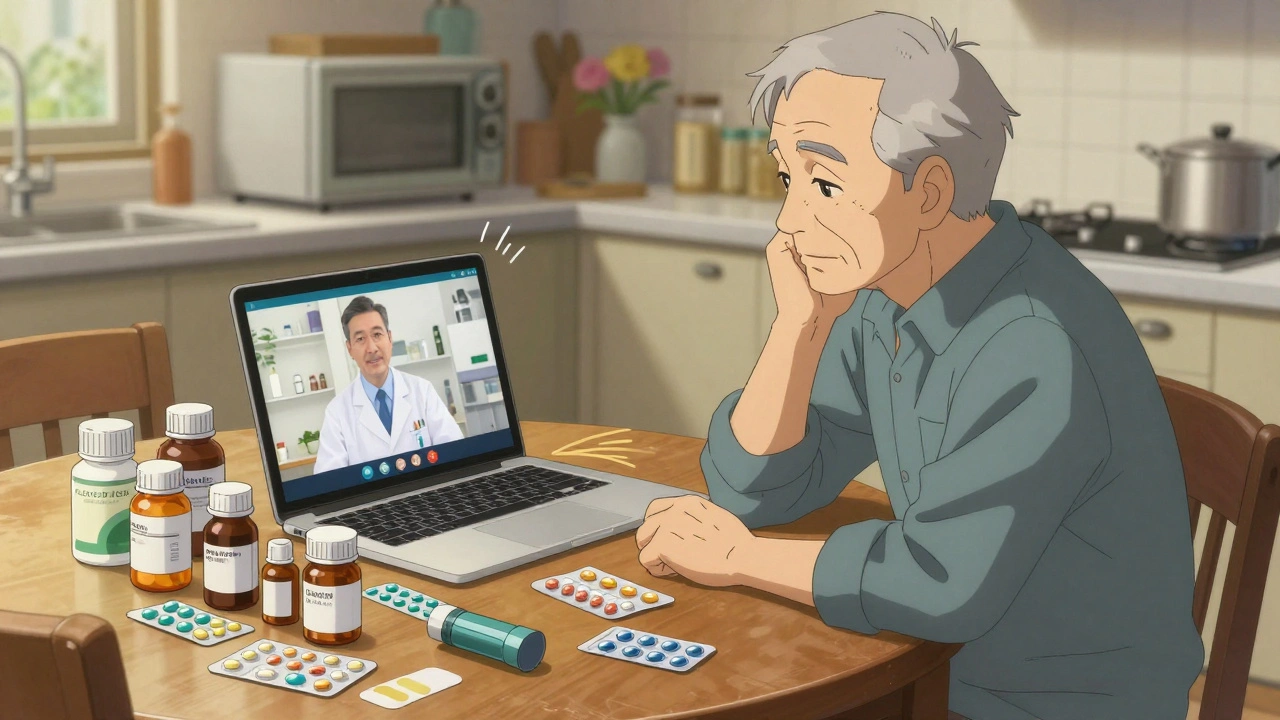
Medication Review Preparation Checker
Medication Review Preparation Checker
When you’re managing multiple medications, a simple mistake can lead to serious health risks. Drug interactions, wrong doses, or unused pills piling up in your cabinet aren’t just inconvenient-they’re dangerous. That’s where telehealth medication reviews come in. These virtual check-ins with a pharmacist or doctor aren’t just a convenience-they’re a proven way to cut down on harmful side effects and keep your meds working the way they should. In 2024, 78% of U.S. healthcare systems offered them, and studies show they reduce adverse drug events by up to 35% in older adults. But here’s the catch: if you don’t show up prepared, you could miss the chance to catch a dangerous problem. This isn’t a casual chat. It’s a clinical review. And how you prepare makes all the difference.
What Exactly Happens in a Telehealth Medication Review?
A telehealth medication review isn’t just a video call where you say, “I’m taking my pills.” It’s a structured, evidence-based process designed to find hidden risks. A trained pharmacist-often one certified in medication therapy management-will go through every substance you’re taking: prescriptions, over-the-counter drugs, vitamins, herbal supplements, even creams and patches. They’ll cross-check your list against your medical history, lab results, and pharmacy records. Using clinical decision tools, they look for interactions, duplicate therapies, or medications that no longer make sense for your condition.
For example, if you’re on blood pressure meds and also take ibuprofen regularly, the pharmacist might spot that the NSAID is undoing your blood pressure control. Or if you’re taking five different pills for sleep, anxiety, and pain, they might find that three of them are sedating and could be increasing your fall risk. The whole session usually lasts 20 to 45 minutes. Afterward, the pharmacist sends a written report to your doctor with specific recommendations: stop one drug, switch another, adjust the dose, or schedule a lab test.
How to Prepare Before Your Appointment
You wouldn’t walk into a doctor’s office without your insurance card or a list of symptoms. The same applies here-but even more so. Telehealth reviews rely on what you bring to the screen. Missing details mean missed risks.
- Collect every medication. Gather all pills, capsules, liquids, patches, inhalers, and supplements. Don’t rely on memory. Put them all on a table in front of you. A 2023 study found that patients who displayed their actual meds during the call increased review accuracy by 37.4%.
- Write down the details. For each item, note the name, dose, how often you take it, and why you’re taking it. If you don’t know why, write that down too. Many patients are on drugs they can’t explain-and that’s a red flag.
- Bring your pharmacy list. Log into your pharmacy’s app or call them to get a printed or digital list of everything filled in the last six months. Pharmacies often have more complete records than your doctor’s office.
- Check your devices. Make sure your camera works, your internet is stable (at least 1.5 Mbps upload/download), and you’re using a HIPAA-compliant platform like Doxy.me or Zoom for Healthcare. Test it 10 minutes before your appointment. Glitches are common-and they cost you time.
- Prepare your questions. Write down three to five things you want to know. Don’t wait until the call to think of them. You’ll forget.
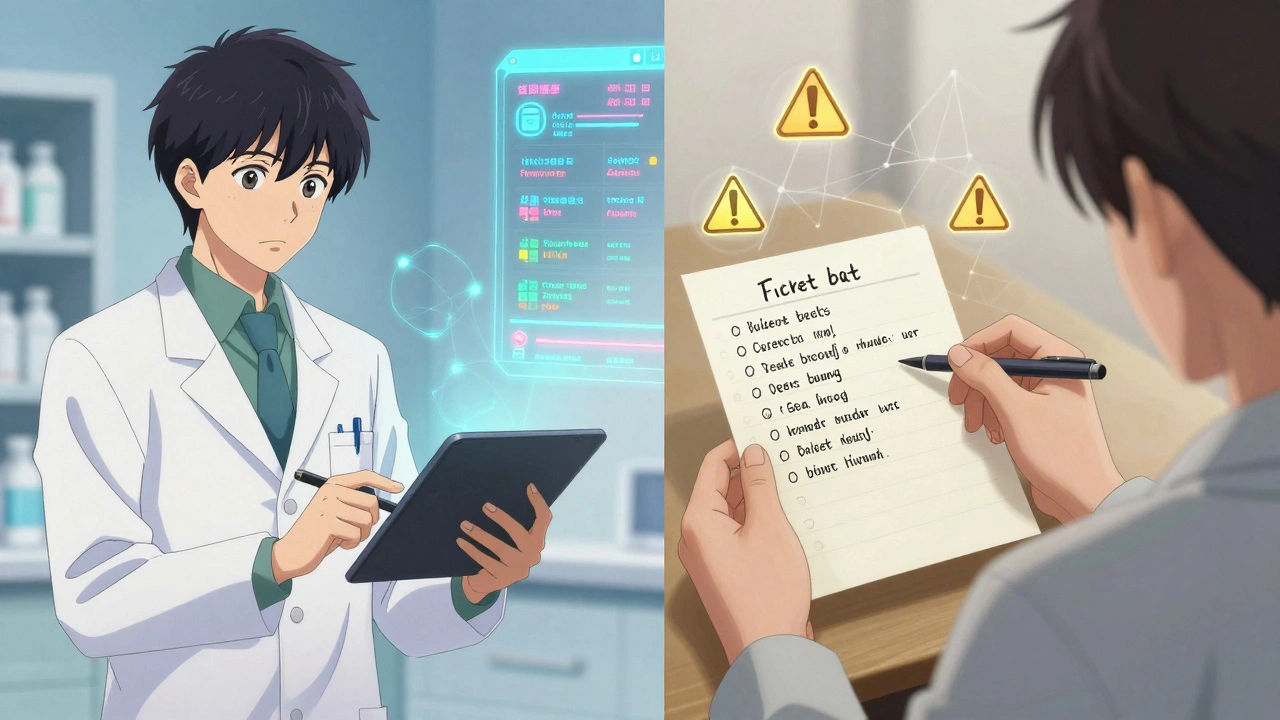
What to Ask During the Review
Don’t just listen. Ask. The pharmacist is there to help you understand, not just to check boxes. Here are the questions that matter most:
- “How will you make sure this list matches what’s in my pharmacy records?” About 43% of medication errors come from inaccurate lists. Pharmacists can pull your fill history, but only if you give them permission and the right info.
- “What changes are you recommending, and how will they get to my doctor?” Only 63% of telehealth services have automatic, standardized ways to send recommendations to primary care providers. If yours doesn’t, you might need to follow up yourself.
- “Are any of these drugs no longer necessary?” Many people stay on meds long after they’re needed-especially for pain, sleep, or anxiety. Stopping them safely can improve your energy, balance, and mental clarity.
- “What side effects should I watch for, and what should I do if they happen?” Some reactions take weeks to show up. Know what’s normal and what’s not. For example, if you’re on a new cholesterol drug and start feeling muscle pain, that could be serious.
- “Will you follow up with me if something changes?” Telehealth reviews reduce hospital readmissions by 22%, but only if there’s ongoing monitoring. Ask if you’ll get a call if your labs come back abnormal or if you refill a risky medication.
When Telehealth Medication Reviews Fall Short
They’re powerful-but not perfect. Some cases need more than a screen. If you have complex conditions like advanced dementia, severe psychiatric illness, or multiple chronic diseases that require physical exams (like checking for swelling, skin sores, or muscle weakness), a video call might miss critical signs. A 2021 study found that 17.3% of assessments were incomplete for patients with multiple comorbidities because the pharmacist couldn’t see or feel what was happening.
Also, if you’re over 75 and not comfortable with technology, you’re less likely to participate. One study showed only 32.7% of seniors without digital support joined telehealth reviews. That’s a gap. If you’re in this group, ask your family, caregiver, or local senior center for help setting up the tech. Many community health programs now offer free training.
And if you’re on controlled substances-like opioids, benzodiazepines, or stimulants-rules get stricter. As of January 2025, the DEA requires an in-person visit before you can get a new prescription for Schedule II drugs (like oxycodone or Adderall). After that, follow-ups can be virtual-but only every three months. For Schedule III-V drugs (like tramadol or Xanax), you can do everything remotely if your provider has a special telemedicine registration.
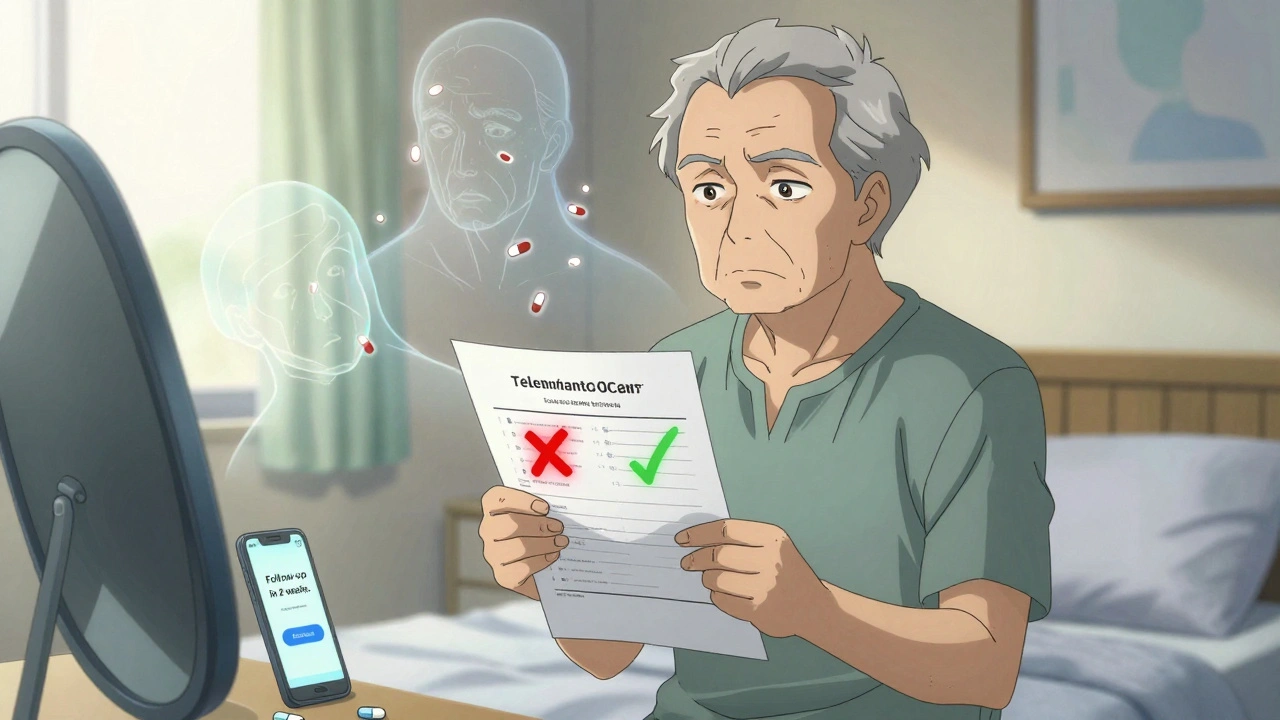
What Happens After the Review?
Don’t assume your job is done when the call ends. You need to take action.
- Get the summary. Ask for a written report via email or patient portal. It should list every change recommended and why.
- Follow up with your doctor. If your doctor hasn’t responded within a week, call their office. Don’t wait. Some changes need a new prescription or lab order.
- Update your list. If you stopped, started, or changed a dose, update your personal medication list right away. Keep it with you-on your phone, in your wallet, or taped to your fridge.
- Watch for changes. Pay attention to how you feel in the next two weeks. Did your energy improve? Are you sleeping better? Any new dizziness, nausea, or confusion? Report it.
Why This Matters More Than Ever
In 2025, the telehealth medication review market is worth nearly $4 billion-and growing fast. That’s because it works. It saves lives. A single review can prevent a hospital stay, a fall, or even a death. But it only works if you show up ready. You’re not just a patient. You’re the most important part of the team. The pharmacist can’t fix what they can’t see. You have to bring the truth-every pill, every side effect, every doubt.
Don’t wait until something goes wrong. If you’re on three or more medications, especially if you’re over 65, ask your doctor or pharmacist about a telehealth medication review. Schedule it. Prepare. Ask the hard questions. Your safety isn’t something you should leave to chance.
Do I need to be on multiple medications to qualify for a telehealth medication review?
No. You don’t need to be on five or ten drugs. Even if you’re only taking one or two, a review can help. Maybe one is outdated. Maybe you’re taking an OTC painkiller that’s raising your blood pressure. Or perhaps your prescription is too strong now that your kidney function has changed. Telehealth reviews are for anyone who wants to make sure their meds are still safe and necessary.
Can I do a telehealth medication review if I don’t have a computer?
Yes. Many telehealth platforms work on smartphones and tablets. If you have a smartphone with a camera and internet access, you can participate. If you don’t have a smartphone, some pharmacies and community health centers offer in-person help to connect you via their devices. Call your local pharmacy or senior center-they often have programs to help seniors get connected.
Will my insurance cover a telehealth medication review?
Most Medicare Part D plans cover comprehensive telehealth medication reviews at no cost to you. Many private insurers do too, especially if you’re on multiple medications or have conditions like diabetes or heart disease. Check your plan’s website or call customer service and ask about “Medication Therapy Management (MTM)” services. If you’re on Medicaid, coverage varies by state-but most states now include telehealth MTM.
What if the pharmacist says I should stop a medication, but my doctor says to keep it?
This happens sometimes-and it’s normal. Your pharmacist and doctor may have different perspectives. The pharmacist sees your full medication list and how drugs interact. Your doctor sees your overall health goals. Ask both of them to talk to each other. You can say, “My pharmacist suggested stopping [drug], but you recommended it. Can you two discuss this?” Most providers are happy to collaborate when the patient brings them together.
How often should I get a telehealth medication review?
If you’re on three or more medications, especially if you’re over 65 or have chronic conditions, aim for a review every 6 to 12 months. If you’ve recently been hospitalized, had a major surgery, or started a new drug, get one within 30 days. Changes in health, new prescriptions, or pharmacy switches are all triggers for a review.
Can a telehealth review catch if I’m not taking my meds correctly?
Yes-but only if you’re honest. Pharmacists can’t tell if you’re skipping pills just by looking at you on video. But they can ask smart questions: “Do you ever forget to take your blood thinner?” “Do you crush pills because they’re hard to swallow?” “Do you stop taking something if you feel better?” If you answer honestly, they can spot patterns. Many patients don’t realize they’re not taking meds as prescribed-and that’s exactly why these reviews exist.

Write a comment
Your email address will not be published.
Recent Posts
-
 How and Where to Buy Prednisone Online Safely April 16, 2026
 -
 How to Buy Cheap Generic Lamictal Online: 2026 Price Guide April 30, 2026


15 Comments
Just had my first telehealth med review last week-totally changed how I feel. I was on three sleep aids I didn’t even know were interacting, and the pharmacist caught it in 20 minutes. No more zombie mornings.
Bring your meds on camera. Seriously. It’s not weird-it’s life-saving.
My mom did this last month and she’s been texting me nonstop about how ‘lighter’ she feels. She stopped two pills she’d been taking since 2012. Turns out, they were for a condition she’d outgrown.
Stop waiting for a crisis. Do this now. Even if you think you’re fine.
i did this and i was so nervous i forgot to show my patch… then realized i had it on my wrist the whole time. lol. but the pharmacist was so nice and didn’t judge. we fixed my blood pressure med combo.
you dont need to be perfect. just show up.
78% of U.S. healthcare systems offering this in 2024? That’s progress. But the real win is the 35% reduction in adverse events. This isn’t just tech-it’s public health infrastructure working.
People still think ‘telehealth’ means quick fixes. This is the opposite. It’s precision medicine, delivered with care.
You’re all so naive. You think this is safe? Pharmacies have no idea what you’re really taking! They don’t see your stash under the sink, or the Xanax you get from your cousin! You’re handing your meds to a stranger on Zoom-what if they’re a scammer??!!!
Let’s be real: if you can’t even remember your own meds, why are you still driving? Or living alone? This isn’t a ‘review’-it’s a triage for people who can’t manage basic self-care.
And don’t get me started on the ‘supplements.’ That herbal nonsense is what’s killing people-not the prescriptions.
Why do we even need this? I just take my pills. End of story.
And why do I have to show my cabinet on camera? That’s just creepy. My meds are private.
Also, I don’t trust these apps. My wifi drops all the time. This is a waste of time.
Excellent article. In India, telehealth MTM is still nascent, but growing rapidly in urban centers. I recommend patients keep a printed list in Hindi and English-many pharmacists are bilingual but may not understand regional drug names.
🙏 Stay safe. Your health is your wealth.
Stop waiting for permission to take charge of your health. You don’t need a doctor’s approval to ask, ‘Is this still necessary?’
I did this for my dad. He was on 11 meds. Now he’s on 4. He’s walking again. He’s laughing again.
You can do this too. Start today. Not tomorrow. TODAY.
Wait-so you’re telling me I have to organize my meds? Like, physically pick them up? And look at them? And write stuff down? Ugh. That’s so much work.
Can’t the AI just read my brain? I’m tired. Can’t someone else do this for me?
Bro… this whole thing is just capitalism feeding off our fear.
We used to trust our grandmas’ advice. Now we’re staring at a screen while some stranger judges our vitamin bottles.
Are we really that lost? Or just that broke?
Just stop taking pills. Go outside. Breathe. That’s the real medicine.
Oh great. Another ‘innovation’ that only works if you’re white, middle-class, and tech-savvy.
My aunt can’t even turn on her TV. Now they want her to ‘show her meds’ on Zoom? Like some kind of pharmacy performance art?
This isn’t healthcare. It’s exclusion dressed up as progress.
My doctor said I didn’t need this because I’m ‘young’ and ‘healthy.’ But I’m on 3 meds for anxiety and migraines. I’m 42. I don’t need to be 70 to need this.
Why do they assume only old people need help? I cried after my review. They saw how I was taking half my pills because I was scared of side effects.
You’re not alone. Ask for this. Even if they say no.
Did you know the DEA is using these reviews to track people on opioids? My cousin got flagged because he asked about tapering. Now he’s being investigated.
This isn’t about safety. It’s about control. They want to know everything you’re taking. And then they’ll punish you for it.
I’m not great with tech, but I did this with my sister helping me. We printed out the list. She held the phone. I showed my meds. We cried a little. But now I’m on the right dose.
It’s okay to need help. It’s okay to not know. You don’t have to be perfect.
Just show up.