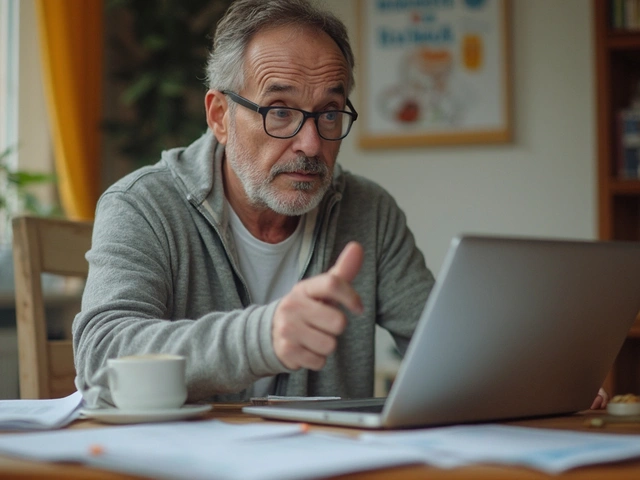
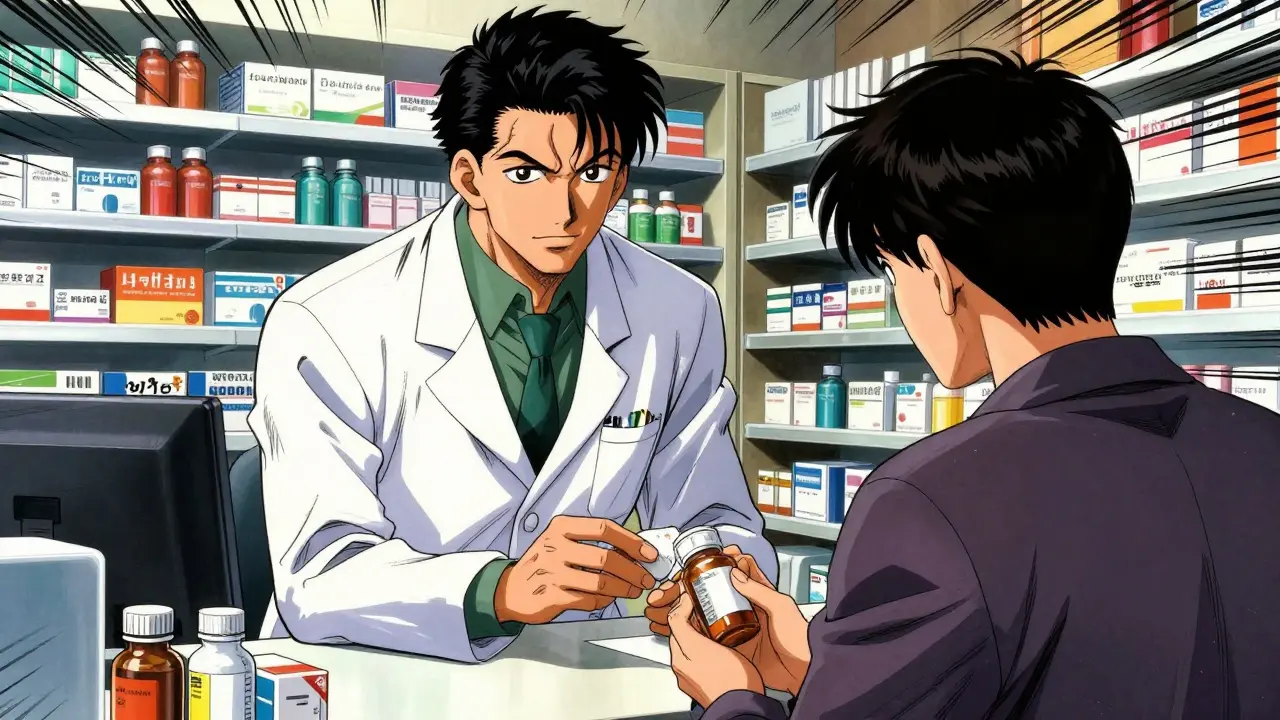
Walk into any community clinic or pharmacy, and you will likely hear the same hesitation from a patient picking up their prescription. "Is this really the same as the brand name?" It is a question that stems not from malice, but from a deep-seated misconception that has persisted for decades. For healthcare providers, pharmacists, and community health workers, bridging this gap is no longer optional; it is a critical component of modern patient care. The stakes are high because when patients doubt their medication, they stop taking it. When they stop taking it, health outcomes deteriorate, and costs skyrocket.
This article explores how to effectively use public education resources to demystify generic drugs. We will look at the science behind why generics work, the specific tools available from regulatory bodies like the FDA is the U.S. Food and Drug Administration, the federal agency responsible for protecting public health by ensuring the safety, efficacy, and security of human and veterinary drugs, and practical strategies for delivering these messages in community settings. Whether you are preparing a slide deck for a senior center or counseling an individual in a rural clinic, understanding the evidence and the psychology behind medication adherence is your most powerful tool.
The Science of Bioequivalence: More Than Just Marketing
To educate patients, you first need to understand the hard data yourself. The core argument for generic drugs rests on the concept of bioequivalence. This is not a vague promise; it is a rigorous scientific standard enforced by the FDA. For a generic drug to be approved, it must demonstrate that it delivers the same amount of active ingredient into a patient's bloodstream over the same period as the brand-name drug.
The FDA requires that generic drugs contain the exact same active ingredients, strength, dosage form, and route of administration as their brand-name counterparts. The only differences allowed are in inactive ingredients, such as dyes or binders, which do not affect how the drug works in the body. The statistical requirement is precise: generic drugs must deliver between 80% and 125% of the active ingredient concentration compared to the brand-name version, with a 90% confidence interval. In plain English, this means the performance difference is statistically negligible and clinically irrelevant for the vast majority of medications.
Consider the scale of this validation. The FDA’s Office of Generic Drugs reviews approximately 1,000 Abbreviated New Drug Applications (ANDAs) annually. Each review involves comparative pharmacokinetic studies measuring Cmax (maximum concentration) and AUC (area under the curve). These metrics ensure that the drug reaches therapeutic levels quickly enough and stays there long enough to be effective. When you explain this to a patient, avoid jargon. Instead, say: "The government tests these drugs to prove they work exactly the same way inside your body as the expensive brand name. They have to pass the same strict safety checks."
Why Misconceptions Persist: The Psychology of Brand Loyalty
If the science is so clear, why does the doubt remain? A 2016 study by CVS Health revealed that 87% of patients had misconceptions about generic medications. Nearly half of all Americans incorrectly believe that generics are less effective than brand-name products. This belief persists despite 40 years of scientific evidence to the contrary.
One major factor is the "nocebo effect." This is the opposite of the placebo effect. If a patient believes a drug is inferior, they are more likely to report side effects or feel that the drug isn't working. A 2021 study in the Annals of Internal Medicine found that discontinuation rates for generics were 18.7% higher when patients knew they were receiving a generic versus when they were blinded to the type of medication. This highlights a crucial point for community health presenters: perception shapes reality. Your role is not just to inform, but to reframe the narrative from "cheap alternative" to "smart, safe choice."
Another barrier is appearance. A 2022 survey by the University of Michigan School of Pharmacy found that 23% of patients questioned medication equivalence solely because the pill looked different-different shape, color, or size. Patients often associate the specific look of a brand-name pill with its effectiveness. Addressing this visual disconnect is a key part of any educational presentation.
Key Public Education Resources Available Today
You do not need to create educational materials from scratch. Several authoritative organizations provide ready-to-use resources that are scientifically accurate and culturally sensitive. Leveraging these tools ensures consistency and credibility in your messaging.
| Resource Name | Provider | Format | Target Audience | Key Feature |
|---|---|---|---|---|
| Generic Drugs Patient Education Program | FDA | Videos, Infographics, Fact Sheets | General Public | Bilingual (English/Spanish), 2,147+ resources |
| Generic Drug Stakeholder Toolkit | FDA | Provider Guides, Scripts | Healthcare Providers | 14 evidence-based communication strategies |
| Generics for Better Health Campaign | Association for Accessible Medicines (AAM) | Brochures, Digital Content | Patients & Clinics | Distributed to 14,300+ community health centers |
| Generics 101 Video Series | FDA | Short Videos | Medicare Beneficiaries (65+) | 31% improvement in knowledge retention |
The FDA’s Generic Drugs Stakeholder Toolkit is particularly valuable for frontline workers. It provides 14 evidence-based communication strategies validated through clinical trials. One standout method included in the toolkit is the "Teach-Back" method. This involves explaining a concept and then asking the patient to repeat it back in their own words. Studies show this approach improves patient understanding by 28-42%. For example, instead of just saying "generics are equivalent," you might say, "The FDA requires generic drugs to have the same active ingredient, strength, and dosage form as brand-name drugs." Then ask, "Can you tell me what that means for your medicine?"

Structuring Effective Community Health Presentations
When designing a presentation for a community group, whether it is a church basement, a library, or a hospital waiting room, structure matters. You want to move from empathy to evidence to action. Here is a recommended flow:
- Acknowledge the Concern: Start by validating their feelings. "Many people wonder if the cheaper pill is really the same. It is a smart question to ask." This builds trust rather than defensiveness.
- Simplify the Science: Use analogies. Compare generic drugs to store-brand groceries. "If you buy store-brand sugar, it tastes the same and sweetens your coffee the same way as the big brand. The packaging is different, but the product is identical."
- Highlight the Savings: Make the economic benefit personal. Generics cost 80-85% less than brand-name drugs on average. For a family spending hundreds on prescriptions, this is life-changing money. Mention that generics save the U.S. healthcare system $377 billion annually.
- Address Appearance Differences: Show two pills side-by-side. Explain that the color and shape change because different manufacturers make them, but the medicine inside is the same. Reassure them that if they have trouble remembering their meds due to the new look, they can ask their pharmacist for a specific manufacturer.
- Call to Action: Encourage them to talk to their doctor or pharmacist before switching, especially for sensitive conditions. Provide a handout with the FDA’s "Generics 101" video link or QR code.
Nuances and Exceptions: Building Credibility Through Honesty
One of the biggest mistakes educators make is claiming that generics are perfect in every single scenario. While true for 90.8% of prescriptions filled in the U.S., there are nuanced exceptions. Acknowledging these actually strengthens your credibility.
For instance, in specialized therapeutic areas like epilepsy, some patients may experience issues when switching between brands and generics. A 2023 study in Epilepsy & Behavior noted a slightly higher seizure recurrence rate with generic antiepileptic switches. However, the American Academy of Neurology clarifies that this represents an "extremely rare exception proving the rule of generic equivalence." Most patients do fine, but those with narrow therapeutic index drugs (where small changes in blood levels matter greatly) may need closer monitoring.
By mentioning this, you show that you are not just selling a narrative; you are providing balanced medical information. You can advise patients: "For most conditions like high blood pressure or diabetes, generics are perfectly safe. For complex neurological conditions, we work closely with your doctor to ensure the switch is smooth."
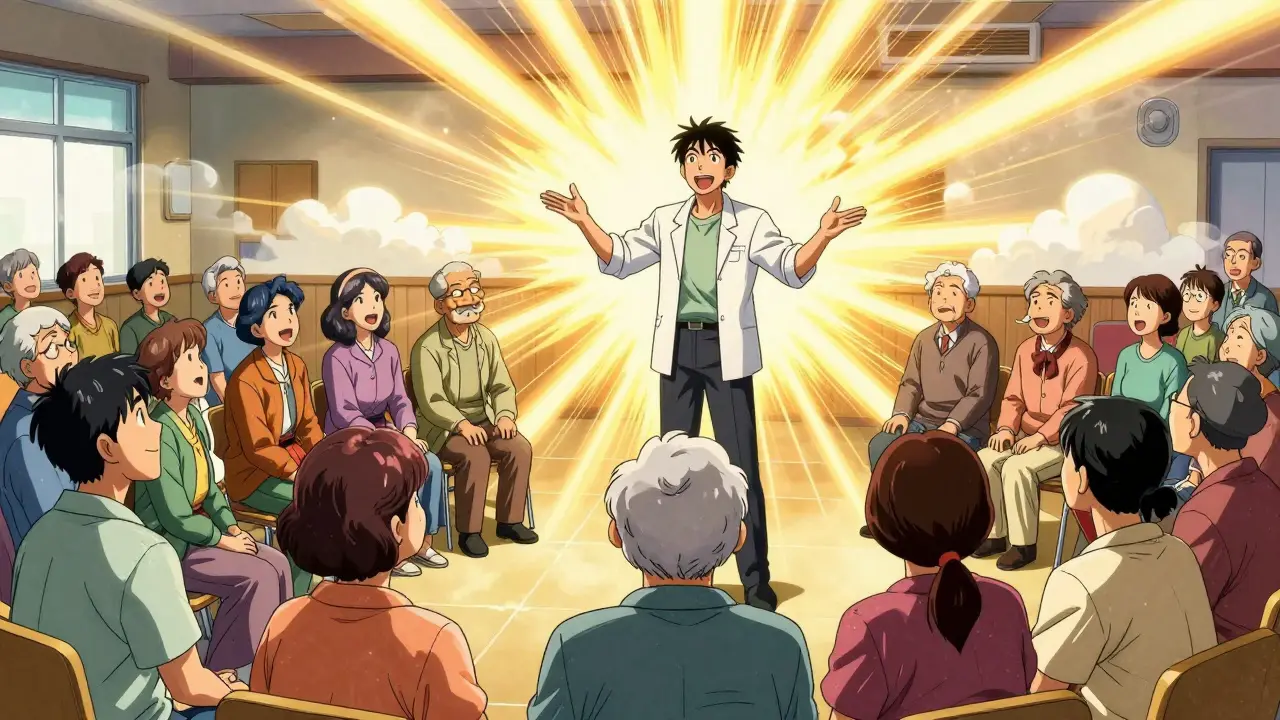
Tailoring Messages for Diverse Audiences
Not all communities respond to the same messaging. Rural populations, for example, have lower generic utilization rates (78%) compared to urban areas (93%), according to CDC data. This gap often stems from access issues and differing trust dynamics in healthcare systems. In rural presentations, emphasize local availability and the role of the community pharmacist as a trusted advisor.
For older adults, the FDA’s "Generics 101" video series has proven highly effective, showing a 31% improvement in knowledge retention among viewers aged 65+. Visual aids and simple language are key. Avoid dense text slides. Use large fonts and clear images.
Language barriers are also significant. The FDA provides resources in both English and Spanish. If your community speaks other languages, consider partnering with local organizations that offer translation services. The goal is inclusivity. When patients understand their medication in their native tongue, adherence improves significantly.
The Economic Impact: Why This Matters Beyond the Pill
Finally, frame generic education as a matter of financial health. The Association for Accessible Medicines reports that generics save the U.S. healthcare system $377 billion annually. But for an individual, the savings are immediate. A brand-name drug might cost $50 per month, while the generic costs $5. That $45 difference can go toward food, rent, or other necessities.
Moreover, increased generic adoption drives market competition. With 287 brand-name drugs losing patent protection between 2023 and 2028, the generic market is projected to grow to $184.3 billion by 2027. This competition keeps prices down for everyone. Educating patients helps sustain this ecosystem, ensuring that affordable care remains accessible for future generations.
As a community health educator, you are not just handing out pamphlets. You are empowering individuals to take control of their health and their wallets. By using evidence-based resources, addressing psychological barriers, and tailoring your message to your audience, you can turn skepticism into confidence. The next time a patient asks, "Is this really the same?" you will have the facts, the tools, and the empathy to give them a reassuring answer.
Are generic drugs exactly the same as brand-name drugs?
Generic drugs must have the same active ingredient, strength, dosage form, and route of administration as brand-name drugs. They are required to meet the same quality standards for purity and stability. The main differences are in inactive ingredients like dyes or fillers, which do not affect the drug's therapeutic effect. The FDA ensures bioequivalence, meaning the generic delivers the same amount of active ingredient into the bloodstream over the same time period.
Why do some patients feel generics don't work as well?
This phenomenon is often linked to the "nocebo effect," where a patient's negative expectations cause them to perceive side effects or reduced efficacy. Studies show that when patients know they are taking a generic, discontinuation rates can be higher due to psychological bias rather than actual pharmacological differences. Additionally, differences in pill appearance (color, shape) can lead to doubts about equivalence, even though the active medicine is identical.
What resources are available for educating patients about generics?
The FDA offers a comprehensive Generic Drugs Patient Education program with over 2,147 resources in English and Spanish, including videos, infographics, and fact sheets. The FDA’s Generic Drug Stakeholder Toolkit provides evidence-based communication strategies for healthcare providers. The Association for Accessible Medicines (AAM) also distributes brochures and digital content through its "Generics for Better Health" campaign. These resources are designed to be culturally sensitive and easy to understand.
Are there any risks associated with switching to generic drugs?
For the vast majority of medications, there are no significant risks. However, for certain "narrow therapeutic index" drugs (such as some anti-seizure or thyroid medications), small variations in blood levels can be more impactful. In these cases, doctors may prefer to keep patients on a specific brand or monitor them closely during a switch. Always consult your healthcare provider before making changes to your medication regimen, especially for complex conditions.
How much money can patients save by using generic drugs?
On average, generic drugs cost 80-85% less than brand-name equivalents. This translates to substantial savings for individuals and families. Nationally, generic drugs save the U.S. healthcare system approximately $377 billion annually. For a patient, this could mean paying $5 instead of $50 for a monthly prescription, freeing up funds for other essential needs.
What is the "Teach-Back" method in patient education?
The Teach-Back method is a communication strategy where healthcare providers explain a concept and then ask the patient to repeat it back in their own words. This confirms understanding and identifies any gaps in knowledge. For generic drug education, this might involve explaining bioequivalence and then asking the patient to summarize why the generic is safe. Studies show this method improves patient understanding by 28-42%.

Recent Posts
-
 Oral Care for Dry Mouth: Best Products and Daily Habits September 3, 2026
 -
 How and Where to Buy Sildenafil Online Safely in 2026 July 27, 2026
 -
 Natural Fever Remedies: Effectiveness, Safety & When to Use Them September 24, 2025