

Dry Mouth Relief Quiz
Answer these questions to test your understanding of how to manage dry mouth effectively.
What is the primary reason alcohol-based mouthwashes are discouraged for people with dry mouth?
Which ingredient is recommended in gum or lozenges because it inhibits bacterial growth while moisturizing?
Why is nighttime considered the most critical period for dry mouth intervention?
What role does saliva play in preventing cavities?
Which common habit can exacerbate dry mouth symptoms?
Waking up with a mouth that feels like sandpaper isn't just annoying; it's a warning sign. If you constantly feel thirsty or notice your tongue sticking to the roof of your mouth, you're likely dealing with xerostomia, commonly known as a condition characterized by reduced salivary flow that compromises oral health and comfort. It’s not just about discomfort. Saliva is your mouth’s natural defense system, washing away food particles and neutralizing acids produced by bacteria. Without enough of it, you become a prime target for cavities, gum disease, and persistent bad breath.
You might be wondering why this happens. According to the Mayo Clinic, over 500 commonly prescribed medications list dry mouth as a side effect. That includes everything from antidepressants and antihistamines to blood pressure meds. Age plays a role too-the American Dental Association notes that about 30% of adults over 65 experience significant dry mouth. But here’s the good news: you don’t have to suffer in silence. With the right mix of specialized products and smart daily habits, you can restore moisture and protect your teeth.
Why Saliva Matters More Than You Think
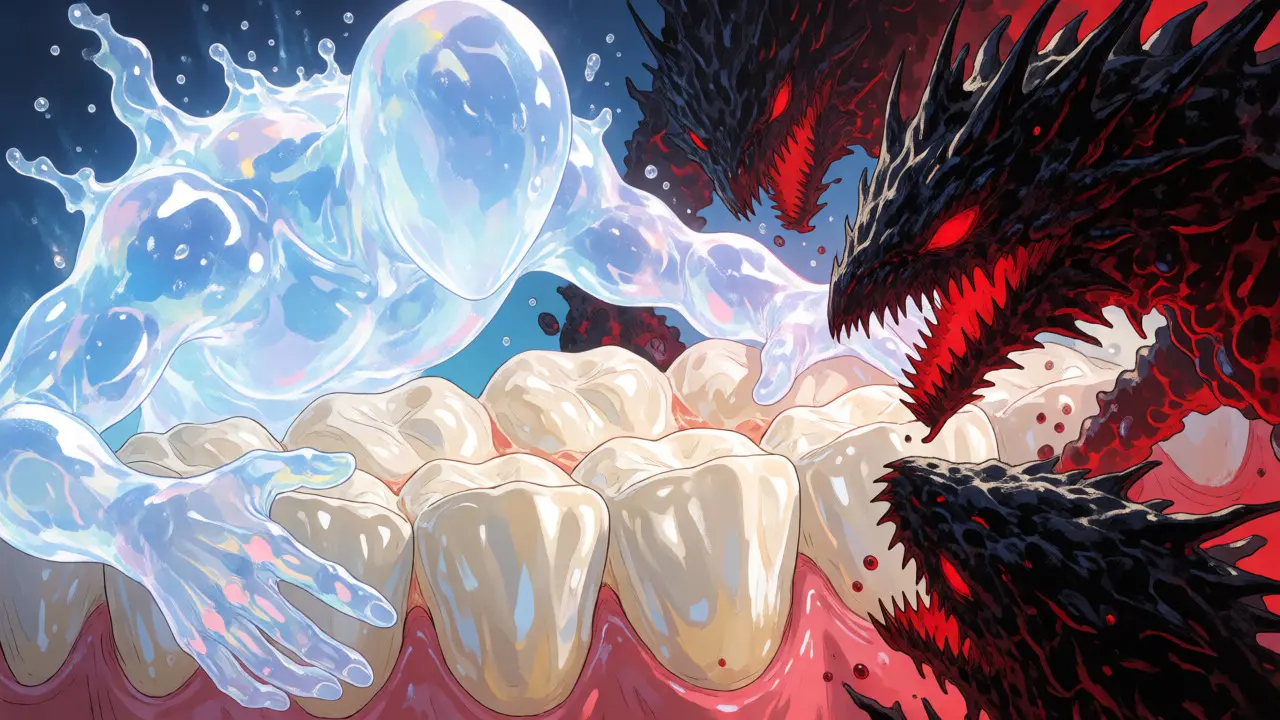
Think of saliva as your mouth’s self-cleaning cycle. When production drops, that cycle breaks down. You lose the mechanical cleaning action of swallowing, which physically removes debris. You also lose the chemical protection-saliva contains enzymes and minerals like calcium and phosphate that help repair early tooth decay (remineralization).
When your mouth stays dry, plaque builds up faster. The pH balance shifts toward acidity, creating an environment where cavity-causing bacteria thrive. This is why people with chronic dry mouth often see a sudden increase in dental issues, even if they’ve always had strong teeth. Managing this condition isn't just about feeling comfortable; it's about preventing expensive dental work down the line.
The Best Products for Dry Mouth Relief
Not all mouthwashes are created equal. In fact, many standard alcohol-based rinses make dry mouth worse. Alcohol dries out tissues further, leaving you thirstier than before. Instead, look for products specifically designed to mimic natural saliva or stimulate its production.
Biotène has become the go-to recommendation among dentists and pharmacists for a reason. Their product line is formulated to match the pH balance of natural saliva, providing lubrication rather than just a temporary wet sensation. Their Oralbalance Moisturizing Gel, for example, offers relief for up to four hours, making it ideal for nighttime use when saliva production naturally slows down.
Another key ingredient to look for is xylitol. Unlike regular sugar, xylitol doesn't feed bacteria. In fact, it inhibits their growth. Products containing xylitol, such as ACT Dry Mouth lozenges or XyliMelts, serve a dual purpose: they moisturize your mouth while actively helping to prevent cavities.
| Product Type | Best For | Key Ingredient | Duration of Relief |
|---|---|---|---|
| Biotène Oralbalance Gel | Nighttime & severe dryness | Carboxymethylcellulose | Up to 4 hours |
| ACT Dry Mouth Rinse | Daily cleansing & cavity prevention | Xylitol | Short-term |
| XyliMelts Lozenges | All-day wear & on-the-go | Xylitol | Hours (dissolves slowly) |
| TheraBreath Oral Rinse | Breath freshening + moisture | Oxygeneating agents | Medium |
Daily Habits That Make a Real Difference
Products help, but habits sustain. Small changes in your routine can significantly improve your comfort levels without spending extra money.
- Sip water consistently: Don't wait until you're parched. Keep a water bottle nearby and take small sips throughout the day. Sucking on ice chips is another great trick-it provides slow-release moisture without flooding your stomach.
- Chew sugar-free gum: Chewing stimulates saliva flow mechanically. Look for gums sweetened with xylitol to get the added benefit of cavity protection. Just be mindful: too much xylitol can cause gas or diarrhea in some people, so start with one piece at a time.
- Breathe through your nose: Mouth breathing dries out tissues rapidly. If you snore or wake up with a dry mouth, try nasal strips or consult a doctor about sleep apnea. Keeping your lips closed during the day helps maintain humidity.
- Avoid irritants: Tobacco, alcohol, and caffeine are major culprits. They dehydrate your body and directly irritate oral tissues. Cutting back on coffee or switching to decaf can provide noticeable relief within days.
Nighttime Routine for Maximum Protection
Your mouth produces the least amount of saliva while you sleep. This makes nighttime the most critical period for intervention. If you wake up with a sticky mouth, your current routine needs an upgrade.
Before bed, use a fluoride rinse or brush-on gel. Since dry mouth increases decay risk, extra fluoride strengthens enamel against acid attacks. For those with severe dryness, ask your dentist about custom-fit fluoride trays. These hold the gel in place against your teeth for hours, ensuring deep penetration.
Consider using a bedside humidifier. Adding moisture to the air reduces evaporation from your mouth and throat. Pair this with applying a thick moisturizing gel like Biotène right before sleep. It acts as a barrier, keeping tissues hydrated until morning.

What to Avoid: The Dry Mouth Traps
Some common oral care practices actually worsen xerostomia. First, check your toothpaste. Many contain sodium lauryl sulfate (SLS), a foaming agent that can irritate sensitive, dry tissues. Switching to an SLS-free toothpaste might reduce stinging and burning sensations.
Also, watch your diet. Sugary and acidic foods stick around longer in a dry mouth because there’s no saliva to wash them away. Carbonated drinks are particularly problematic-they’re acidic and often sugary. If you do consume them, rinse with water immediately afterward. And please, skip the alcohol-based mouthwashes. They offer a fleeting fresh feeling but leave your mouth drier minutes later.
When to See a Dentist
If home remedies aren't cutting it, professional help is necessary. Your dentist can assess whether your dry mouth is medication-induced or linked to systemic conditions like Sjögren’s syndrome or diabetes. They can also prescribe stronger saliva stimulants, such as pilocarpine or cevimeline, if OTC options fail.
Regular checkups are non-negotiable. Because dry mouth accelerates decay, you may need cleanings every six months instead of annually. Tell your hygienist exactly what medications you’re taking. This context helps them tailor their cleaning approach and recommend specific preventive treatments.
Can drinking water cure dry mouth?
Water provides temporary relief by moistening tissues, but it does not address the underlying lack of saliva production. It lacks the enzymes and lubricating properties of natural saliva. For lasting comfort, you need products that mimic saliva's viscosity or stimulate its production, alongside consistent hydration.
Is xylitol safe for everyone?
For humans, yes, xylitol is generally safe and beneficial for dental health. However, consuming large amounts quickly can lead to gastrointestinal distress, including bloating, gas, or diarrhea. Start with small doses to gauge tolerance. Note: Xylitol is highly toxic to dogs, so keep gum and mints out of their reach.
Why does my mouth feel dry only at night?
Saliva production naturally decreases during sleep. If you breathe through your mouth due to congestion or habit, evaporation accelerates this drying process. Using a bedroom humidifier and applying a long-lasting moisturizing gel before bed can counteract these effects.
Do alcohol-free mouthwashes really work?
Yes, and they are preferred for dry mouth sufferers. Alcohol strips away protective oils and dehydrates tissues. Alcohol-free rinses, especially those with xylitol or enzymes, cleanse without drying, helping to maintain a healthier oral microbiome and reducing bad breath associated with xerostomia.
Can medications cause permanent dry mouth?
In most cases, dry mouth is reversible once the medication is stopped or adjusted. However, if dry mouth results from radiation therapy to the head and neck area, damage to salivary glands can be permanent. Always consult your doctor before stopping any prescribed medication to manage side effects.

Write a comment
Your email address will not be published.
Recent Posts
-
 Inderal for Sale: Understanding its Uses and Effects March 8, 2025
 -
 Recent Patent Cases and Generic Delays: 2023-2025 Examples December 19, 2025
 -
 DASH Diet Guide: Lowering Blood Pressure and Managing Weight August 20, 2026
 -
 Switching to an Authorized Generic: Managing Patient Transitions December 16, 2025
10 Comments
I simply cannot believe that this entire thread is discussing the trivialities of oral hygiene while ignoring the absolute catastrophic implications of xerostomia on one's social standing. It is frankly embarrassing that we are treating a condition that destroys enamel like it is a mere inconvenience rather than a medical emergency. The sheer audacity of suggesting that water alone suffices is laughable, especially when the article explicitly states that saliva contains specific enzymes and minerals essential for remineralization. If you do not understand the biochemical necessity of carboxymethylcellulose in products like Biotène, then perhaps you should reconsider your approach to health entirely. This is not just about comfort; it is about preserving the structural integrity of your teeth against an acidic onslaught that would otherwise be unsurvivable. I have seen too many friends lose their smiles because they failed to recognize the urgency of salivary flow reduction. Do not let your ignorance lead to expensive dental reconstruction bills later in life. The lack of proper care here is truly indicative of a broader societal decline in health literacy.
yeah but honestly half of these products are overpriced garbage. i tried biotene and it felt like slime. stick to sugar free gum if you want real relief without the chemical taste.
The reliance on xylitol as a panacea demonstrates a fundamental misunderstanding of its metabolic limitations in high-dosage scenarios. While the article correctly identifies xylitol's ability to inhibit bacterial growth, it fails to adequately warn users about the potential for significant gastrointestinal distress, specifically osmotic diarrhea, which can severely impact quality of life. Furthermore, the dismissal of alcohol-based rinses is scientifically sound, yet the recommendation for fluoride trays lacks context regarding patient compliance issues. Many individuals with severe hyposalivation struggle with the mechanical discomfort of wearing custom-fit trays during sleep, rendering the treatment ineffective due to non-adherence. One must also consider the systemic etiology; if the dry mouth is secondary to Sjögren’s syndrome, topical interventions are merely palliative rather than curative. The article’s tone suggests a simple fix where complex pathophysiology is at play. Ignoring the differential diagnosis between medication-induced xerostomia and autoimmune conditions leads to inadequate management strategies. We need to prioritize holistic assessment over product placement.
It is fascinating how our bodies signal us through such subtle discomforts. Dry mouth is often a whisper before a shout, indicating that something internal needs attention beyond just hydration. Instead of viewing it as a nuisance, we might see it as an invitation to slow down and listen to our physiological rhythms. The advice about nasal breathing resonates deeply with me, as it connects oral health to our overall respiratory patterns and stress levels. When we breathe through our mouths, we bypass the natural filtration and humidification processes of the nose, leading to desiccation of the mucous membranes. By cultivating mindfulness around our breathing habits, we address the root cause rather than just the symptom. This holistic perspective encourages patience and self-compassion in managing chronic conditions. It is not merely about buying the right gel, but about aligning our daily actions with our body's needs. Let us embrace these small changes as acts of self-care that ripple outward into our general well-being. True health is found in balance and awareness, not just in clinical interventions.
Omg literally saved my life 🙌✨ I used to wake up feeling like I licked a cactus 🌵😩 Now I use XyliMelts and I’m obsessed!! They last forever and don’t taste weird like those other lozenges 🍬👅 Also, ditching SLS toothpaste was a game changer 🔥 My gums stopped burning immediately 💯 Highly recommend trying the bedside humidifier trick too, it’s so cheap but works wonders 🌫️💤 Don’t let dry mouth ruin your vibe besties! Stay hydrated and keep smiling 😁💖
ugh... another listicle telling me what i already know. did anyone actually read the part about caffeine? cutting coffee is impossible for most people. good luck with that.
This article clearly favors American commercial interests over practical global solutions. Why are we pushing expensive proprietary brands like Biotène when basic saline rinses work perfectly fine? It seems like every health tip nowadays is just a disguised advertisement for US pharmaceutical companies. We should be skeptical of any advice that requires purchasing specialized items from a pharmacy chain. Real health knowledge doesn't come with a price tag attached by marketing departments.
I feel you on the coffee thing, man. It’s tough. But I’ve been experimenting with decaf espresso blends lately, and honestly, they’re surprisingly decent. You get that rich flavor profile without the dehydration kick. Plus, pairing it with a sip of water after each cup has helped me maintain moisture levels significantly better than before. It’s all about finding those little hacks that fit into your lifestyle without making you miserable. I also started using a lip balm with SPF during the day, which sounds unrelated, but keeping the lips sealed helps reduce evaporation from the mouth itself. Small tweaks really add up over time. Keep fighting the good fight!
agreed on the humidity point. my partner snores badly so we got a humidifier and his morning dryness dropped instantly. no need for fancy gels if you fix the air moisture first. simple fixes often win.
You guys are overthinking this! Just drink more water and stop being dramatic about sticky tongues. Seriously, if you can't handle a little thirst, maybe check your attitude instead of your saliva count. The human body adapts to everything, even dry mouths. Stop complaining and start adapting. Or don't, and enjoy the cavities. Your choice, not mine. Life is short, teeth are long... wait, that didn't make sense. Anyway, stay positive and buy less stuff.