
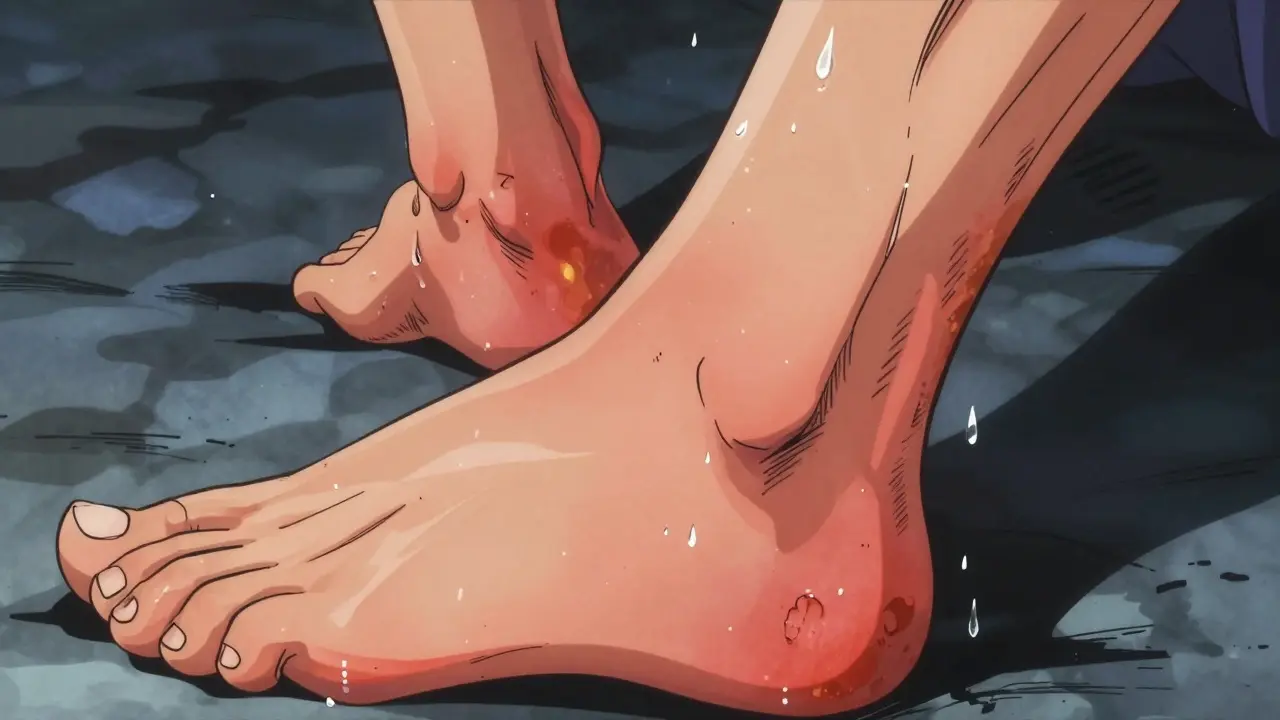
That itchy, burning sensation between your toes isn't just annoying-it’s a sign that you’ve likely picked up athlete's foot, also known as tinea pedis. This common fungal infection affects roughly one in four people globally at any given time. The good news? You probably don’t need a doctor to fix it. Over-the-counter (OTC) antifungal treatments are the first line of defense for about 85% of uncomplicated cases. But with so many creams, sprays, and powders on the shelf, how do you pick the right one without wasting money or time?
Choosing the wrong product or using it incorrectly can turn a mild nuisance into a stubborn, recurring problem. This guide cuts through the marketing hype to show you exactly which active ingredients work best, how to apply them correctly, and when it’s time to see a professional.
How to Pick the Right Active Ingredient
Not all antifungals are created equal. While they all aim to kill the fungus causing your discomfort, they do so in different ways and with varying speeds. The most common active ingredients you’ll find in OTC products include terbinafine, clotrimazole, miconazole, and tolnaftate.
Terbinafine is widely considered the gold standard for OTC treatment. It works by inhibiting squalene epoxidase, an enzyme fungi need to build their cell walls. This action kills the fungus directly (fungicidal) rather than just stopping its growth (fungistatic). Clinical data shows terbinafine achieves a mycological cure rate of about 83%, significantly higher than other options. Because it’s so potent, you typically only need to apply it once a day for one to two weeks.
Clotrimazole and miconazole belong to a class called imidazoles. They work by blocking ergosterol synthesis, which weakens the fungal cell membrane. These are fungistatic, meaning they stop the fungus from spreading while your immune system cleans up the rest. They require twice-daily application for two to four weeks. However, they have a broader spectrum of activity, making them better if you suspect a mixed infection involving yeast or non-dermatophyte molds.
Tolnaftate is an older ingredient that’s still popular because it’s cheap and has drying properties. It’s effective for simple interdigital infections (between the toes) but struggles with more extensive cases like moccasin-type athlete’s foot, which covers the sole of the foot. Its efficacy rate hovers around 60-65%, lower than terbinafine’s.
| Active Ingredient | Brand Examples | Application Frequency | Treatment Duration | Cure Rate Estimate |
|---|---|---|---|---|
| Terbinafine (1%) | Lamisil AT | Once daily | 1-2 weeks | ~83% |
| Clotrimazole (1%) | Lotrimin AF | Twice daily | 2-4 weeks | ~74% |
| Miconazole (2%) | Desenex | Twice daily | 2-4 weeks | ~74% |
| Tolnaftate (1%) | Tinactin | Twice daily | 4 weeks | ~60-65% |
Choosing the Right Formulation
The vehicle you choose-cream, spray, powder, or gel-matters almost as much as the ingredient inside. Your choice should depend on where the infection is and what your lifestyle looks like.
- Creams: These hold the largest market share (about 65%) because they are easy to spread and absorb well into dry, scaly skin. If your athlete’s foot presents as flaky patches on the sole or sides of your feet, a cream is usually your best bet.
- Sprays: Preferred by about 78% of users for daily convenience. Sprays are excellent for hard-to-reach areas and allow you to treat both your feet and the inside of your shoes simultaneously without touching the infected area. They are less messy than creams.
- Powders: Ideal for moist, macerated infections where the skin between your toes is white, soggy, and peeling. Powders absorb moisture, creating an environment where fungi struggle to survive. They are also the top choice for prevention, reducing recurrence rates by up to 63% when used daily in shoes.
- Gels/Liquids: Best for hairy areas or very localized spots. They dry quickly and don’t leave a greasy residue, but they cover less surface area than creams.
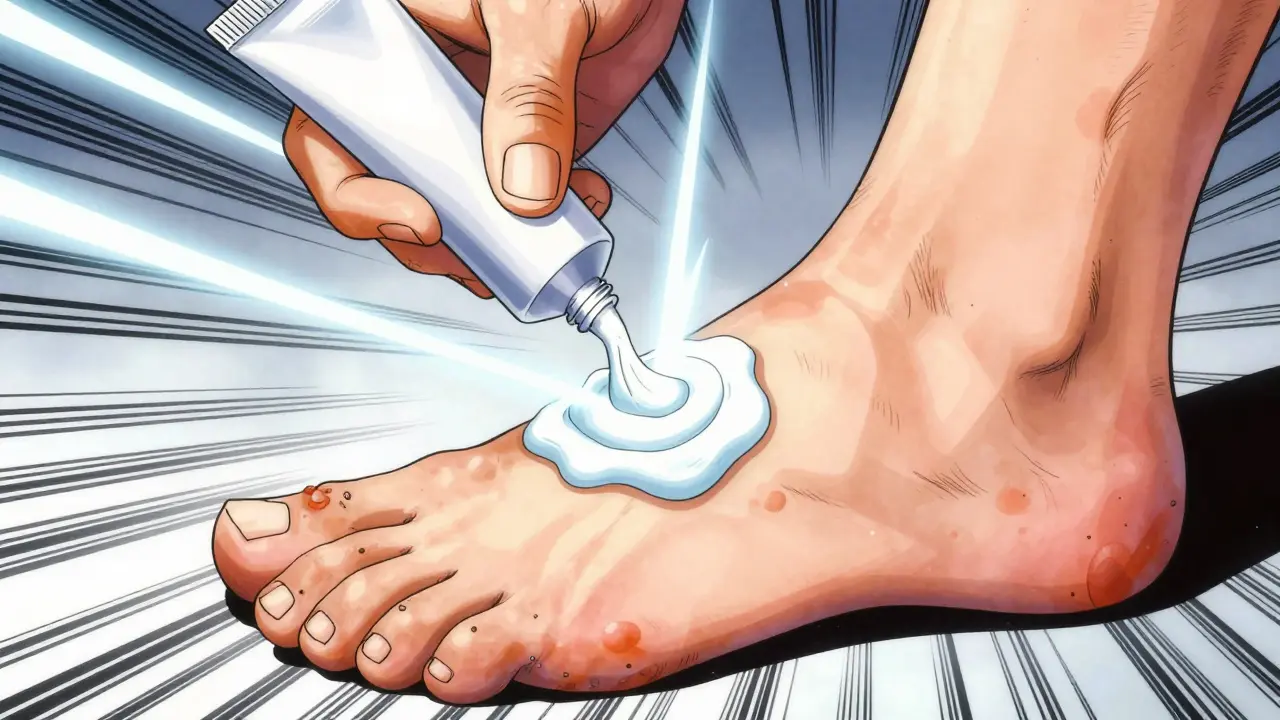
Step-by-Step Application Protocol
Even the best medication fails if applied poorly. Many treatment failures aren’t due to drug resistance but rather user error. Follow this protocol to maximize effectiveness:
- Wash and Dry Thoroughly: Wash your feet with soap and water. Then, dry them completely. Pay special attention to the spaces between your toes. If you’re worried about missing moisture, use a hairdryer on the cool setting. Fungi thrive in damp environments, so starting with dry skin is non-negotiable.
- Apply Thinly: You don’t need a thick layer. Apply a thin coat of the antifungal to the affected area and extend it about one inch beyond the visible border of the rash. Fungi often spread further than you can see.
- Treat Both Feet: Even if only one foot is visibly infected, treat both. Athlete’s foot is highly contagious and often asymmetrical in presentation.
- Stick to the Schedule: If the label says twice daily, do twice daily. Set a reminder on your phone if you have to. Inconsistent application is the number one reason patients report “it didn’t work.”
- Continue After Symptoms Fade: This is the most critical step. Keep applying the medication for at least one to two weeks after your itching and redness disappear. Stopping early allows surviving fungal spores to regrow, leading to a relapse. For terbinafine, this means continuing for a full week after symptoms vanish; for clotrimazole, continue for two weeks.
Prevention: Keeping It Away for Good
Treating the infection is only half the battle. Preventing recurrence requires changing your foot hygiene habits. Fungi love warm, dark, and moist places. Your goal is to make your feet inhospitable to them.
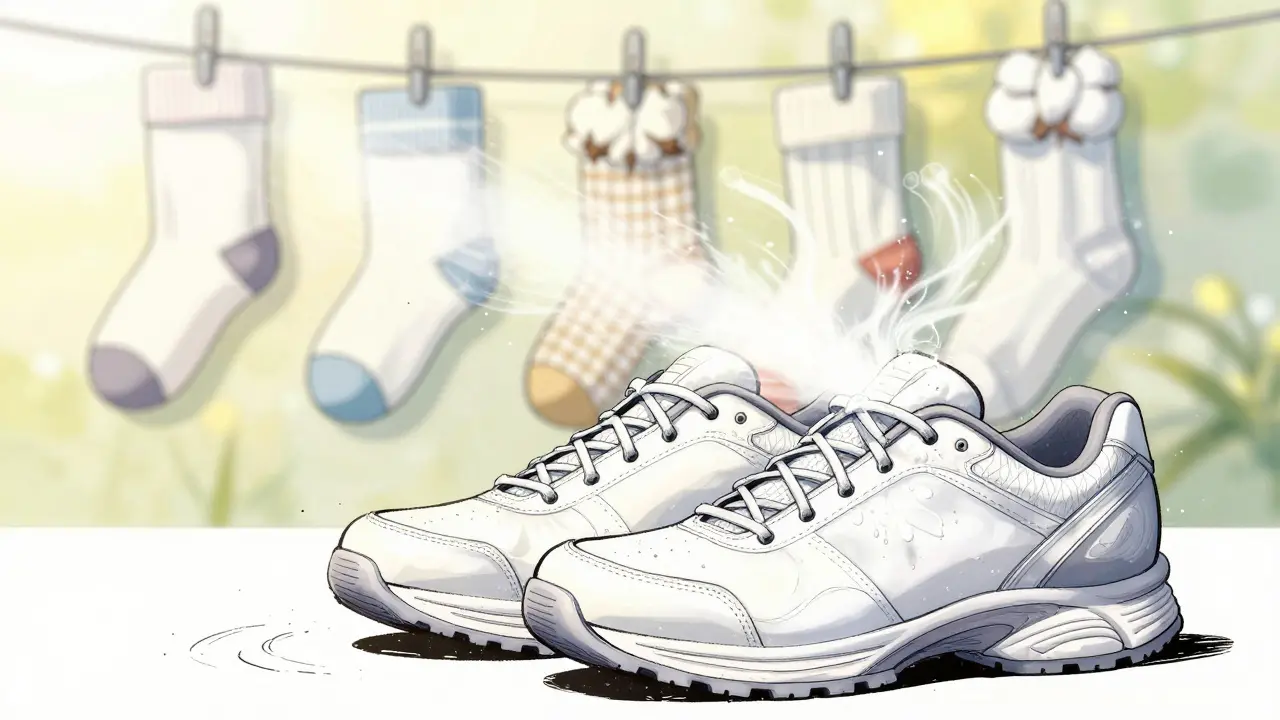
Change your socks at least twice a day, especially if your feet sweat heavily. Cotton socks are breathable, but moisture-wicking synthetic blends can keep feet drier during intense activity. Never wear wet socks. Rotate your shoes, allowing them to air out for 24 to 48 hours between wears. This reduces fungal growth in footwear by nearly 80%. Consider putting antifungal powder in your shoes every morning before you put them on.
In public showers, locker rooms, and pool decks, always wear flip-flops. Barefoot exposure in these communal areas is the primary transmission route. At home, use a separate towel for your feet to avoid cross-contaminating your body or family members. If you live with others who have athlete’s foot, everyone should be treated simultaneously to prevent passing the infection back and forth.
When to See a Doctor
Most cases resolve with OTC care, but some situations require professional intervention. Seek medical advice if:
- You’ve used an OTC antifungal consistently for two weeks with no improvement.
- The infection spreads to your toenails (onychomycosis), which topical creams rarely cure effectively.
- You notice signs of bacterial superinfection, such as pus, increasing redness, warmth, swelling, or pain. This may require antibiotics.
- You have diabetes or a compromised immune system. For diabetics, even minor foot infections can lead to serious complications, so professional monitoring is essential.
- The rash covers more than 70% of your foot surface.
If OTC treatments fail, a doctor might prescribe oral antifungals like terbinafine or itraconazole, or stronger topical solutions like ciclopirox. Oral medications are highly effective but carry risks of liver side effects, so they require blood tests and medical supervision.
How long does it take for OTC athlete's foot treatment to work?
You should notice relief from itching within 24 to 48 hours. However, complete clinical resolution typically takes 1 to 2 weeks for terbinafine and 2 to 4 weeks for clotrimazole or miconazole. Always continue treatment for the full recommended duration, even if symptoms disappear earlier, to prevent recurrence.
Can I use Vaseline or moisturizer on athlete's foot?
Avoid using heavy occlusive ointments like Vaseline on active fungal infections, as they trap moisture and create an ideal environment for fungi to grow. Once the infection is fully cleared, you can use a light, non-comedogenic moisturizer to repair dry, cracked skin, but ensure your feet are completely dry first.
Is athlete's foot contagious to other parts of the body?
Yes. The same dermatophytes that cause athlete's foot can spread to your groin (jock itch) or hands (tinea manuum). To prevent this, always wash your hands after applying antifungal cream, and never touch other body parts with contaminated fingers. Using a dedicated foot towel also helps contain the fungus.
Why did my athlete's foot come back after treatment?
Recurrence is usually caused by stopping treatment too soon, failing to treat both feet, or reinfecting yourself from contaminated shoes or socks. Fungal spores can survive in fabric for months. To prevent this, disinfect your shoes with antifungal spray, wash socks in hot water, and maintain daily preventive hygiene habits.
Are natural remedies like tea tree oil effective?
While some studies suggest tea tree oil has antifungal properties, it is generally less effective and slower-acting than FDA-approved OTC medications like terbinafine. It can also cause contact dermatitis in sensitive individuals. For reliable results, stick to clinically proven OTC antifungals rather than relying solely on natural remedies.

Write a comment
Your email address will not be published.
Recent Posts
-
 Mononucleosis: Epstein-Barr Virus, Fatigue, and Recovery March 12, 2026
 -
 How to Spot Labeling Errors in Data and Request Fixes July 29, 2026
 -
 Medication-Induced Drowsiness: What Causes It and How to Manage It December 15, 2025


13 Comments
thats so true, i always forget to dry my toes completly and then wonder why it comes back. thanks for the tip on the hair dryer thing, never thought of that.
You people are just slaves to big pharma pushing these chemicals. The body knows how to heal itself if you let it breathe. It is a moral failing to trust in synthetic solutions over natural order. Simple living cures simple problems.
Stick with terbinafine. Works fast. Don't waste time on weak stuff. You got this.
OMG I literally just bought the wrong cream yesterday and now I feel like such an idiot!! Why does nobody tell us that clotrimazole takes FOREVER?? I am so frustrated right now, my feet are still itching and I have been using it for a week already. This article saved me from wasting another month on useless products. Thank you so much for posting this, I was about to give up entirely!
The key is consistency. Most guys stop when the itch goes away, but the fungus is still there. Treat both feet even if one looks fine. Also, throw out old socks or wash them in hot water. That’s where the spores hide. Lamisil is the way to go for most people.
In India we deal with humidity all year round. These western creams are too expensive for daily use. We use neem leaves and turmeric paste which works better than any chemical nonsense. Your guide ignores traditional wisdom that has worked for centuries. Passive observation shows your methods are flawed.
Funny how everyone thinks they know best 🤣. Real men use powder because it keeps things dry. Creams are for amateurs who want sticky feet. Just a thought 😂. Stop overcomplicating it.
I must respectfully disagree with the notion that powders are superior for all cases. While moisture control is vital, the active ingredient concentration in creams often penetrates deeper into the stratum corneum. Therefore, for established infections, creams remain the clinical standard. One should consider the specific presentation of their condition before choosing a vehicle.
hey everyone! i totally agree with the part about drying your feet. i used to rush through my shower routine and then wonder why my feet were always sore. taking that extra minute to dry between toes changed everything for me. its small steps that make a big difference. keep going strong friends!
This is really helpful information! I appreciate the detailed breakdown of ingredients. It makes sense to choose based on severity. Thanks for sharing this resource with the community.
Society tells you to buy more. I say do less. The fungus feeds on your fear. Concise action beats verbose guides. Think for yourself.
I cannot believe people actually follow these instructions blindly. What if the fungus is resistant? What if it's not fungus at all? You are all walking around spreading misinformation without consulting a specialist. It is tragic how little people care about proper medical protocol.
Oh my goodness, this is such a fantastic read! I have struggled with athlete's foot for years and never understood why it kept coming back. Now I realize I was probably stopping treatment too soon. I am so excited to try the terbinafine approach and see if it finally clears up completely. Thank you so much for writing this detailed guide, it gives me so much hope that I can finally be comfortable again!