

Levothyroxine-Soy Interaction Calculator
How Much Soy Can Interfere With Your Medication
Enter times and soy amount to see if you're within safe separation limits
If you take levothyroxine for hypothyroidism, what you eat can make a real difference in how well your medicine works. One of the most common but often overlooked problems involves soy products. Many people don’t realize that something as simple as soy milk, tofu, or even a protein bar can interfere with how your body absorbs levothyroxine - and that can lead to symptoms like fatigue, weight gain, or brain fog, even if you’re taking your dose exactly as prescribed.
How Soy Gets in the Way of Thyroid Medicine
Levothyroxine is a synthetic version of the thyroid hormone T4. It’s designed to be absorbed in your small intestine and then used by your body to regulate metabolism, energy, and body temperature. But when soy is present in your stomach at the same time, its natural compounds - mainly genistein and daidzein - bind to the medicine before it can be absorbed. This isn’t just a theory. Studies using blood tests show that when soy and levothyroxine are taken together, the amount of hormone your body actually absorbs drops by 20% to 40%.This interference isn’t limited to one type of soy. It happens with soy milk, tofu, tempeh, edamame, soy protein isolate, and even soy lecithin - which is hidden in many processed foods. The more soy protein you consume, the worse the effect. A 2006 study found that 20 grams of soy protein reduced absorption by 15.8%, while 40 grams cut it by over 35%.
Why This Matters More Than You Think
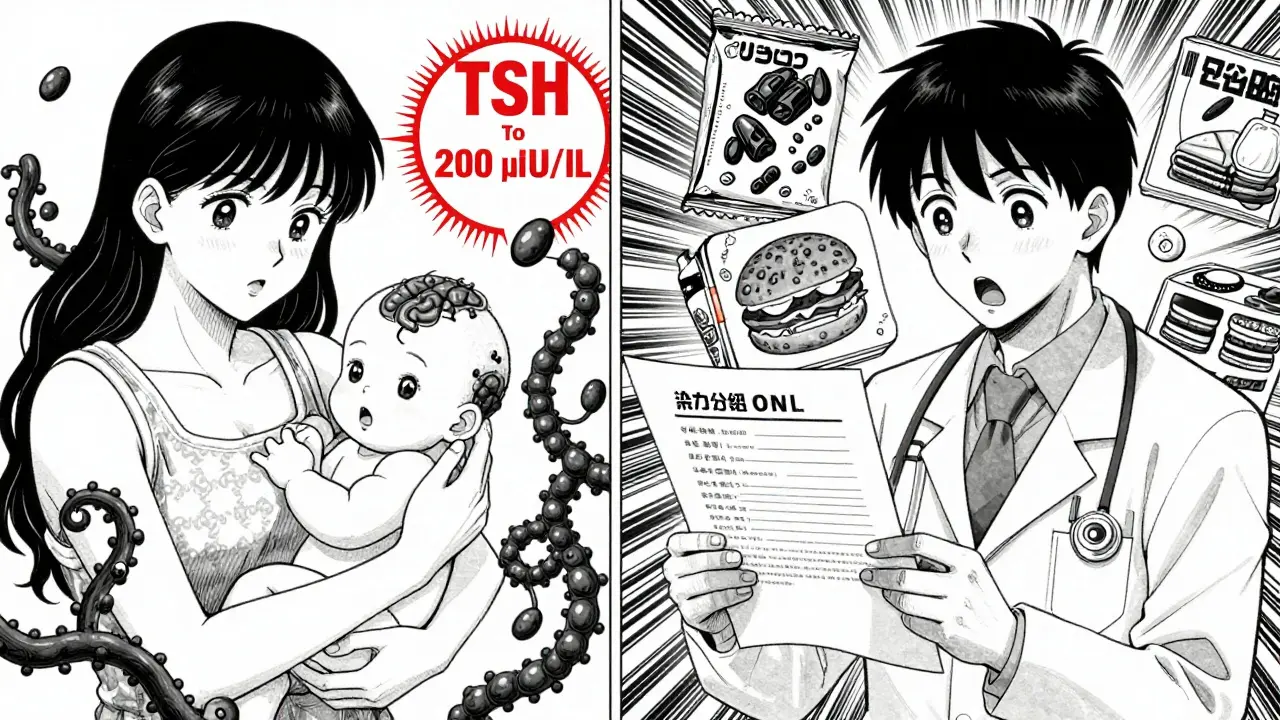
For most people, a small drop in hormone absorption might not seem like a big deal. But thyroid hormone levels need to be tightly controlled. Even a 20% drop can push your TSH (thyroid-stimulating hormone) from a normal range into the hypothyroid zone. That’s why some patients see their TSH jump from 2.1 to 8.7 after switching to soy milk for breakfast - and their doctor has no idea why.Infants with congenital hypothyroidism are especially at risk. A 2012 study documented newborns whose TSH levels soared above 200 µIU/mL despite being given the correct levothyroxine dose - all because they were on soy-based formula. Left untreated, this can lead to permanent developmental delays. In adults, the problem is harder to spot. Older adults, who make up nearly half of all levothyroxine users, are more vulnerable because their stomach acid naturally decreases with age, making absorption already trickier.
How Soy Compares to Other Food Interferents
Soy isn’t the only thing that messes with levothyroxine. Calcium, iron, coffee, fiber, and even tea can reduce absorption too. But soy ranks third in severity:- Calcium supplements: 35.2% reduction
- Iron supplements: 32.1% reduction
- Soy products: 25.3% reduction
- Coffee: 21.4% reduction
- High-fiber foods: 17.8% reduction
- Tea: 15.3% reduction
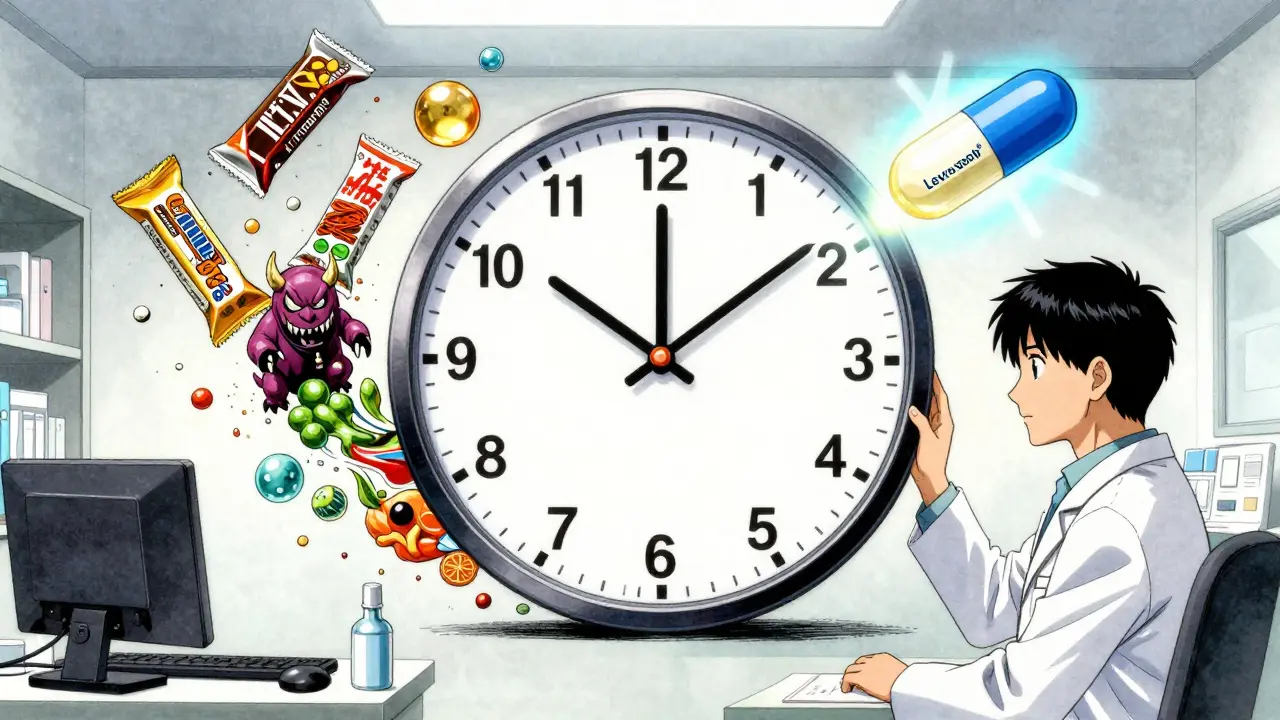
Unlike calcium and iron, which need a 4-hour gap before or after taking levothyroxine, soy requires at least a 3-hour separation. That’s because soy protein empties from the stomach faster - around 2.8 hours on average. If you take your pill at 7 a.m. and eat a soy-based breakfast at 7:30 a.m., you’re likely still blocking absorption.
The Hidden Soy Problem
One of the biggest challenges is that soy isn’t always obvious. Soy lecithin is in 70% of packaged foods - think chocolate, salad dressings, veggie burgers, and protein shakes. Soy protein isolate is in 68% of vegetarian meat alternatives. If you’re eating plant-based meals regularly, you’re probably consuming soy multiple times a day without realizing it.A 2023 survey of over 3,200 thyroid patients found that 17% of unexplained TSH fluctuations were directly linked to soy. That’s second only to calcium supplements. Yet, a Reddit poll of 1,847 people with thyroid conditions showed that 63% had never heard of this interaction.
What Experts Say - And Why There’s Confusion
There’s some debate in the medical community. Some studies on adults show no major TSH changes in people who eat 1-2 servings of soy per day. But those studies don’t account for individual differences in metabolism, stomach acid, or how soy is prepared. The American Thyroid Association and Endocrine Society both agree: separate soy and levothyroxine by at least 3 hours.The Mayo Clinic puts it plainly: “You don’t have to quit soy - just don’t eat it right before or after your pill.” That’s the practical middle ground most endocrinologists follow. But it’s not always easy. One patient reported taking 100 µg of Synthroid with a soy latte every morning for seven years with stable TSH levels. Another had a baby whose development was delayed because the pediatrician didn’t connect soy formula to poor hormone absorption.
How to Manage It - Simple Rules That Work
You don’t need to eliminate soy. You just need to time it right. Here’s what works based on clinical evidence:- Take your levothyroxine on an empty stomach, first thing in the morning, with a full glass of water.
- Wait at least 3 to 4 hours before eating soy products - including soy milk, tofu, tempeh, or soy-based snacks.
- If you prefer to take your pill at night, wait at least 3 hours after your last soy-containing meal before taking it.
- Check food labels. Look for “soy protein,” “soy lecithin,” “soy isolate,” or “textured vegetable protein.”
- Keep a food and TSH log. If your levels start rising without explanation, review your diet for hidden soy.
For infants with congenital hypothyroidism, the American Academy of Pediatrics recommends switching from soy formula to a non-soy formula immediately if hormone levels don’t improve. Soy formula is not the standard for these babies - and it shouldn’t be used unless absolutely necessary.
New Options on the Horizon
There’s some promising research. A 2020 trial found that a softgel version of levothyroxine called Tirosint® was absorbed 18.3% better than regular tablets when taken with soy. That’s a big deal for people who rely on soy-heavy diets.In 2023, a new formulation called Levo-Sorb® showed 92.4% absorption even with soy present - compared to just 58.7% for standard levothyroxine. It’s not widely available yet, but it’s a sign that science is responding to this real-world problem.
What You Should Do Today
If you’re on levothyroxine:- Don’t panic - you don’t have to give up soy forever.
- Do separate your medicine and soy by at least 3 hours.
- Ask your pharmacist or doctor to review your diet - especially if your TSH has been rising lately.
- Check labels on everything: protein bars, plant-based meats, sauces, and even some cereals.
- If you’re a parent of a baby on levothyroxine, confirm with your pediatrician that the formula is soy-free.
Thyroid medication isn’t like a vitamin you can take with breakfast. It’s a precise hormone replacement. What you eat matters - and soy is one of the most common, silent disruptors out there. The good news? A few simple changes can make a huge difference. You don’t need to be perfect. You just need to be aware.

Write a comment
Your email address will not be published.

11 Comments
so like... i just took my levothyroxine with my soy latte for 5 years and my tsh was always 'normal'?? what if the studies are just biased? like maybe they only tested people who already had bad absorption? idk man. maybe we're all just being scared by pharma? 🤔
bro i switched to almond milk and my energy levels went from 'i need a nap at 10am' to 'i did 3 sets at the gym before breakfast'. no joke. this stuff is real. you're not crazy if you feel better after cutting soy.
THEY DON'T WANT YOU TO KNOW THIS. SOY IS A CULTIVATED TOOL BY BIG PHARMA TO KEEP THYROID PATIENTS DEPENDENT. WHY? BECAUSE IF YOU'RE STILL SYMPTOMATIC, YOU KEEP TAKING THE DRUG. THEY'RE PROFITING OFF YOUR FATIGUE. CHECK THE PATENTS ON LEVO-SORB. IT WAS DEVELOPED BY A COMPANY OWNED BY A PHARMA EXEC WHO ALSO INVESTED IN SOY PRODUCTION. THIS ISN'T SCIENCE. THIS IS CONTROL.
As someone raised in a household where soy was a daily staple, I find this information both vital and deeply concerning. The cultural normalization of soy in plant-based diets often overlooks biochemical realities. It is not a matter of personal preference but of physiological necessity. I urge all readers to consult their endocrinologist and consider a dietary audit-not out of fear, but out of informed care.
i used to eat tofu every day for protein and thought i was being so healthy... then my tsh jumped from 2.5 to 8.9 and i had no idea why. my doctor was like 'did you change anything?' and i said 'no'... until i remembered i started drinking soy milk instead of cow's milk. after switching and waiting 4 hours, my levels dropped back to normal in 6 weeks. it's wild how something so 'natural' can mess with your hormones so quietly. i feel so dumb but also so relieved.
soy is poison for thyroids. stop it. now.
the 3-hour gap sounds reasonable. i’ve been taking mine at 6am and having soy for lunch. never had an issue. maybe the studies overstate it? or maybe i’m just lucky.
i just started taking levothyroxine last month and i was already planning to go plant based. now i know to wait. thanks for the heads up. i feel less alone in this
in india we have eaten soy for centuries in different forms. no one has thyroid issues here. this is western paranoia. you eat too much processed junk and then blame soy. the real problem is your lifestyle, not the bean.
if you're taking levothyroxine and eating soy you're basically sabotaging your own health. no one else is responsible for your choices. stop being lazy and read the label. seriously. i'm not mad. i'm just disappointed.
i tried tirosint and it works better with soy but its 3x more expensive. why dont insurance cover it if its clearly better? this is healthcare corruption