
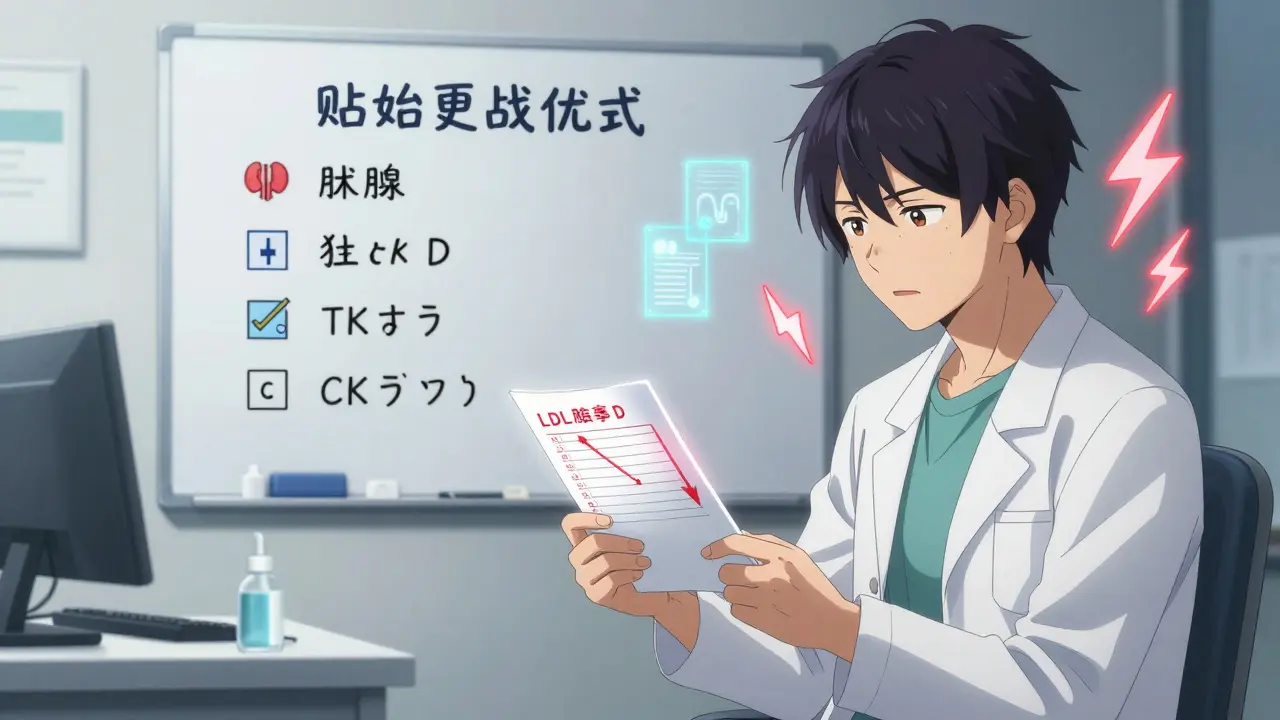
Statin Tolerance Assessment Tool
How to Determine True Statin Intolerance
According to the National Lipid Association, true statin intolerance requires specific criteria. This tool helps you check if you qualify based on clinical guidelines.
Answer the questions above to see your results.
Why So Many People Stop Taking Statins-And Why They Shouldn’t
Statin intolerance isn’t rare. In fact, up to one in four people on statins say they can’t take them anymore because of muscle pain, weakness, or fatigue. But here’s the catch: most of them don’t actually need to quit. Many of these symptoms aren’t caused by the statin at all-and even when they are, there are ways to get back on track without losing the heart protection statins offer.
Statin therapy reduces heart attacks and strokes by 20-25% for every 1 mmol/L drop in LDL cholesterol. That’s not a small benefit. Yet, because of poorly managed side effects, nearly half of patients who report intolerance end up stopping statins for good. That’s dangerous. Cardiovascular disease is still the number one killer worldwide. If you’re one of the people told you’re "statin intolerant," you need to know there’s a better way.
What Exactly Is Statin Intolerance?
Statin intolerance isn’t just "my legs hurt" after taking a pill. It’s a clinical diagnosis with clear rules. According to the National Lipid Association’s 2022 update, it’s when you can’t take at least two different statins-one at the lowest dose, another at any dose-because of muscle symptoms that go away when you stop the drug and return when you restart it.
That’s important. Many people think they’re intolerant because they felt sore after taking simvastatin once. But true intolerance requires confirmation through a process called rechallenge. Without that, you’re just guessing. And guesswork leads to unnecessary risks.
Doctors used to blame statins for any muscle ache. Now they know other things can cause it: low vitamin D, underactive thyroid, even over-the-counter supplements like red yeast rice. A proper clinic doesn’t just stop the statin-they investigate everything else first.
The Four-Step Protocol That Works
Specialized statin intolerance clinics follow a strict, step-by-step plan. It’s not complicated, but it’s rarely done in regular doctor’s offices. Here’s how it actually works:
- Stop the statin completely for two weeks. No exceptions. Muscle symptoms should start improving within days and disappear fully within two weeks if they’re truly statin-related.
- Check for other causes. Blood tests for thyroid function (TSH), vitamin D, and creatine kinase (CK) are required. CK levels above 10 times the normal limit or over 1,000 IU/L are a red flag. But even normal CK doesn’t rule out muscle symptoms-clinical history matters more.
- Rechallenge with a different statin. Don’t go back to the same one. Switch to a hydrophilic statin like rosuvastatin or pravastatin. These don’t enter muscle tissue as easily as lipophilic ones like simvastatin or atorvastatin. Start at the lowest dose-even 5 mg once a week.
- Try intermittent dosing. If daily dosing still causes issues, try taking the statin every other day or twice a week. Rosuvastatin has a long half-life, so it still works even if you don’t take it daily. Studies show 76% of patients who failed daily dosing tolerate this approach.
At Cleveland Clinic, pharmacists lead this rechallenge process. Why? Because they know the dosing tricks, drug interactions, and how to explain it to patients in plain language. In clinics where pharmacists are involved, success rates jump 22% compared to standard care.
What If You Still Can’t Tolerate Any Statin?
Some people-about 5-15% of those initially thought to be intolerant-truly can’t take any statin, even at low or intermittent doses. That’s where non-statin options come in. And no, you don’t need to go straight to expensive injectables.
First-line? Ezetimibe. It’s a pill. Costs about $35 a month. Proven in the IMPROVE-IT trial to reduce heart events by 6% when added to statins-and it works alone too. Many patients tolerate it perfectly.
Second option? Bempedoic acid (Nexletol). Approved in 2020, it lowers LDL by 18% without muscle side effects because it only activates in the liver, not in muscles. It costs about $491 a month, but many insurance plans cover it for high-risk patients.
PCSK9 inhibitors like evolocumab (Repatha) are powerful-they drop LDL by 60%-but they cost $5,850 a year. Insurance often denies them unless you’ve tried and failed ezetimibe and bempedoic acid. Some patients spend months appealing. That’s why clinics help navigate the paperwork.
Real Stories From Patients Who Got Their Life Back
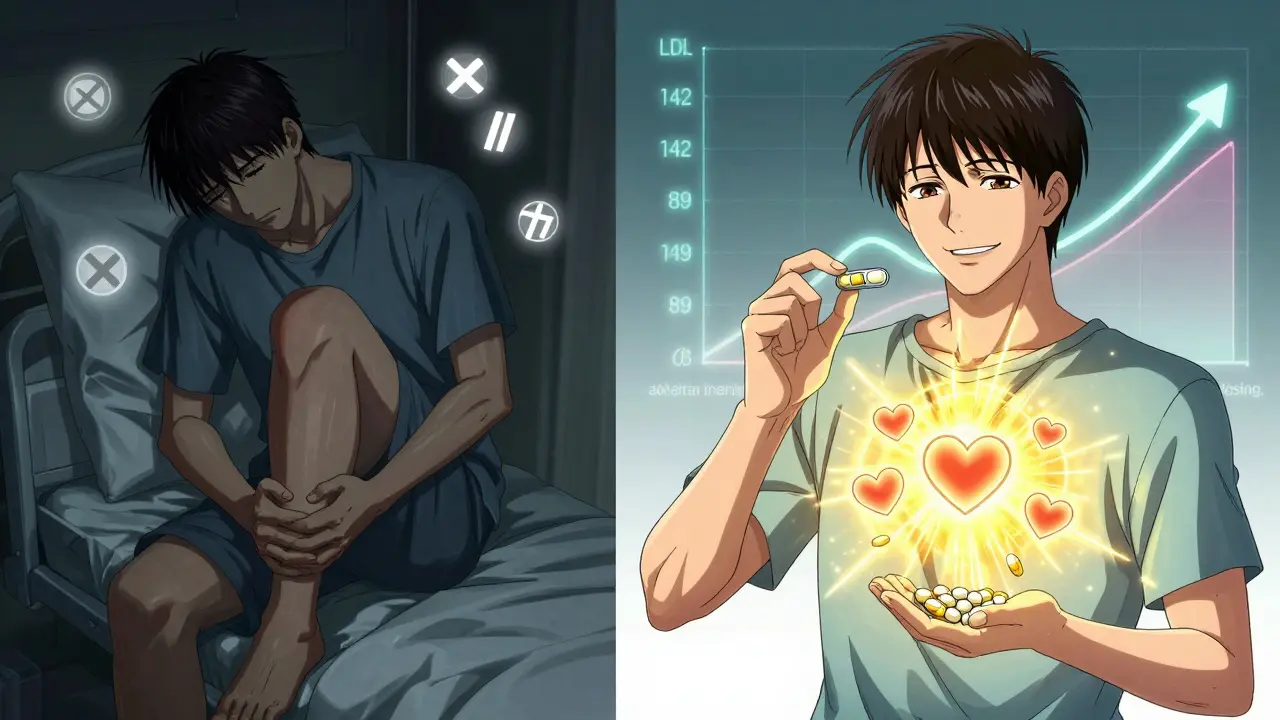
"I was told I was statin intolerant five years ago," says a Reddit user named HeartPatient87. "I had LDL of 142. My doctor said, ‘Just live with it.’ Then I found a lipid clinic. They put me on rosuvastatin 5 mg twice a week with CoQ10. My LDL dropped to 89. No pain. No fatigue. I’m not scared anymore."
Kaiser Permanente’s patient survey in 2022 showed 82% of people in their statin intolerance program were able to resume some form of lipid-lowering therapy. In regular clinics? Only 45%.
Another patient on the Inspire forum shared: "I got on ezetimibe after three failed statins. My insurance denied PCSK9 inhibitors for 11 weeks. Four appeals. But I kept pushing. Now my LDL is 72. I’m not dying of a heart attack because someone finally listened."
These aren’t outliers. They’re the result of structured care.
Why Most Clinics Fail at This
Here’s the truth: most doctors don’t have time to do the rechallenge. They don’t have the training. They don’t have the support staff. So they say, "Stop the statin. Try ezetimibe." And that’s it.
But that’s not enough. Without ruling out other causes, without trying a different statin, without adjusting the dose-you’re not managing intolerance. You’re giving up.
VA hospitals, which implemented a standardized protocol across 170 centers in 2020, cut false diagnoses by 38%. Why? Because they forced doctors to follow the steps. No shortcuts.
Meanwhile, community hospitals still have only a 42% adoption rate of formal protocols. Academic centers? 87%. The gap is real-and it’s costing lives.
What’s New in 2026?
Things are moving fast. In 2023, Mayo Clinic started testing for the SLCO1B1 gene variant, which makes people more likely to get muscle pain from simvastatin. If you have it, you avoid that drug. Simple.
Phase 2 trials for nanoparticle statins are showing 92% tolerability. These tiny drug carriers deliver statins straight to the liver, bypassing muscle tissue. If approved, they could change everything.
And the ACC’s Statin Intolerance Tool-launched in 2023-is now used in over 600 clinics. It’s free, web-based, and walks you through risk calculators: "Is your ASCVD risk high enough to justify trying again?" It even helps you explain the options to patients.

What You Can Do Right Now
If you’ve been told you’re statin intolerant:
- Don’t accept that as final. Ask: "Did you rule out thyroid and vitamin D?"
- Ask: "Can I try a different statin? Even a tiny dose?"
- Ask: "Can I take it every other day?"
- Ask: "What about ezetimibe?"
- Ask: "Can you refer me to a lipid specialist?"
Most people can get back on some form of treatment. You don’t have to live with high LDL. You don’t have to fear a heart attack because you stopped the one thing proven to prevent it.
Frequently Asked Questions
Can statin side effects be psychological?
Yes. Studies show up to 80% of people who report muscle pain on statins may actually be experiencing a nocebo effect-where the expectation of side effects causes real symptoms. This is why blinded rechallenge is critical. In controlled studies, patients who didn’t know they were taking a statin often reported no symptoms, even when they were. That’s why proper clinics don’t rely on patient reports alone-they use structured testing.
Is it safe to take statins every other day?
Yes, for certain statins. Rosuvastatin and atorvastatin have long half-lives, meaning they stay active in the body for days. Studies show intermittent dosing (every other day or twice weekly) lowers LDL by 20-40% and is tolerated by 76% of patients who failed daily dosing. It’s not experimental-it’s a standard protocol in major clinics.
Why not just stop statins and use supplements?
Red yeast rice, garlic, and fish oil don’t come close to statins in lowering LDL or preventing heart events. Red yeast rice contains a natural form of lovastatin-and can cause the same muscle side effects. Supplements aren’t regulated. Their potency varies. And none have the 170,000-patient evidence base that statins do. If you’re avoiding statins for fear of side effects, you’re risking something far worse: a heart attack or stroke.
How do I find a statin intolerance clinic?
Look for lipid specialists at academic medical centers or large hospital systems. Ask your cardiologist for a referral. The National Lipid Association’s website has a provider directory. Some insurance plans require a referral. If your local hospital doesn’t have one, consider traveling to a nearby city-many clinics offer telehealth follow-ups after the initial visit.
Will my insurance cover non-statin treatments?
Ezetimibe is usually covered. Bempedoic acid often requires prior authorization. PCSK9 inhibitors are expensive and typically denied unless you’ve tried and failed two other options and have high ASCVD risk. Many clinics have financial counselors who help with appeals. Don’t take "no" as final-many patients get approval after multiple appeals.
Next Steps If You’re Struggling With Statins
If you’re on a statin and having side effects, don’t quit. Don’t assume it’s hopeless. Write down your symptoms: when they started, where they hurt, how bad they are (use a 0-10 scale), and if they improved after stopping. Take that to your doctor. Ask for a CK test. Ask about switching statins. Ask about intermittent dosing.
If your doctor says, "Just stop it," ask for a referral to a lipid specialist. If they don’t know what that is, find one yourself. The American College of Cardiology’s Statin Intolerance Tool is free and public. Print it out. Bring it to your appointment.
Statin intolerance is fixable. You just need the right system. And now, you know how to find it.

Write a comment
Your email address will not be published.
Recent Posts
-
 BPH Symptoms: When to See a Doctor for Prostate Health September 28, 2025




12 Comments
Lol so now we're supposed to trust some 'lipid clinic' run by pharmacists like they're wizards with a clipboard? In Canada we don't have time for this nonsense. My GP told me to stop statins and I did. My legs feel fine. My LDL? Still high. But at least I'm not dragging myself around like a zombie. You people act like statins are holy water. They're not. They're chemicals. And I'm not your lab rat.
I just want to say THANK YOU for writing this. 🙏 My mom was told she was 'statin intolerant' and gave up-until she found a lipid clinic in Toronto. They put her on rosuvastatin twice a week. Now she hikes every weekend. No pain. No fear. I cried reading this. If you're reading this and you're scared? Don't give up. There's a way. You're not broken. 💛
In India, we don't even have access to these clinics. My doctor just says 'take ezetimibe' and charges me 500 rupees for a blood test. No rechallenge. No vitamin D check. Just... done. I get it-resources are limited. But please don't act like this is standard everywhere. Many of us are just hoping for a pill that doesn't make us feel like we're rotting from the inside.
Ah yes, the classic Western medical theater: blame the patient’s thyroid, then the vitamin D, then the red yeast rice, then the nocebo effect, then finally-after 7 appointments and 3 blood draws-offer a statin again. Meanwhile, in the real world, people die of heart attacks because they were too poor to afford the 11-week appeal process for a $5,850 drug. We don’t need protocols. We need universal healthcare. Or at least, a drug company that doesn’t treat patients like ATM machines.
Hey, I know how hard it is to feel like your body betrayed you. I was on simvastatin for 3 months, felt like I was walking through molasses. Gave up. Then I found a clinic-did the rechallenge, switched to pravastatin 10mg every other day. Now I’m lifting weights again. It’s not magic. It’s just patience + science. You’re not weak for struggling. You’re human. And you deserve better than a shrug from your doctor. Keep going. 🙌
so like... i just stopped statins bc my legs hurt and now i feel like a new person?? like, what if the whole thing is just a scam?? like, why do we even need these drugs?? my grandad lived to 92 on toast and tea. maybe we're all just being sold fear?? 🤔
Let’s break this down. 76% success rate on intermittent dosing? That’s not a win-that’s a failure rate of 24%. And we’re calling that a protocol? Meanwhile, the cost of bempedoic acid could buy a used Prius. And PCSK9 inhibitors? Only for the rich or the terminally bureaucratic. This isn’t medicine. It’s a luxury subscription service with a side of guilt-tripping. You’re not failing if you can’t afford it. The system is.
Nocebo effect? Funny. My muscle pain went away the moment I stopped taking it. Coincidence? Or just another way to gaslight patients into taking drugs they don’t need?
I’ve been on rosuvastatin 5mg every other day for 18 months now. No pain. LDL down 40%. I didn’t know this was even a thing until I read this post. I’m just glad someone finally explained it without making me feel like a failure for needing help. Thanks for the clarity. I’ll be sharing this with my brother-he’s been scared to even ask his doctor.
wait so if i take statin every other day its still working?? like i thought it had to be daily?? and why do they say 'hydrophilic' like its a magic word?? can someone dumb this down for me?? also is coq10 even real or just a scam??
I’ve been a nurse for 22 years. I’ve seen patients cry because they were told they couldn’t take statins-and then I’ve seen them light up when they found a clinic that actually listened. This isn’t just about LDL numbers. It’s about dignity. It’s about not being dismissed. It’s about giving people back their lives. I’ve watched someone go from wheelchair to walking their dog again because someone took the time to do the rechallenge. This isn’t just medicine. It’s justice. And if your doctor doesn’t know this protocol? Find one who does. You deserve more than a quick 'stop it.' You deserve a chance.
so like... i just found out my 'statin intolerance' was actually low vit D and a thyroid thing?? and now i'm back on a tiny dose?? and i feel like a superhero?? 🤯 i didn't even know to ask for a CK test. my doc just said 'try ezetimibe' and called it a day. this post literally saved me. thank u. also i cried. like, full ugly tears. 🥹