
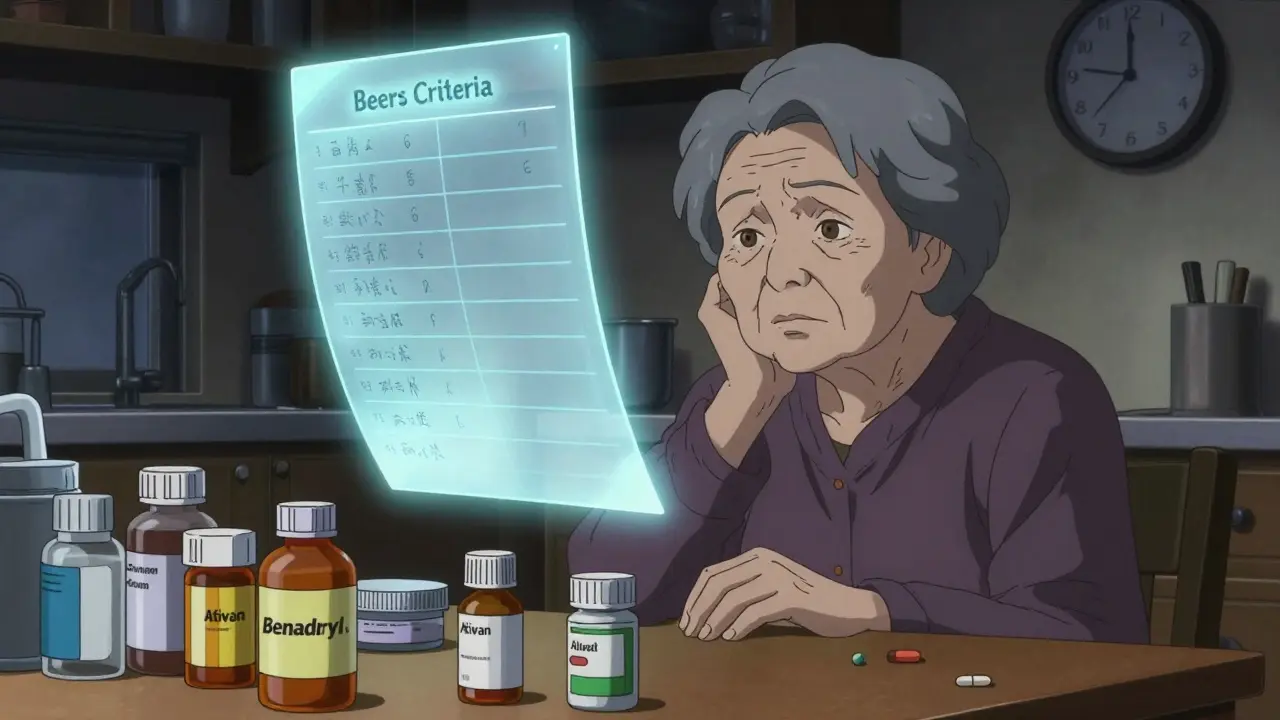
What Is the Beers Criteria?
The Beers Criteria is a living list of medications that doctors and pharmacists are told to avoid or use with extreme caution in adults aged 65 and older. It’s not a ban-it’s a warning. Developed by the American Geriatrics Society and updated every three years, the latest version came out in May 2023 after reviewing over 7,000 studies. The goal? To cut down on harmful side effects that older adults are more likely to suffer from, like confusion, falls, kidney damage, and dangerous bleeding.
Why does this matter? Seniors make up just 13.5% of the U.S. population but take 34% of all prescription drugs. Many take five, six, or even ten medications at once. That’s called polypharmacy, and it’s where things go wrong. A drug that’s fine for a 40-year-old can be risky for a 75-year-old with slower kidneys, weaker liver function, or multiple health conditions. The Beers Criteria helps sort out which pills might do more harm than good.
Which Medications Are on the List?
The 2023 Beers Criteria lists 134 medications or drug classes that should be avoided or adjusted in older adults. Some of the most common ones you’ll hear about:
- First-generation antihistamines like diphenhydramine (Benadryl) and hydroxyzine. These are often used for allergies or sleep, but they block a brain chemical called acetylcholine. That can cause dizziness, memory trouble, constipation, and even delirium. Studies show these drugs increase dementia risk over time.
- Benzodiazepines like lorazepam (Ativan) and diazepam (Valium). Used for anxiety or insomnia, but they make seniors much more likely to fall-leading to broken hips and long hospital stays. The 2023 update tightened warnings for these, especially in people over 75.
- NSAIDs like ibuprofen and naproxen. Great for arthritis pain, but they can cause stomach bleeds, raise blood pressure, and worsen heart failure. For seniors with heart or kidney issues, even a daily pill can be dangerous.
- Antipsychotics like risperidone and olanzapine. Sometimes used off-label for dementia-related agitation, but they increase stroke risk and death in this group. Only use if absolutely necessary and under close supervision.
- Gabapentin. Often prescribed for nerve pain, but it builds up in the body if kidneys aren’t working well. Dose adjustments are critical-many doctors still prescribe the same dose as for younger patients.
Thirty-two new drugs were added in 2023. Some were pulled from the list too-like certain older antidepressants-because newer evidence showed they weren’t as risky as once thought. The list isn’t static. It changes with science.
Why Do These Drugs Still Get Prescribed?
If the risks are so clear, why are seniors still getting these medications? The answer isn’t simple.
Some doctors don’t know the list well enough. A 2023 survey found only 41% of primary care practices consistently use the Beers Criteria. Others know it but feel pressured-by patients asking for quick fixes, by time limits in appointments, or by insurance rules that make non-Bers alternatives harder to access.
Then there’s the issue of alternatives. If a senior has chronic insomnia, and benzodiazepines are off the table, what’s left? Cognitive behavioral therapy works-but it’s not covered by Medicare in most cases. Pain management? Physical therapy and acupuncture help, but they require time and money. For many, the easiest path is still the pill.
Cost plays a role too. A 2023 study in JAMA Internal Medicine found that 25% of seniors skip doses or don’t fill prescriptions because they can’t afford them. Sometimes, the only affordable option is a Beers-listed drug. That’s a cruel choice: pay for food or pay for safety.
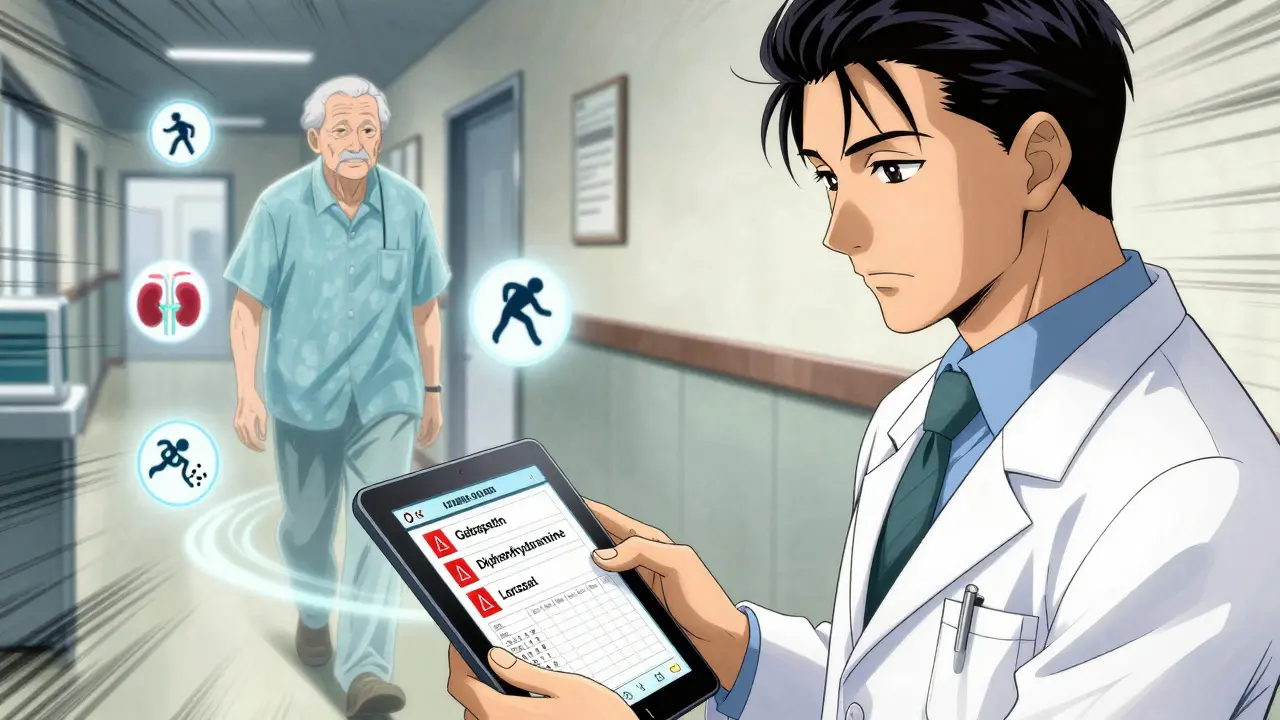
How Is It Used in Real Clinics?
Best results come when the Beers Criteria is built into electronic health records. Systems like Epic and Cerner now have alerts that pop up when a doctor tries to prescribe a flagged drug to someone over 65. At one clinic in Ohio, after adding these alerts, benzodiazepine prescriptions for seniors dropped by 43% in just nine months.
Pharmacists are key players here. In hospitals and long-term care facilities, medication therapy management teams-often led by pharmacists-review every senior’s drug list every 90 days. They check for duplicates, interactions, and Beers violations. One pharmacist in Michigan told me she catches an average of three Beers-related issues per patient during a full review. That’s three potential hospital visits avoided.
But there’s a downside: alert fatigue. In some clinics, doctors get 10 to 12 Beers alerts per patient visit. Many become numb to them. One primary care doctor on Medscape said, “I start ignoring them after the fifth one.” That’s a big problem. If the system screams too much, people stop listening.
How Does It Compare to Other Tools?
The Beers Criteria isn’t the only tool out there. In Europe, many doctors use STOPP/START. It’s different. STOPP/START looks at the patient’s condition first. For example: “If someone has heart failure, avoid NSAIDs.” Beers says: “Avoid NSAIDs in all seniors.”
That’s both a strength and a weakness. Beers is simpler to use in busy clinics. STOPP/START is more precise but takes longer to apply. In the U.S., 87% of health systems use Beers. In Europe, it’s 42%. Why? Because Beers fits better with Medicare’s rules. Medicare Part D now requires pharmacies to screen high-risk seniors using the Beers list. That’s why it’s everywhere here.
But Beers doesn’t cover everything. It doesn’t tell you when a drug might be okay-for example, if a dementia patient is violent and other treatments have failed. That’s where judgment still matters. The criteria are a guide, not a rulebook.
What’s New in the 2025 Update?
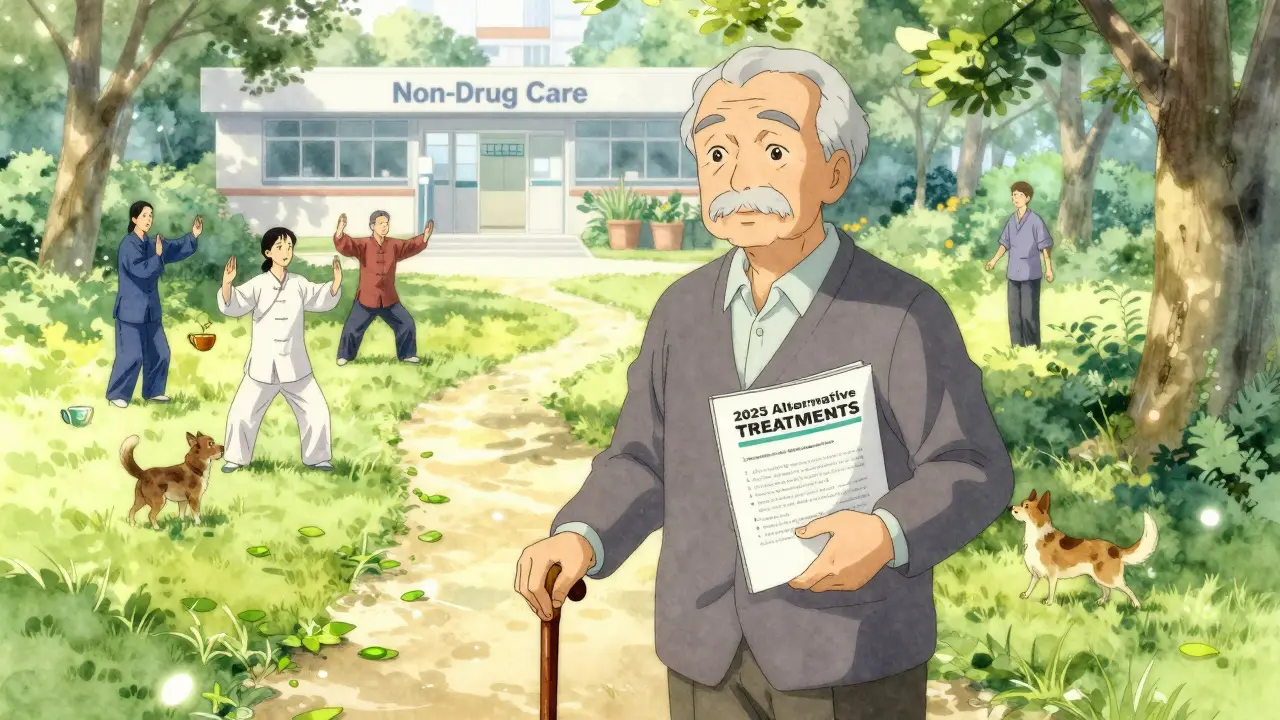
In July 2025, the American Geriatrics Society released a companion guide: Alternative Treatments to Selected Medications in the 2023 Beers Criteria. This isn’t just another list. It’s a roadmap for what to do instead.
- For insomnia: Cognitive behavioral therapy (CBT-I), sleep hygiene, and light therapy-not Ambien.
- For chronic pain: Physical therapy, tai chi, and topical capsaicin-not opioids or NSAIDs.
- For depression: Exercise programs, social engagement, and counseling-not SSRIs with high fall risk.
This shift is huge. Instead of just saying “don’t use this,” it says, “here’s what actually works.” That’s what makes the 2025 update a game-changer. It’s no longer just about avoiding harm-it’s about creating better care.
What Should Seniors and Families Do?
You don’t need to memorize the Beers list. But you can ask the right questions.
- “Is this medicine still needed? Can we try to stop it?”
- “Are there safer alternatives?”
- “Could this be causing my dizziness or confusion?”
- “Is there a cheaper option?”
Bring a full list of all your medications-including vitamins, supplements, and over-the-counter pills-to every appointment. Many seniors don’t realize that Benadryl or sleep aids count as meds too.
And if your doctor dismisses your concerns, ask for a pharmacist consult. Many clinics now offer free medication reviews. Ask your pharmacy if they do them.
Most seniors don’t know their meds are being checked against the Beers Criteria. That’s a gap. You have the right to know why a drug is being prescribed-and why it might be risky.
What’s Next for the Beers Criteria?
The 2026 update will focus on kidney dosing. Right now, only 68% of drugs cleared by the kidneys have clear dosage rules for seniors. That’s changing. They’re adding specific guidelines for all of them.
Also, the AGS is working with Google Health AI to build tools that predict which seniors are most at risk from Beers-listed drugs-before they even take them. Imagine an alert that says: “Patient X, 78, has kidney decline and is on gabapentin. Risk of fall: 62%.” That’s the future.
Meanwhile, drug companies are racing to create “senior-friendly” alternatives. Over 23 new medications have been developed since 2023, targeting the most dangerous Beers-listed drugs. The market for these is expected to hit $84 billion by 2027.
But the real win won’t be a new pill. It’ll be a new way of thinking: less reliance on drugs, more focus on movement, sleep, connection, and non-drug therapies. That’s what the Beers Criteria is really pushing for.
Final Thoughts
The Beers Criteria isn’t perfect. It’s not a magic fix. But it’s the best tool we have to stop well-meaning prescriptions from becoming dangerous ones. It’s saved lives by making doctors pause before hitting “prescribe.”
For seniors, it’s a reminder: your body changes. What worked at 60 might not be safe at 80. And that’s okay. You don’t need every pill. Sometimes, less is more.
Ask questions. Review your list. Push for alternatives. You’re not being difficult-you’re being smart.
What is the Beers Criteria used for?
The Beers Criteria is a list of medications that healthcare providers should avoid or use with caution in adults aged 65 and older because the risks often outweigh the benefits. It helps reduce side effects like confusion, falls, kidney damage, and dangerous drug interactions in seniors.
Are all drugs on the Beers list banned for seniors?
No. The Beers Criteria doesn’t ban any drugs. It flags those with higher risks for older adults. In some cases-like severe agitation in dementia or end-of-life pain-a flagged drug may still be appropriate. The list guides decisions, but doesn’t replace clinical judgment.
Can I stop a medication on the Beers list on my own?
Never stop a prescribed medication without talking to your doctor or pharmacist. Some drugs, like benzodiazepines or blood thinners, can cause serious withdrawal or rebound effects if stopped suddenly. Always ask for a tapering plan or safer alternative.
How often is the Beers Criteria updated?
The Beers Criteria is updated every three years by the American Geriatrics Society. The most recent version was released in May 2023, with a companion guide on alternative treatments published in July 2025.
Do Medicare plans use the Beers Criteria?
Yes. Since 2024, Medicare Part D requires all prescription drug plans to use the Beers Criteria in medication therapy management programs for dual-eligible beneficiaries-about 12.7 million Americans. Pharmacies must review high-risk seniors’ medications using this list.
What should I do if my doctor prescribes a Beers-listed drug?
Ask: Why this drug? Are there safer alternatives? Can we try a non-drug option first? Request a medication review with a pharmacist. Bring your full list of all medications-including OTCs and supplements. You have the right to understand the risks and explore better options.

Write a comment
Your email address will not be published.
Recent Posts
-
 Tadasiva vs Alternatives: Sildenafil & Tadalafil Comparison October 8, 2025

15 Comments
The Beers Criteria is one of the most vital tools in geriatric care, yet it's still underutilized in primary care. Many clinicians don't have the time or training to implement it properly. Electronic alerts help, but they're only as good as the clinical culture that supports them. We need mandatory geriatric pharmacology modules in residency programs. This isn't optional-it's a matter of patient safety.
And let's not forget the role of pharmacists. In my experience, medication reviews by clinical pharmacists reduce hospital admissions by up to 30% in elderly populations. Yet Medicare still doesn't reimburse adequately for these services. Fix the payment model, and you fix the problem.
Also, the 2025 alternative treatments guide is a game-changer. We're finally moving from 'don't do this' to 'do this instead.' That shift in mindset could save thousands of lives.
bro why do we even need a list? just tell old people to stop taking so many pills. its not that hard. benadryl? just sleep better. ibuprofen? stretch. its all just lazy medicine.
This is such a beautiful step forward for elder care! I love how the 2025 guide doesn't just say 'avoid' but shows us what to replace it with-movement, connection, sleep hygiene. So many seniors just need to walk more, talk more, and feel less alone. Medicine shouldn't be the first answer. Thank you for sharing this!
Honestly, the Beers Criteria is a good start but it’s too blunt. Like, sure, NSAIDs are risky-but what if someone has severe arthritis and can’t walk? You can’t just take away pain relief without offering something real. The real issue isn’t the list-it’s the lack of access to PT, acupuncture, or even community centers where seniors can move safely. We need infrastructure, not just warnings.
i read this and thought wow this is so basic. why are we still surprised that old people get messed up on benadryl? its been known for decades. the system is just broken. doctors are overworked, patients are impatient, and no one has time to think.
I’ve seen firsthand how Beers alerts can be ignored when they’re too frequent. One clinic I worked with reduced alert fatigue by tiering them: critical flags popped up with mandatory confirmation, while moderate ones were logged silently. The result? Compliance doubled. We need smarter systems, not louder alarms.
I’m a caregiver for my mom, and I had no idea most of her meds were on the Beers list until I sat down with a pharmacist. She was on gabapentin, diphenhydramine, and an NSAID-all flagged. We tapered her off slowly, switched to magnesium for sleep, and started daily walks. Her confusion cleared up in three weeks. No one told us this was even an option. Why isn’t this standard practice? Why do we assume seniors just have to live with side effects? We’re not asking for miracles-just a little more attention.
This whole Beers thing is just another Western obsession with overregulating medicine. In India, we treat our elders with respect and natural remedies-turmeric, ashwagandha, yoga. We don’t need some American list to tell us what’s safe. Our seniors live longer because we don’t poison them with chemicals. This is cultural imperialism dressed as science.
The Beers Criteria is a bureaucratic overreach. It strips physicians of clinical autonomy under the guise of safety. If a patient is stable on a flagged medication, why force a change? This is not medicine-it’s algorithmic paternalism. And now Medicare mandates it? That’s not care, that’s compliance theater.
My grandma was on lorazepam for years. No one ever questioned it. Then we found out about Beers. We switched to melatonin and light therapy. She started sleeping better and didn’t fall once in a year. I wish we’d known sooner. It’s not about the meds-it’s about not being afraid to ask.
Let’s be real-this isn’t about safety. It’s about cost-cutting. Insurance companies hate paying for physical therapy. So they push doctors to use Beers as an excuse to cut meds. Meanwhile, the real solution-better access to non-drug therapies-is ignored because it doesn’t make money. This is capitalism masquerading as geriatric care.
There is a deeper truth here: modern medicine treats aging as a disease to be managed with pills. But aging is not a pathology. It is a natural process. The Beers Criteria, however well-intentioned, still operates within this flawed paradigm. We must shift from suppression to harmony-from reducing drugs to restoring balance. A quiet walk at dawn, a shared meal, a conversation without distraction-these are the real prescriptions. The list is a bandage. We need surgery on the system.
I work at a senior center and we started doing monthly med reviews with the local pharmacist. Changed everything. One woman stopped her benzos and started tai chi. She said she felt like herself again. No one told her she could. We need more of this. Not more lists. More people who care enough to listen.
I’m from India and I’ve seen how our elders are treated here vs. there. In the U.S., seniors are often isolated and medicated. In India, they’re part of the family, active in daily life. Movement, routine, community-these are the real medicines. The Beers list is useful, but it’s treating symptoms, not the root: loneliness and disconnection. Let’s fix that too.
The most dangerous thing about the Beers Criteria is not what’s on it-it’s what’s assumed. That seniors are passive recipients of care. That they won’t ask questions. That their voices don’t matter. The real breakthrough isn’t the list-it’s empowering them to say: 'Why this? What else? Can we try something else?' That’s the only cure that never runs out.