
You pour a glass of wine or grab a beer to wind down after a long day. It feels like the right move. The drink makes you feel heavy-eyed, relaxed, and ready for bed. But while that initial sedation might help you fall asleep faster, it is setting a trap for your brain and body during the rest of the night. Alcohol does not just make you sleepy; it fundamentally breaks the architecture of your sleep, leading to fragmented rest, worsened breathing issues, and a foggy, emotionally unstable morning.
Most people believe that a nightcap helps them sleep better. The reality is starkly different. While alcohol acts as a central nervous system depressant in the short term, its metabolism creates a rebound effect that shatters sleep quality. Understanding this mechanism is crucial if you want to wake up feeling truly rested rather than just having been unconscious for eight hours.
Key Takeaways
- Sleep Fragmentation: Alcohol metabolizes at roughly one standard drink per hour, causing wakefulness and arousal in the second half of the night as blood alcohol levels drop.
- REM Suppression: Even one drink can reduce REM sleep by over 9%, delaying the stage critical for emotional processing and memory consolidation.
- Apnea Risk: Alcohol relaxes upper airway muscles, increasing the severity of obstructive sleep apnea by 20-30% and lowering oxygen saturation.
- Next-Day Impact: Despite similar total sleep time, alcohol reduces slow-wave sleep by 15.3%, leading to significant drops in cognitive speed and working memory the following day.
- The Cycle: Poor sleep from alcohol increases the urge to drink again to sleep, creating a dangerous feedback loop that can contribute to dependence.
The Biphasic Trap: Why You Fall Asleep Fast but Wake Up Tired
To understand why alcohol ruins sleep, we have to look at how it interacts with your brain’s chemistry. When you consume alcohol, it increases extracellular adenosine in the basal forebrain. Adenosine is the chemical that builds up during the day to make you feel tired. By artificially spiking this chemical, alcohol forces your brain into sleep quickly. This is why you might crash within minutes of finishing your last drink.
However, this initial benefit comes with a steep price. Your liver metabolizes alcohol at a relatively constant rate-about one standard drink (such as a small glass of wine or a light beer) per hour. If you finish five drinks at 10 p.m., your blood alcohol concentration will be near zero by 3 a.m. As the sedative effects wear off, your brain experiences a "rebound" state of hyperarousal.
This metabolic shift triggers significant sleep fragmentation. Instead of cycling smoothly through sleep stages, your brain jerks awake repeatedly. A study published in Substance Abuse (Thakkar et al., 2005) highlights that while moderate consumption decreases sleep latency (the time it takes to fall asleep), it leads to increased wakefulness later in the night. In animal models, binge drinking led to a 40-60% increase in wakefulness during normal sleep periods. For humans, this means you spend less time in deep, restorative sleep and more time tossing, turning, or experiencing micro-arousals that you don’t even remember.
How Alcohol Destroys Sleep Architecture and REM Sleep
Sleep is not a uniform state; it consists of cycles including Non-Rapid Eye Movement (NREM) and Rapid Eye Movement (REM) stages. Each stage has a specific job. NREM Stage 3, often called deep sleep or slow-wave sleep, is vital for physical restoration and immune function. REM sleep is where your brain processes emotions, consolidates memories, and strengthens neural connections.
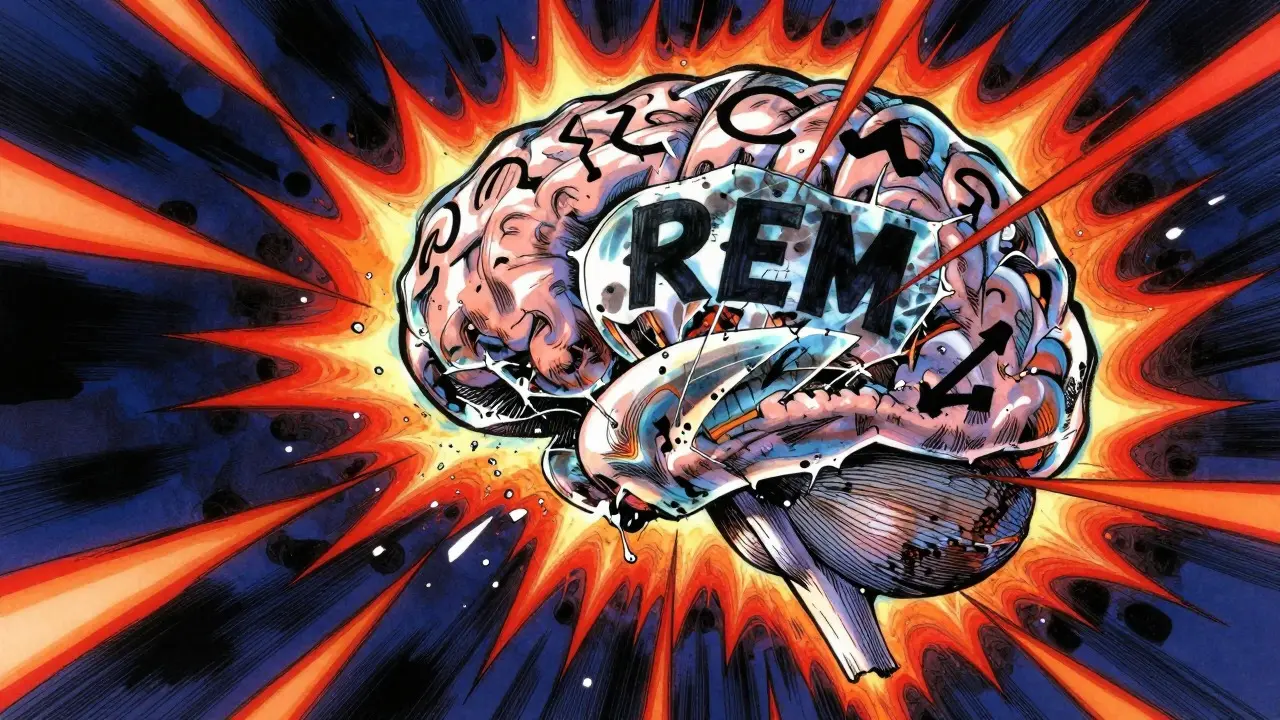
Alcohol disrupts this balance severely. Initially, it may boost deep sleep (N3) slightly, but it aggressively suppresses REM sleep. Research indicates that even a single standard drink can reduce REM sleep by 9.3%. During the first half of the night, alcohol can cut REM sleep by up to 50%. Your brain tries to compensate in the second half of the night with a "REM rebound," characterized by intense dreaming or nightmares. However, because the sleep is fragmented by the earlier mentioned arousal, this rebound is rarely restorative.
The loss of REM sleep has tangible consequences. Without adequate REM, you may experience decreased creativity, emotional instability, and difficulty regulating mood. The National Council on Aging notes that REM deprivation is linked to reduced longevity and poorer mental health outcomes. Essentially, you are sleeping without allowing your brain to do its nightly housekeeping.
Alcohol and Obstructive Sleep Apnea: A Dangerous Combination
If you snore or have been diagnosed with Obstructive Sleep Apnea (OSA), defined as a disorder where breathing repeatedly stops and starts during sleep due to blocked airways, alcohol is particularly harmful. OSA occurs when the muscles in the back of your throat relax too much to allow normal breathing. Alcohol is a muscle relaxant. When you drink before bed, it causes the tissues in your upper airway to collapse more easily.
The data on this relationship is alarming. According to research cited by the American Academy of Sleep Medicine, each standard drink consumed before bedtime can increase the Apnea-Hypopnea Index (AHI)-a measure of apnea severity-by 20%. A meta-analysis in Chest Journal (2022) found that consuming 2-4 drinks per day increases the risk of moderate-to-severe OSA by 25%, while heavy consumption (5+ drinks) raises that risk by 51%.
When these apnea events occur, your oxygen saturation drops. The American Thoracic Society warns that alcohol can reduce oxygen levels by 3-5 percentage points during sleep events. This puts immense strain on your cardiovascular system, raising nocturnal heart rates by an average of 6.7 beats per minute, as shown in a 2023 study in Alcoholism: Clinical and Experimental Research. Over time, this combination of hypoxia and stress significantly increases the risk of hypertension, stroke, and heart disease.
| Sleep Metric | Effect of Alcohol Consumption | Long-Term Consequence |
|---|---|---|
| Sleep Latency | Decreases (fall asleep faster) | Masks underlying insomnia |
| REM Sleep | Reduced by ~9.3% per drink initially | Emotional dysregulation, poor memory |
| Sleep Efficiency | Reduced by 4.3% | Increased daytime fatigue |
| Airway Muscle Tone | Relaxed/Collapsed | Worsened Sleep Apnea (OSA) |
| Slow-Wave Sleep | Reduced by 15.3% overall | Slower cognitive processing next day |
The Hidden Cost: Next-Day Cognitive and Emotional Effects
You might think that if you slept for seven or eight hours, you should feel fine. But the quality of those hours matters more than the quantity. Because alcohol reduces slow-wave sleep by approximately 15.3%, your brain misses out on the deepest, most restorative phase. A 2022 study in the Journal of Clinical Sleep Medicine found that this reduction leads to a 12.7% decrease in cognitive processing speed and a 9.4% drop in working memory capacity the next day.
The emotional toll is equally significant. Research from the University of Pittsburgh Medical Center (2022) demonstrated that participants showed 31.2% greater emotional reactivity to negative stimuli after a night of alcohol-consumed sleep compared to control nights. This explains why you might feel irritable, anxious, or overly sensitive to minor stresses the morning after drinking, even if you don’t feel physically hungover.
Perhaps most concerning is the lack of self-awareness. The same 2023 study in Alcoholism: Clinical and Experimental Research noted that individuals often underestimate their impairment. They may report only modest changes in mood despite objective measures showing significant cognitive deficits. This disconnect can lead to risky decisions, such as driving or making important professional calls, while operating at a suboptimal level.
Breaking the Cycle: Practical Steps for Better Sleep
If you rely on alcohol to fall asleep, you are likely trapped in a cycle. The sleep deprivation caused by alcohol increases the urge to consume more alcohol to initiate sleep, which further degrades sleep quality. This bidirectional relationship is a key factor in the development of alcohol use disorder. Approximately 35% of individuals with alcohol use disorder experience clinically significant sleep disturbances, and insomnia is a strong predictor of relapse.
To break this cycle, consider these evidence-based strategies:
- Set a Cut-Off Time: The American Thoracic Society recommends avoiding alcohol entirely within three hours of bedtime. This allows your body to metabolize the alcohol before you enter the critical REM-heavy phases of the night.
- Monitor Your Apnea: If you have sleep apnea, treat alcohol avoidance as part of your medical regimen. Even moderate consumption can negate the benefits of CPAP therapy by relaxing airway muscles.
- Track Next-Day Symptoms: Pay attention to your mood and cognitive performance. If you notice increased irritability or brain fog, link it back to your previous night’s drinking rather than attributing it to stress or aging.
- Allow for Recovery: If you have been drinking regularly, know that sleep architecture takes 3-6 months to normalize after cessation. Be patient with your body as it recalibrates its natural adenosine regulation and sleep homeostasis.
Improving your sleep doesn’t always mean giving up alcohol entirely, but it does require respecting the biological timeline of how your body processes it. By moving alcohol consumption earlier in the evening or limiting intake, you can preserve the integrity of your sleep cycles, protect your airway, and ensure that you wake up mentally sharp and emotionally balanced.
Does alcohol actually help you sleep?
Alcohol helps you fall asleep faster by acting as a sedative, but it significantly reduces sleep quality. It fragments sleep later in the night and suppresses REM sleep, leading to non-restorative rest and next-day fatigue.
How many drinks before bed is safe for sleep apnea?
Ideally, none. Even one standard drink can increase the severity of obstructive sleep apnea by relaxing throat muscles. Experts recommend avoiding alcohol completely within 3 hours of bedtime if you have sleep apnea.
Why do I wake up in the middle of the night after drinking?
This is due to the "rebound effect." As your liver metabolizes the alcohol (about one drink per hour), the sedative effects wear off, causing a surge in arousal and wakefulness, typically in the second half of the night.
Can alcohol cause insomnia?
Yes. Regular pre-bedtime alcohol consumption increases the risk of chronic insomnia by 38%. It disrupts sleep homeostasis and creates a dependency cycle where alcohol is needed to initiate sleep, worsening overall sleep maintenance.
How long does it take for sleep to return to normal after quitting alcohol?
For regular drinkers, sleep architecture can take 3 to 6 months to fully normalize after cessation. Initial improvements may happen sooner, but full restoration of REM and deep sleep cycles requires sustained abstinence.

Recent Posts
-
 What Each Part of Your Rx Medication Label Means for Patients January 21, 2026
 -
 Exploring Ivermectin: Potential COVID-19 Treatment March 21, 2025
 -
 Telehealth Medication Reviews: How to Prepare and What to Ask December 2, 2025