
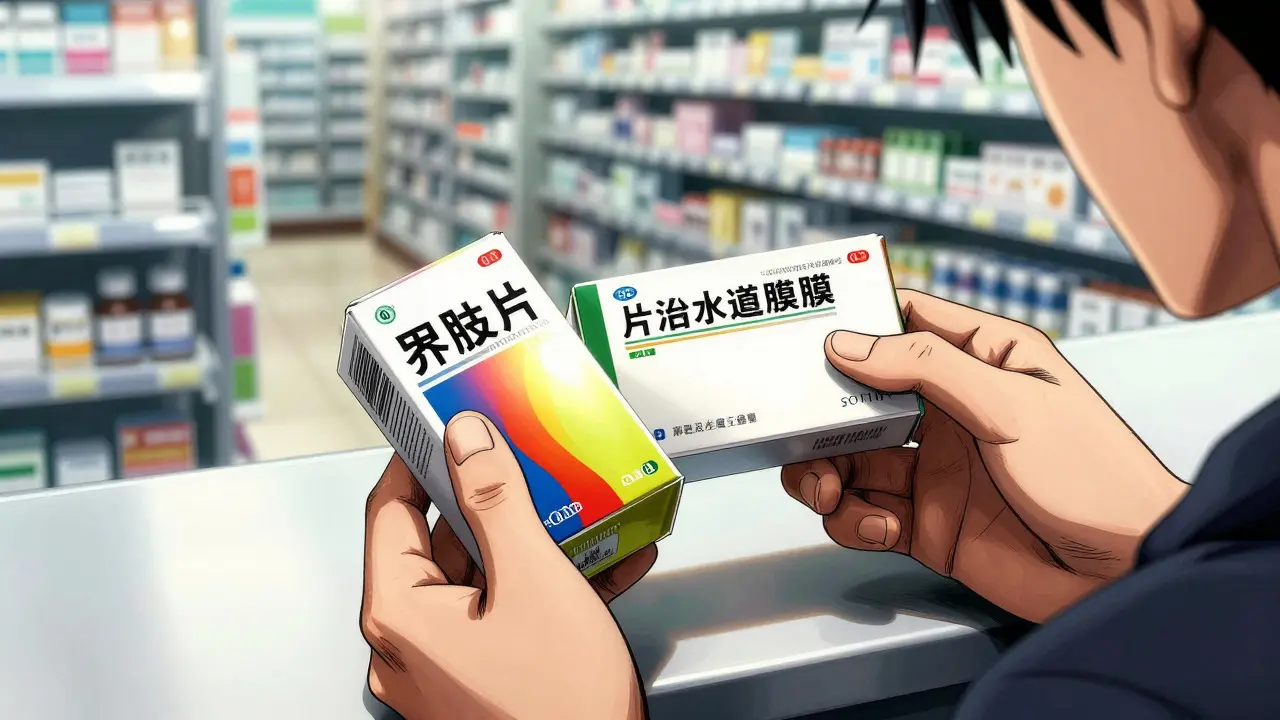
You might have picked up your prescription at the pharmacy counter and noticed the box looks different. No flashy logo, no familiar color scheme-just a plain label with the drug's generic name. You probably assumed it was a standard generic, but what if it’s actually an authorized generic? This isn’t just a marketing trick; it’s a specific regulatory category that often confuses patients and even some healthcare providers. The core question on everyone’s mind is simple: is this "plain" version as good as the expensive brand-name drug you were originally prescribed? The short answer is yes, but understanding *why* requires looking under the hood of how the U.S. Food and Drug Administration (FDA) regulates these products.
An authorized generic is defined by the FDA as an approved brand-name drug marketed without the brand name on its label. Other than the missing trademark, it is the exact same drug product as the branded version. This distinction matters because traditional generics go through a rigorous process to prove they work the same way, whereas authorized generics are literally the same molecule produced in the same facility using the same ingredients. If you’ve ever wondered why your insurance copay dropped suddenly when the pill looked slightly different, you’re likely dealing with one of these products. Let’s break down the science, the regulations, and the real-world data to see if there’s any reason to worry about switching.
The Regulatory Pathway: Why They Are Identical
To understand the quality of authorized generics, you have to look at how they get to the shelf. Traditional generics must file an Abbreviated New Drug Application (ANDA) with the FDA. In this process, manufacturers must demonstrate bioequivalence, meaning their drug releases the active ingredient into the bloodstream at the same rate and extent as the reference brand-name drug. It’s a scientific hurdle designed to ensure safety and efficacy.
Authorized generics take a different route. They are marketed under the original New Drug Application (NDA) held by the brand manufacturer. Because they are sold under the same NDA, they don’t need separate FDA approval for a new formulation. Instead, the brand holder simply notifies the FDA that they will be selling the drug without the brand name. This means the manufacturing process, the active pharmaceutical ingredients (APIs), and the inactive ingredients (excipients) remain exactly the same. There is no reformulation, no change in dosage form, and no alteration in the route of administration. When Dr. Janet Woodcock, former Director of the FDA’s Center for Drug Evaluation and Research, testified before the Senate Aging Committee in 2019, she put it plainly: "Authorized generics are the brand product without the brand name on the label-they are identical in every way."
This regulatory shortcut doesn’t mean less scrutiny. Authorized generics are subject to the same Current Good Manufacturing Practices (cGMP) as brand-name drugs. The facilities undergo identical FDA inspections, and the lot traceability requirements are the same. The only difference is the packaging and the price tag. This is crucial because it eliminates the variable of formulation changes that sometimes occur with traditional generics, which may use different fillers or dyes.
Quality Standards and Formulation Equivalence
When we talk about quality in pharmaceuticals, we aren't just talking about the active ingredient. We’re talking about the entire package: the strength, the dosage form, the excipients, and the manufacturing consistency. For authorized generics, the technical specifications are locked to the brand-name counterpart. According to U.S. Pharmacist, authorized generics have the same active and inactive ingredients as the brand-name drug, differing only in appearance and labeling.
Why do inactive ingredients matter? For most people, they don’t. But for patients with specific allergies or sensitivities, excipients like lactose, corn starch, or certain dyes can cause issues. Since authorized generics keep the exact same excipient profile as the brand, they avoid the potential tolerability problems that can arise when a patient switches to a traditional generic with a different filler mix. The dissolution profiles-the speed and manner in which the drug breaks down-are also identical because the physical tablet or capsule structure hasn’t changed.
The FDA requires all generic drugs, including authorized versions, to meet the same quality standards as brand-name drugs. This includes passing strict tests for purity, potency, and stability. So, if you are taking a statin, an antidepressant, or an asthma medication, the chemical makeup of the authorized generic is chemically indistinguishable from the brand. You are getting the same therapeutic payload, just in a plainer box.
Clinical Evidence: What Real-World Data Shows
Theory is great, but does it hold up in practice? A retrospective cohort study published in PMC in 2018 provides compelling evidence. Researchers compared outcomes for seven drugs studied between 1999 and 2014. They looked at 5,234 unique patients who were on brand drugs before generic entry. Of those, 4,900 (93.6%) switched to a generic. The study tracked outpatient visits, urgent care visits, hospitalizations, and medication discontinuation rates over the following 12 months.
The results showed that patients using traditional generics versus authorized generics had similar outcomes. In fact, the researchers found only a slightly higher likelihood of emergency department visits for authorized generics compared with traditional generics (odds ratio 1.08, 95% CI 1.01-1.15). However, the key takeaway was that generics were clinically no worse than their proxy brand comparator. Dr. Aaron Kesselheim, a Professor of Medicine at Harvard Medical School and lead author of the study, noted that the identical formulation of authorized generics makes them the most appropriate comparator when evaluating generic drug performance. In other words, if the authorized generic works just like the brand, and the traditional generic works just like the authorized generic, then the chain of equivalence holds strong.
Another piece of evidence comes from a Kaiser Permanente patient survey conducted in 2021. They surveyed 8,342 members using authorized generics. The adherence rate was 94%, compared to 92% for brand-name equivalents. More importantly, there was no statistically significant difference in self-reported effectiveness (p=0.37). This suggests that patients aren’t just sticking with the meds out of habit; they feel the same relief, pain reduction, or symptom control they experienced with the brand.

Patient Experiences and Common Misconceptions
Despite the solid data, confusion remains a barrier. On the Asthma and Allergy Foundation of America (AAFA) community forum, 87% of 1,245 respondents reported identical effectiveness when switching from brand-name Singulair to its authorized generic version. Only 8% reported minor differences in tolerability, which researchers attribute to packaging or dispenser differences rather than formulation changes. GoodRx user reviews of 37 different authorized generics showed an average rating of 4.6 out of 5.0, with 92% of users stating they would recommend the product to a friend.
So, where do the negative experiences come from? Often, it’s not the drug itself, but the system around it. A 2022 survey by the National Community Pharmacists Association found that 78% of independent pharmacists consider authorized generics interchangeable with the brand at the pharmacy level without physician consultation. However, 15% of Reddit users in r/pharmacy reported instances where pharmacists incorrectly labeled authorized generics as "different products." This communication gap can make patients anxious. If your pharmacist tells you it’s a "new formula" when it’s actually an authorized generic, you might hesitate. But rest assured, the chemistry hasn’t changed.
Dr. Randall Stafford of Stanford University has cautioned that while authorized generics are identical to brands, the mere existence of multiple generic versions (both authorized and traditional) can create confusion in the supply chain. This might occasionally lead to therapeutic substitution errors, but this is a system issue, not a product quality issue. The drug itself remains reliable.
Cost, Availability, and Market Trends
If the quality is the same, why do we even have this category? The answer is economics. Authorized generics typically retail at 15-30% below brand-name prices but often maintain prices 10-20% higher than traditional generics. This sweet spot allows brand manufacturers to maintain market share while creating competition against incoming traditional generics. For patients, this means lower copays without sacrificing efficacy. Insurance formularies often categorize authorized generics in the same tier as traditional generics, resulting in significant savings.
Availability varies by drug and market conditions. As of December 2022, there were 387 authorized generic products available, representing approximately 12% of all generic drug entries according to FDA tracking data. A Health Affairs study documented that 68% of top-selling brand-name drugs launched an authorized generic version within six months of patent expiration. The total U.S. market value for authorized generics reached $18.7 billion in 2022, growing at 9.3% annually since 2018. Industry analysts project that authorized generics will represent 15-18% of the global generics market by 2027.
| Feature | Brand-Name Drug | Authorized Generic | Traditional Generic |
|---|---|---|---|
| Regulatory Pathway | New Drug Application (NDA) | Original NDA (no brand name) | Abbreviated New Drug Application (ANDA) |
| Active Ingredients | Specific API | Identical API | Same API, different source possible |
| Inactive Ingredients | Specific excipients | Identical excipients | May differ (different fillers/dyes) |
| Bioequivalence Requirement | N/A (Reference) | N/A (Identical product) | Must prove 80-125% confidence interval |
| Price Range | Highest | 15-30% lower than brand | Lowest (often 80-90% lower) |
| Orange Book Listing | Listed | Not Listed | Listed |

Practical Tips for Patients and Providers
If you’re a patient, here’s what you need to know. First, don’t panic if the box looks plain. Check with your pharmacist if you want confirmation that it’s an authorized generic. They can verify it by checking the NDA number or the packaging details. Second, remember that your insurance plan likely treats it as a generic, so your copay should drop. Third, if you have a known allergy to a specific dye or filler in the brand, you’re safe with the authorized generic because it contains the same ones. Conversely, if you switch to a traditional generic, double-check the excipient list.
For healthcare providers, the American College of Clinical Pharmacy position statement confirms that authorized generics are therapeutically equivalent to brand-name drugs. You can confidently prescribe or substitute without needing to consult the patient about formulation changes, unless the patient has a very specific sensitivity. Documentation for authorized generics is identical to brand-name products, with the only difference being the absence of trademarked branding elements in prescribing information.
Recent developments include the FDA’s 2022 guidance clarifying that authorized generics must maintain the same lot traceability as brand-name products. This addresses previous confusion in adverse event reporting. The Inflation Reduction Act of 2022 also included provisions affecting authorized generics through Medicare Part D redesign, potentially increasing their utilization among seniors. These regulatory moves signal that authorized generics are here to stay, providing a robust middle ground between high-cost brands and low-cost traditional generics.
Frequently Asked Questions
Are authorized generics really the same as brand-name drugs?
Yes. Authorized generics are manufactured using identical processes as their brand-name counterparts, containing precisely the same active and inactive ingredients. The only difference is the labeling, which omits the brand name. They are marketed under the original New Drug Application (NDA), ensuring complete formulation equivalence.
Why are authorized generics cheaper than brand-name drugs?
The cost savings come from removing the marketing and branding expenses associated with the brand name. Since the drug itself is identical, manufacturers can offer it at a lower price point (typically 15-30% less) to compete with traditional generics while maintaining higher margins than traditional generic makers.
Do authorized generics appear in the FDA Orange Book?
No. The Orange Book lists drugs approved via the Abbreviated New Drug Application (ANDA) process. Since authorized generics are sold under the original NDA of the brand-name drug, they do not require separate ANDA approval and thus do not appear in the Orange Book.
Can I switch between brand, authorized generic, and traditional generic freely?
Generally, yes. Authorized generics are interchangeable with the brand at the pharmacy level. Switching to a traditional generic is also common, but patients with sensitivities to specific inactive ingredients should check the excipient list, as traditional generics may use different fillers or dyes than the brand or authorized generic.
Is there any risk of reduced efficacy with authorized generics?
Clinical studies show no clinically meaningful differences in outcomes. A 2018 study found that patients using authorized generics had similar hospitalization and visit rates compared to brand users. The identical formulation ensures that the drug behaves the same way in the body, minimizing the risk of reduced efficacy.

Recent Posts
-
 Benzodiazepines and Birth Defect Risks: What Pregnant Women Need to Know February 23, 2026
 -
 Top Alternatives to RxAssist: Exploring Accessible Options March 20, 2025