
Bisphosphonate Absorption Calculator
Step 1: Select Your Medication
Step 2: What did you consume?
Click items to add them to your intake list.
Absorption Analysis
Estimated Drug Absorbed
Baseline without food
Taking this medication on an empty stomach is critical for efficacy.
Recommended Action:
- ✓ Wait Time: 30 minutes before eating.
- ✓ Posture: Stay upright (sit/stand).
- ✓ Liquid: Plain water only.
Imagine swallowing your osteoporosis medication, sitting up straight for an hour, and feeling confident you’re protecting your bones. Now imagine that a single glass of milk or a spoonful of yogurt just before breakfast rendered that dose almost useless. This isn’t hypothetical-it’s the daily reality for millions taking bisphosphonates, a class of drugs used to treat osteoporosis by slowing bone loss. These medications are notoriously picky about what they travel with in your stomach, especially when it comes to calcium-rich foods.
If you take alendronate (Fosamax), risedronate (Actonel), or similar drugs, you already know the drill: empty stomach, plain water, wait 30 to 60 minutes. But why is this rule so strict? And what exactly happens when dairy sneaks into the mix? Let’s break down the science, the risks, and practical ways to keep your treatment effective without turning your morning routine into a minefield.
Why Dairy Blocks Your Medication
The problem starts with chemistry. Bisphosphonates have extremely poor bioavailability-meaning very little of the drug actually gets absorbed into your bloodstream. For alendronate, only about 0.6% to 0.7% of the pill makes it through your gut intact. Risedronate fares slightly better at 0.6% to 1.0%, but even that tiny fraction is critical for preventing fractures.
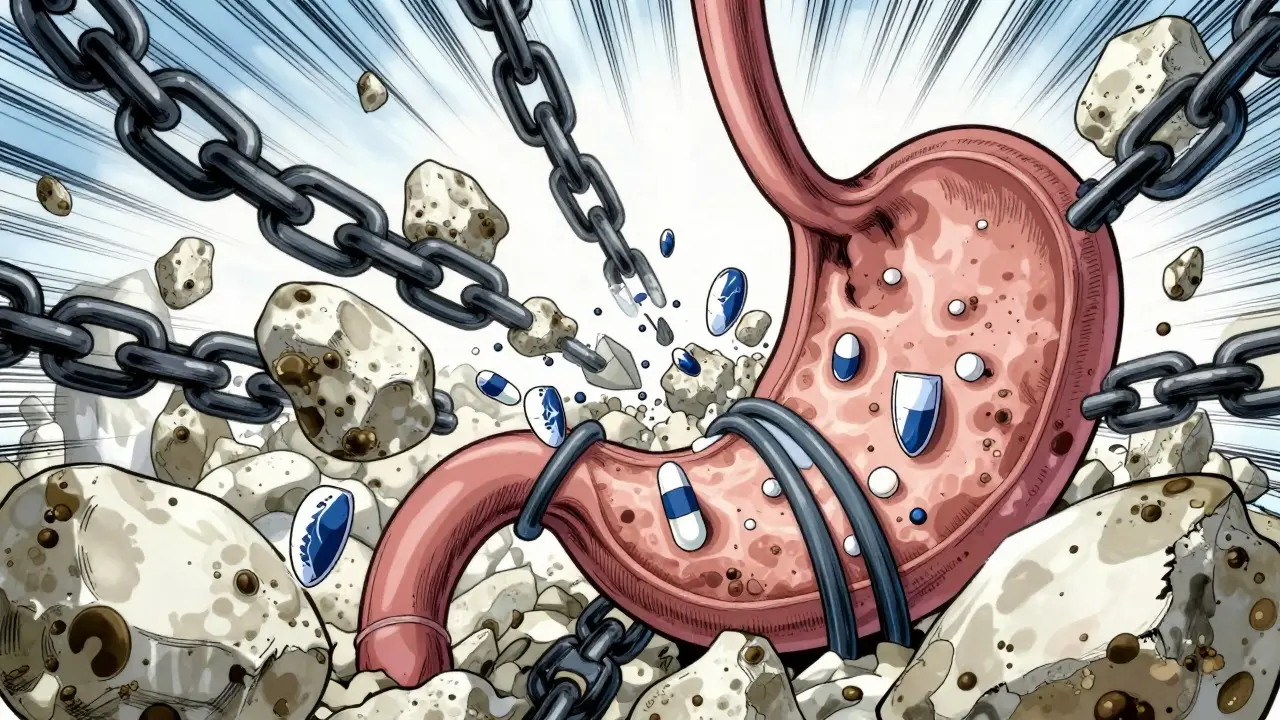
When you introduce calcium, magnesium, or other divalent cations-which are abundant in milk, cheese, yogurt, and fortified juices-they bind with the bisphosphonate molecules in your stomach. This creates insoluble complexes that your body can’t absorb. According to research by Zielińska et al. published in 2022, consuming just 30-40 grams of cheese or egg yolk can bind 80-90 milligrams of a 100-milligram risedronate dose. In simpler terms, that snack effectively neutralizes nearly your entire prescription.
| Food Item | Approximate Amount | Estimated Reduction in Drug Absorption |
|---|---|---|
| Milk (whole) | 8 oz (240 ml) | Up to 90% |
| Cheese (cheddar) | 1 cup shredded (~100g) | Nearly 100% (complete binding) |
| Yogurt | 1 small container (150g) | Up to 80-90% |
| Orange Juice | 8 oz (240 ml) | 50-60% |
| Coffee with Milk | Standard mug | Significant reduction due to dairy content |
This isn’t just theoretical. The FDA prescribing information for Fosamax explicitly warns that absorption is "markedly decreased" in the presence of calcium. Dr. Kenneth Saag, a leading rheumatologist at the University of Alabama at Birmingham, notes that even acidic beverages like orange juice can cut absorption by half because they alter the pH environment needed for the drug to dissolve properly.
The Critical Timing Window
You’ve probably heard “wait 30 minutes.” But where does that number come from? It’s not arbitrary. That window aligns with gastric emptying time-the period it takes for your stomach to clear its contents into the small intestine, where minimal absorption of bisphosphonates occurs.
Dr. Angela Cheung, Director of the Osteoporosis Program at Toronto General Hospital, explains that the 30-minute mark is when duodenal pH rises enough to allow the tiny fraction of drug that *can* be absorbed to pass through. If you eat sooner, you flood the system with interfering agents before the drug has a chance to move along.
- Alendronate (Fosamax): Wait at least 30 minutes after taking the pill before eating or drinking anything except plain water.
- Risedronate (Actonel): Also requires a 30-minute fast, though some guidelines suggest up to 60 minutes for optimal results.
- Ibandronate (Boniva): Requires a longer 60-minute fasting period due to its specific pharmacokinetic profile.
A 2021 study in *Pharmacotherapy* found that waiting less than 30 minutes reduces absorption by an average of 44.7%. That means if you rush your coffee at the 20-minute mark, you might be throwing away nearly half your dose.
Real-World Challenges and Adherence
We know the rules, but do we follow them? Unfortunately, adherence is a major hurdle. The Therapeutic Outcomes Project (TOP) study revealed that 38.7% of patients stop taking oral bisphosphonates within the first year. While gastrointestinal side effects are the top reason (32.1%), difficult administration requirements come in second at 24.3%.
Online forums paint a vivid picture of these struggles. On Drugs.com, 60% of users admitted to forgetting the waiting period, and nearly 30% specifically cited dairy as their biggest mistake. One Reddit user shared, "I took my Fosamax with orange juice for 3 months thinking it was fine-my bone density scan showed zero improvement." Stories like this highlight how easily good intentions slip into ineffective habits.
Age plays a role too. The National Osteoporosis Foundation reports that 53% of patients over 65 find the timing requirements "very difficult" to maintain consistently, compared to 32% of those aged 50-64. Memory lapses, morning routines, and simple hunger make the strict protocol feel burdensome.
Practical Strategies for Success
So, how do you stick to the plan without losing your mind? Here are actionable tips based on patient success stories and clinical recommendations:
- Create a Dedicated Morning Routine: Take your pill immediately upon waking with 6-8 ounces of plain tap water. Keep a dedicated glass by your bed the night before.
- Set Alarms: Use your phone to set two alarms: one for taking the pill and another for the earliest time you can eat. Label the second alarm "Breakfast OK."
- Stay Upright: Remain sitting or standing for the full 30-60 minutes. Lying down increases the risk of esophageal irritation and slows gastric emptying. A comfortable chair or recliner works best.
- Separate Calcium Supplements: If you take calcium or vitamin D pills, schedule them for lunch or dinner-at least 6 hours apart from your bisphosphonate.
- Choose Safe Breakfast Options: After the waiting period, avoid high-calcium foods for the first meal if possible. Opt for oatmeal with fruit, toast with jam, or eggs (without cheese). Save the yogurt and milk for later in the day.
One successful strategy shared by users is the "oat milk compromise." Since plant-based milks like oat or almond milk typically contain significantly less calcium than cow’s milk (unless fortified), they pose a lower risk. However, always check labels, as many fortified versions still contain added calcium carbonate.

Alternatives When Adherence Fails
If the daily ritual feels impossible, you’re not alone. Many patients switch to alternative treatments that bypass the digestive tract entirely. Injectable options like denosumab (Prolia) or teriparatide (Forteo) eliminate food interaction concerns completely. Prolia, for instance, is administered once every six months via subcutaneous injection.
The trade-off is cost. Generic alendronate costs around $4 per month with coupons, while injectables can run $1,500-$2,000 monthly. However, if you’re not absorbing your oral medication properly, you’re paying for nothing. Insurance plans often require trying bisphosphonates first due to their low cost, but discussing adherence challenges with your doctor may justify switching to an injectable.
New developments offer hope too. The FDA approved a delayed-release formulation of risedronate (Atelvia) in April 2023 that allows consumption with food, though it still recommends avoiding high-calcium meals. Additionally, phase 3 trials for a new prodrug (BPS-804) show promise for higher bioavailability and fewer dietary restrictions, potentially changing the landscape by late 2025.
Key Takeaways
- Dairy products, particularly those high in calcium, can reduce bisphosphonate absorption by up to 90%.
- Wait at least 30 minutes (or 60 for ibandronate) after taking your pill before eating or drinking anything other than plain water.
- Even non-dairy items like orange juice or coffee with milk can interfere with absorption.
- Adherence is challenging; use alarms, routines, and pharmacist counseling to stay on track.
- If oral protocols are unsustainable, discuss injectable alternatives with your healthcare provider.
Can I take my bisphosphonate with a glass of water and then eat immediately?
No. You must wait at least 30 minutes after taking alendronate or risedronate, and 60 minutes for ibandronate, before consuming any food or beverage other than plain water. Eating sooner introduces substances that bind to the drug, drastically reducing its effectiveness.
Does almond milk interfere with bisphosphonates?
Unfortified almond milk generally has low calcium content and poses minimal risk. However, many commercial brands add calcium carbonate for nutritional value. Always check the label. If it contains added calcium, treat it like dairy and avoid it during the fasting window.
What if I accidentally ate yogurt before taking my pill?
If you realize the mistake immediately, wait at least 60 minutes after finishing the yogurt before taking your dose. Taking the pill on a non-empty stomach will likely result in poor absorption. Do not double your next dose unless instructed by your doctor.
Are there any bisphosphonates that don't require fasting?
Most oral bisphosphonates require fasting. However, the delayed-release formulation of risedronate (Atelvia) approved in 2023 can be taken with food, though it still advises avoiding high-calcium meals. Injectable options like denosumab (Prolia) have no dietary restrictions.
How long does it take for bisphosphonates to work?
Bisphosphonates begin working within weeks to slow bone turnover, but measurable improvements in bone mineral density (BMD) typically appear on DEXA scans after 1-2 years of consistent, proper use. Fracture risk reduction becomes significant after several years of adherence.
Can I take calcium supplements with bisphosphonates?
Yes, but timing is crucial. Take calcium supplements at least 6 hours apart from your bisphosphonate dose. For example, if you take your pill in the morning, save your calcium supplement for lunch or dinner. This prevents direct competition for absorption in the gut.

Recent Posts
-
 How to Prevent Moisture Damage to Pills and Capsules February 19, 2026