

Notice how you forget where you put your keys one day, but remember it clearly the next? That’s normal. But what if those lapses start happening more often? What if they begin to affect your ability to manage bills or follow conversations? This is where Cognitive Decline becomes a serious concern. It is not just about memory loss; it is about the subtle shifts in thinking, judgment, and spatial awareness that signal something deeper is going on in the brain.
For years, doctors relied on paper-and-pencil tests that were blunt instruments at best. Today, we are witnessing a massive shift. The landscape of early detection of neurological disorders has changed dramatically with the rise of digital tools and blood-based biomarkers. If you are worried about yourself or a loved one, understanding these new methods is crucial because early intervention can now change the course of diseases like Alzheimer's.
Understanding Mild Cognitive Impairment (MCI)
Before diving into screening tools, we need to define what we are looking for. The key stage between normal aging and dementia is called Mild Cognitive Impairment (MCI). MCI is a condition where cognitive abilities decline slightly more than expected due to aging, but daily life remains largely unaffected.
Think of MCI as a warning light on your dashboard. You can still drive the car, but the engine isn't running perfectly. About 10% to 15% of people over age 65 have MCI. Without intervention, roughly 10% to 15% of those individuals progress to dementia each year. However, some people stay stable or even improve. Catching this stage is vital because it is the window where disease-modifying therapies work best.
The Shift from Paper to Digital Screening
If you’ve visited a doctor recently, you might have taken the Montreal Cognitive Assessment (MoCA). The MoCA is a widely used paper-based test that scores cognitive function out of 30 points. Developed by Dr. Ziad Nasreddine, it has been the gold standard for decades. But here is the problem: it misses subtle changes. A person can score "normal" on the MoCA while already showing significant brain pathology.
In 2025, the consensus among experts at the Alzheimer's Association International Conference (AAIC) is clear: traditional screeners like the MoCA, Mini-Cog, and MMSE are outdated for early detection. They lack sensitivity. We are moving toward Digital Cognitive Assessment, which uses tablets, computers, and even virtual reality to measure process metrics-how you think, not just what you answer.
| Feature | Traditional (MoCA/MMSE) | Digital (VR-E/Linus Health) |
|---|---|---|
| Sensitivity | 71-90% | >94% (AUC) |
| Metrics Captured | Final Score Only | Process Metrics (Speed, Accuracy, Eye-tracking) |
| Detection Stage | Moderate Decline | Preclinical/Subtle Changes |
| Time Required | 10-15 Minutes | 7-20 Minutes |
| Longitudinal Tracking | Poor (Subjective) | Excellent (Objective Data) |
Leading Digital Tools in 2025
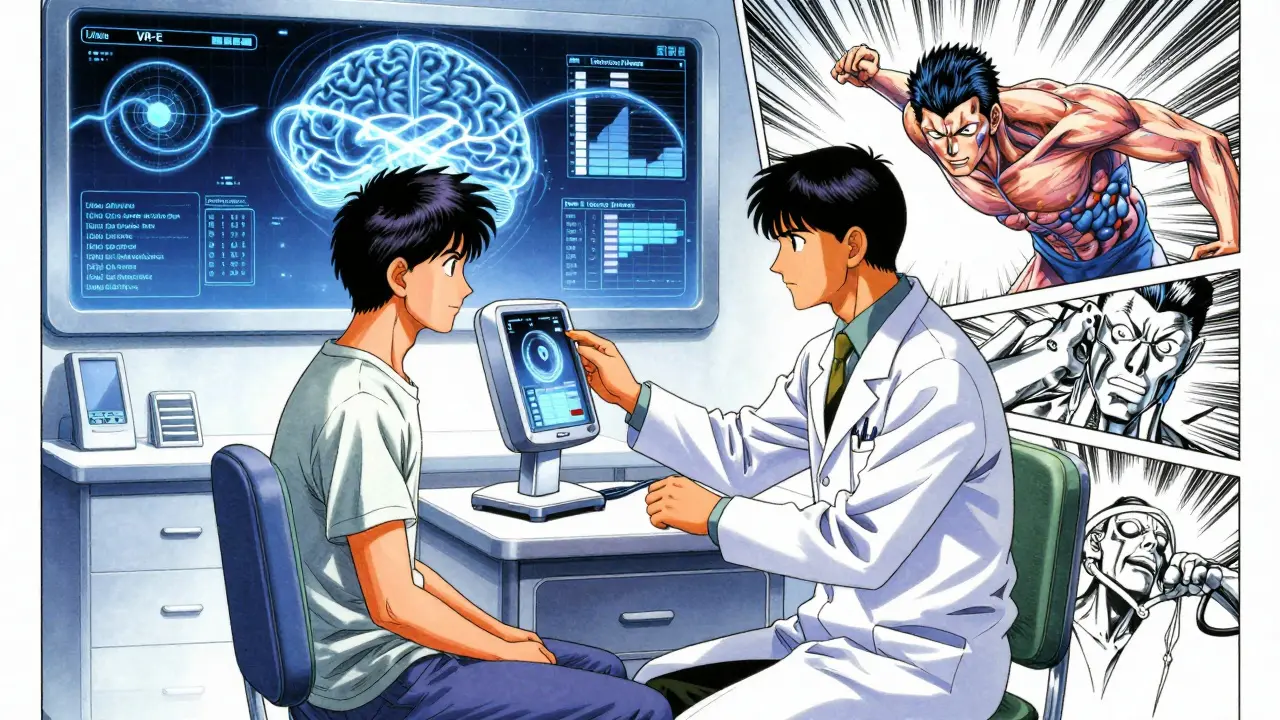
So, what do these new tools look like? They are not just online quizzes. They are sophisticated medical devices that analyze milliseconds of reaction time and eye movements.
Virtual Reality-Based Cognitive Function Examination (VR-E) is one of the most advanced options. VR-E uses high-precision eye-tracking during virtual reality video stimulation to assess five cognitive domains including memory, judgment, and spatial cognition. In studies by Chernyak et al., it achieved an Area Under the Curve (AUC) of 0.9415 in distinguishing MCI from normal cognition. For context, an AUC of 1.0 is perfect prediction. This means VR-E is incredibly accurate at spotting issues before they become obvious.
Another major player is Linus Health. Linus Health provides a digital assessment platform that integrates with electronic health records to track cognitive decline over time. Their protocol includes the Digital Clock and Recall (DCR) combined with the digital Trail Making Test-Part B (dTMT-B). The dTMT-B analyzes 12 process metrics, such as pen stroke velocity and drawing efficiency. According to their AAIC 2025 presentation, this machine-learning model identifies MCI stages with 93.7% accuracy.
For primary care settings, the Cleveland Clinic Cognitive Battery (C3B) is gaining traction. C3B is a validated digital battery designed for quick administration in clinic settings, offering superior discrimination of MCI compared to the Mini-Cog. It boasts a 92% completion rate and helps doctors detect changes during annual Medicare visits. Dr. James Leverenz, Director of the Lou Ruvo Center for Brain Health, notes that linking these tools to routine visits allows for individual-level comparison over time, which is critical for treatment success.
Blood Biomarkers: The Next Frontier
Digital tools measure function, but what about biology? For years, diagnosing Alzheimer's required expensive PET scans or invasive lumbar punctures (spinal taps). That is changing. Blood-Based Biomarkers are finally reaching clinical readiness. Blood-based biomarkers are proteins like amyloid-beta and tau found in blood samples that indicate the presence of Alzheimer's pathology.
The National Institute on Aging's 2025 Research Progress Report states that these markers "may finally be in reach." Imagine getting a simple blood draw at your annual checkup that tells you if you have elevated amyloid levels. This would revolutionize screening by removing the need for costly imaging. While digital tools show *how* your brain is working, blood biomarkers show *what* is happening biologically. Combining both offers the most comprehensive picture.
Early Interventions and Disease-Modifying Therapies
Why does early detection matter so much right now? Because we finally have drugs that modify the disease. Medications like Lecanemab target amyloid plaques in the brain. Lecanemab is a monoclonal antibody approved for early Alzheimer's disease that slows cognitive decline by clearing amyloid-beta. However, these drugs only work in the early stages. Once significant brain damage has occurred, they lose their effectiveness.
This creates a urgent need for accurate screening. If you wait until symptoms are severe, it may be too late for these treatments. Early identification of MCI allows patients to access these therapies when they can provide the most benefit. It also gives individuals time to plan financially, legally, and personally.

Challenges and Accessibility
Despite the excitement, there are hurdles. Not everyone is comfortable with technology. A study on the Rapid Online Cognitive Assessment (RoCA) found that while 83% of users had a positive experience, 17% struggled with usability. As user 'SeniorTechHelp' noted on AgingCare.com, "My father failed the online test because he couldn't figure out how to click the buttons, not because of cognitive issues."
There is also a risk of exacerbating healthcare disparities. A Nature Digital Medicine review found that 78% of remote digital cognitive assessment studies underrepresent racial and ethnic minorities. Developers must ensure these tools are accessible to all demographics, not just tech-savvy, educated populations.
Furthermore, integration with Electronic Health Records (EHRs) remains a challenge for many healthcare systems. Interoperability issues mean that data from these digital tests doesn't always flow smoothly into patient charts, potentially delaying care.
What Should You Do?
If you are concerned about cognitive decline, don’t wait. Talk to your doctor. Ask if they offer digital cognitive screening or if they can refer you to a specialist who does. Keep track of any changes in your memory, mood, or ability to perform daily tasks. Early detection is no longer just about diagnosis; it is about preserving quality of life and accessing life-changing treatments.
Is the MoCA test still reliable for detecting early cognitive decline?
While the MoCA is still widely used, experts consider it insufficient for detecting very early or preclinical cognitive changes. It has lower sensitivity compared to newer digital tools like VR-E or Linus Health's DCR, which capture subtle process metrics that paper tests miss.
How accurate are digital cognitive assessments?
Highly accurate. Tools like VR-E have demonstrated an AUC of 0.9415 in distinguishing MCI from normal cognition. Linus Health's models achieve up to 93.7% accuracy in identifying MCI stages, significantly outperforming traditional screeners.
Can blood tests diagnose Alzheimer's disease?
Blood-based biomarkers are becoming clinically ready. They can detect amyloid and tau proteins associated with Alzheimer's pathology. While not yet a standalone diagnostic tool in all settings, they are revolutionizing screening by providing biological evidence without the need for PET scans or spinal taps.
What is Mild Cognitive Impairment (MCI)?
MCI is a transitional stage between normal aging and dementia. Individuals with MCI experience noticeable cognitive changes that affect daily life slightly less than dementia, but more than typical age-related forgetfulness. It is a critical window for early intervention.
Are digital cognitive tests covered by insurance?
Coverage is evolving. CMS now reimburses for certain digital cognitive assessments (up to $45 per test in 2025). Many Medicare annual wellness visits include cognitive screening, and adoption is increasing as more tools receive FDA clearance and demonstrate clinical value.

Write a comment
Your email address will not be published.
Recent Posts
-
 How to Buy Cheap Generic Bupropion Online Safely and Save Money September 24, 2025
 -
 How Medications Cross the Placenta and Affect the Fetus November 18, 2025



9 Comments
Great read.
I have to say that the shift towards digital cognitive assessments is absolutely fascinating and I think it represents a monumental leap forward in how we approach neurological health! 🧠✨ It is really quite remarkable that tools like VR-E can capture process metrics such as eye-tracking and reaction times which traditional paper tests simply cannot do. The fact that VR-E has an AUC of 0.9415 is mind-blowing when you compare it to the older MoCA tests that often miss subtle changes until they are already quite advanced. I remember reading about Linus Health’s integration with electronic health records and how their machine-learning models identify MCI stages with over 93% accuracy, which is just incredible technology for something so personal and critical. 📈🤖 It gives me so much hope that we are finally moving away from those blunt instruments of the past and into a era where precision medicine can actually save lives by catching these issues early enough for disease-modifying therapies like Lecanemab to work effectively. 💊❤️
The problem with this entire narrative is that it assumes everyone has access to high-end virtual reality headsets or the technological literacy to navigate these 'sophisticated medical devices.' While the data presented regarding sensitivity is undeniably impressive, one must consider the socioeconomic implications of mandating such tools for standard screening. It is elitist to suggest that a simple blood draw or a paper test is insufficient without acknowledging that half the population struggles to update their smartphone apps, let alone perform a digital trail-making test with pen stroke velocity analysis. We are creating a two-tiered healthcare system where only the wealthy and tech-savvy get accurate early detection while everyone else is left with outdated MoCA scores that doctors pretend are still valid because they are cheaper and easier to administer in overworked clinics.
I completely understand your concern about accessibility, Michael, and it is a very valid point that we need to ensure no one is left behind in this progress. ❤️ However, I believe that as these technologies become more standardized, they will also become more integrated into routine primary care visits, making them just as accessible as a blood pressure check. The Cleveland Clinic Cognitive Battery is already being designed for quick administration in clinic settings, which helps bridge that gap for people who might not be comfortable with home-based tech. It is all about finding the balance between innovation and inclusivity, and I am hopeful that developers are listening to feedback from diverse communities to make sure these tools work for everyone. 🌍✨
While the enthusiasm for digital tools is noted, it is important to maintain a clear boundary between diagnostic capability and clinical utility. The article mentions that 17% of users struggled with usability in the RoCA study. This is not a trivial margin of error when dealing with conditions that affect millions. Furthermore, the reliance on Electronic Health Records integration ignores the fragmented nature of current healthcare IT infrastructure. Until interoperability is solved, these sophisticated datasets remain siloed and potentially useless for longitudinal tracking across different providers. We should proceed with caution rather than blind optimism.
Indeed!! The aspect of blood biomarkers is truly revolutionary!!! It is astonishing to think that a simple blood draw could replace invasive lumbar punctures or expensive PET scans!!! This democratization of diagnosis is exactly what we need!!! Imagine the relief for patients who are terrified of spinal taps!!! And the cost savings for the healthcare system would be immense!!! We must support these advancements!!!
As a healthcare professional, I find the convergence of digital phenotyping and liquid biopsies to be the most significant paradigm shift in neurology since the discovery of amyloid pathology itself!!! The synergy between functional assessment via VR-E and biological confirmation through plasma p-tau217 assays provides a holistic view of patient status!!! It is imperative that we advocate for equitable deployment of these technologies to mitigate the well-documented disparities in minority representation within clinical trials!!! We must ensure that the algorithmic bias does not perpetuate existing health inequities!!! Let us move forward with both scientific rigor and social responsibility!!! 🙌🏾💉
This post resonates deeply with me because it touches on the fundamental human experience of aging and the fear of losing oneself. The concept of MCI as a 'warning light' is a powerful metaphor that encourages proactive engagement with our health rather than passive acceptance of decline. It reminds us that our minds are dynamic and responsive to intervention. By embracing these new tools, we are not just detecting disease; we are affirming the value of every stage of life and empowering individuals to take charge of their cognitive journey. It is a testament to human ingenuity and compassion that we continue to seek better ways to care for each other. 🌱
Let us reframe this challenge as an opportunity for collective growth. The transition to digital screening is not just a technological upgrade but a cultural shift towards preventative health. We must educate ourselves and our communities about the importance of early detection. Do not wait for symptoms to become severe. Engage with your healthcare providers now. Ask questions. Demand better tools. Your brain health is a priority, and you have the power to influence your trajectory. Stay curious, stay active, and stay connected. The future of cognitive health is in our hands, and together we can build a more resilient society.