

When your kidneys start to fail, your body doesn’t just slow down-it starts to swell. That’s edema in chronic kidney disease (CKD), and it’s not just discomfort. It’s your body drowning in fluid because your kidneys can’t flush it out. You might notice your ankles puffing up, your shoes feeling tighter, or your face looking puffy in the morning. If you’re living with stage 3 or worse CKD, this isn’t rare-it’s expected. But it doesn’t have to control your life. The real answer isn’t one magic pill. It’s three things working together: diuretics, salt restriction, and compression therapy.
Why Your Body Swells When Kidneys Fail
Your kidneys don’t just make urine-they’re the body’s main fluid and salt regulators. When your eGFR drops below 60 mL/min/1.73m², they start losing their grip. Sodium slips through the cracks, and water follows it like a tide. That extra fluid doesn’t stay in your blood. It leaks into your tissues, especially your legs, feet, and sometimes your belly. This isn’t just about looking swollen. Too much fluid raises your blood pressure, strains your heart, and makes breathing harder. In advanced CKD, fluid overload is a leading reason people end up in the hospital.Diuretics: The Fluid Drain, But With Risks
Diuretics are the go-to drugs for flushing out that extra fluid. But not all are the same-and picking the wrong one can hurt you more than help. If your eGFR is below 30, loop diuretics like furosemide (Lasix), bumetanide, or torsemide are your best bet. They work on the thick ascending limb of the loop of Henle, where most sodium gets reabsorbed. Doctors usually start with 40-80 mg of furosemide daily. If that doesn’t move enough fluid, they’ll bump it up by 20-40 mg every few days, sometimes up to 320 mg a day. For patients with eGFR above 30, thiazides like hydrochlorothiazide (12.5-25 mg daily) can still work. But here’s the catch: once kidney function drops, thiazides lose their punch. That’s why doctors sometimes combine them-loop plus thiazide. It’s called sequential nephron blockade. It pulls more fluid out than either drug alone. But studies show it raises the risk of acute kidney injury by 23%. It’s a trade-off: more fluid out, but your kidneys might take a harder hit. And then there’s spironolactone. It’s not a typical diuretic. It blocks aldosterone, which helps reduce fluid retention and is especially useful if you also have heart failure. But in late-stage CKD, it can spike your potassium to dangerous levels-over 25% of patients with stage 4 or 5 CKD develop hyperkalemia on it. That’s why blood tests are non-negotiable. The new FDA approval of IV furosemide for CKD patients with eGFR under 15 is a game-changer. Oral pills just don’t get absorbed well when kidneys are this damaged. IV gives 38% more fluid removal. But it’s not for home use-it’s for hospitals or dialysis centers. Here’s the hard truth: people on diuretics lose kidney function faster. One study found they dropped 3.2 mL/min/year in eGFR, compared to 1.7 for those not on them. That doesn’t mean you shouldn’t take them. It means you need to be watched closely. Too much diuresis too fast can crash your kidneys. The goal isn’t to dry you out completely-it’s to reach your "dry weight," the lightest you can be without feeling dizzy, weak, or dehydrated.Salt Restriction: The Most Underused Tool
If you think cutting the salt shaker is enough, you’re missing 75% of the problem. Most sodium doesn’t come from your kitchen-it comes from bread, canned soup, deli meat, frozen meals, and even some medications. The National Kidney Foundation says you should aim for under 2,000 mg of sodium a day. For stage 4 or 5 CKD, drop to 1,500 mg. That’s less than one slice of bread and a cup of canned soup combined. One cup of chicken noodle soup? 1,200 mg. Two slices of whole wheat bread? 600 mg. A 2-ounce serving of turkey breast? 500 mg. Add a bag of chips and you’ve blown your daily limit before lunch. The real challenge? Taste. People say low-sodium food tastes like cardboard. That’s why dietitians don’t just hand you a list-they teach you how to rebuild flavor with herbs, lemon, garlic, vinegar, and spices. They show you how to read labels-not just for sodium, but for hidden names like monosodium glutamate, sodium nitrate, or baking soda. And it’s not just salt. Fluids count too. If you’re swollen, you might need to limit total liquids to 1,500-2,000 mL a day. That includes yogurt, soup, watermelon, and even ice cubes. One cup of watermelon is 240 mL of fluid. That’s a quarter of your daily allowance. Stick to it for four weeks, and you can cut edema by 30-40%-without a single pill. But it takes support. One study found patients who met with a renal dietitian 3-4 times had double the success rate of those who didn’t.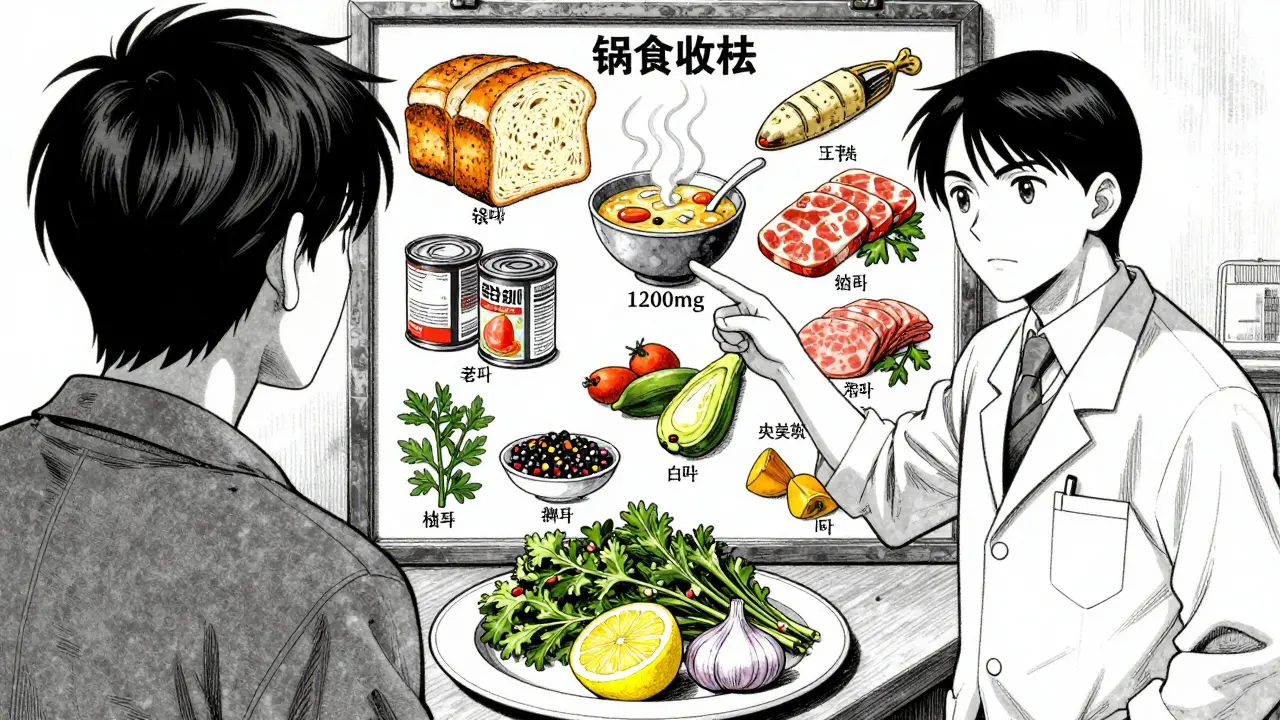
Compression Therapy: The Quiet Hero
Diuretics and salt control tackle the source. Compression tackles the symptom: swollen legs. Graduated compression stockings (30-40 mmHg at the ankle) are the gold standard. They squeeze your legs tighter at the bottom and looser at the top, helping blood and fluid flow back toward your heart. Studies show they reduce leg volume by 15-20% in four weeks. That’s not just cosmetic-it makes walking easier, reduces pain, and prevents skin breakdown. But here’s the problem: most people quit. Why? They’re hard to put on. They itch. They feel tight. One study found only 38% of patients still wore them after three months. That’s why movement matters. Just walking 30 minutes five days a week improves lymphatic drainage and cuts edema by 22% compared to sitting still. Elevating your legs above your heart for 20 minutes a few times a day helps too. It’s simple, free, and works. For severe cases-like nephrotic syndrome or massive swelling-intermittent pneumatic compression devices can help. These are inflatable sleeves that squeeze your leg in waves, mimicking muscle movement. They’re not for everyone, but for those who’ve tried everything else, they can add another 35% reduction in swelling compared to stockings alone.The Real Secret: Teamwork
No single tool works best alone. The patients who get the best results? They have a team. A nephrologist manages the diuretics and monitors kidney function. A renal dietitian teaches you how to eat without salt. A physical therapist shows you how to move safely and use compression gear. A nurse helps you track your weight daily-because a 1 kg jump in 24 hours means you’re holding onto a liter of fluid. In the Mayo Clinic’s registry, 75% of patients with stage 3-4 CKD saw their swelling drop within eight weeks when they had this team approach. Without it? Only 45% improved. And the stakes are high. People with untreated edema have a 28% higher risk of dying within a year. But if you get your fluid balance right, your heart doesn’t have to work as hard. Your blood pressure drops. You sleep better. You can walk without pain.
What to Do Today
If you have CKD and swelling:- Check your daily sodium intake. Use an app like MyFitnessPal to track it. Cut out processed food.
- Ask your doctor if you’re on the right diuretic. If you’re on a thiazide and your eGFR is below 30, you might need a loop diuretic.
- Try compression stockings. Don’t wait until your legs are huge. Start early.
- Walk every day-even 10 minutes helps.
- Get a referral to a renal dietitian. It’s not a luxury-it’s part of your treatment plan.
Frequently Asked Questions
Can I stop taking diuretics if I cut out salt?
Some people with early-stage CKD can reduce or even stop diuretics after strict salt and fluid control. But if you’re in stage 4 or 5, your kidneys can’t handle fluid even with perfect dieting. Stopping diuretics without medical advice can lead to dangerous fluid buildup. Always talk to your nephrologist before making changes.
Why do I feel dizzy when I take diuretics?
Dizziness often means you’re losing too much fluid too fast. Your blood pressure drops, and your brain doesn’t get enough blood. This is called orthostatic hypotension. Weigh yourself daily. If you lose more than 1 kg in a day, call your doctor. You may need a lower dose or to slow down the diuresis.
Are compression stockings only for older people?
No. Anyone with CKD and leg swelling-regardless of age-can benefit. Younger patients with nephrotic syndrome often have severe swelling and need them just as much. The key is finding the right fit and pressure. Ask for a certified fitter at a medical supply store.
Can I use over-the-counter diuretics for CKD edema?
Never. OTC diuretics like herbal pills or "water pills" sold online aren’t regulated. They can cause dangerous electrolyte imbalances, kidney damage, or interact with your other meds. Only use diuretics prescribed and monitored by your nephrologist.
How do I know if my swelling is from CKD and not something else?
CKD edema usually starts in the ankles and feet and moves upward. It leaves a dent when you press it (pitting edema). It often gets worse during the day and improves overnight. If you also have high blood pressure, fatigue, foamy urine, or reduced urine output, it’s likely CKD-related. But swelling in just one leg, with redness or warmth, could be a blood clot-get that checked immediately.
What’s Next
New tools are coming. The FOCUS trial is testing whether using bioimpedance devices at home to measure fluid levels can make diuretic dosing more precise. Early results show 32% fewer hospital visits. If this works, you might soon have a small device at home that tells you exactly how much fluid you’re holding-before you even feel swollen. Until then, stick to the basics: watch your salt, take your meds as directed, wear your stockings, move your legs, and stay in touch with your care team. Edema in CKD is manageable. But it demands discipline-not desperation. Small, consistent actions beat big, rushed fixes every time.
Write a comment
Your email address will not be published.
Recent Posts
-
 Telehealth Medication Reviews: How to Prepare and What to Ask December 2, 2025




10 Comments
Okay, I’ve been living with stage 4 CKD for three years now, and let me tell you-this post is the first thing that actually made sense. I used to think diuretics were just a quick fix, but learning about sequential nephron blockade? Mind blown. I was on HCTZ for ages until my nephrologist switched me to torsemide, and honestly? My ankles stopped looking like inflated balloons. But the salt thing? Oh man. I had no idea one cup of soup could blow my whole day. I started using MyFitnessPal like they said, and now I cook everything from scratch. Garlic, lemon, smoked paprika-it’s wild how good food can still taste when you ditch the sodium bomb. Compression socks? I hated them at first. Now I wear them while I watch Netflix. My dog even gets jealous when I put them on. I’m not cured, but I’m not drowning anymore. Small wins, people. Small wins.
This is a well-structured and clinically accurate overview of edema management in CKD. In India, access to renal dietitians is limited, and many patients rely on anecdotal advice from pharmacies. The emphasis on sodium restriction is critical-processed foods, packaged snacks, and even some Ayurvedic preparations contain hidden sodium. Compression therapy is underutilized here due to cost and lack of awareness. I have seen patients with nephrotic syndrome develop severe lymphedema because they were never fitted for proper graduated stockings. The point about IV furosemide in eGFR <15 is particularly relevant in our context where oral bioavailability is poor due to gut edema. A multidisciplinary approach is not a luxury-it is a necessity.
Y’ALL. I just cried reading this. My mom has stage 3 CKD and I’ve been watching her struggle with swelling for years. She used to say, ‘It’s just aging.’ No. It’s not. I printed this out and taped it to the fridge next to her daily meds. We’ve started tracking sodium like it’s a game-bonus points if we find a low-sodium recipe that doesn’t taste like cardboard 😭✨. We bought her compression socks (the ones with the silicone grip top-they don’t slide down!) and she walks 15 minutes after dinner every night. She says her legs feel ‘lighter.’ I don’t know if this is medical advice or just love, but it’s working. Thank you for writing this like someone who actually gets it. You’re not just a doctor-you’re a lifeline. 💪❤️
So let me get this straight: the ‘magic pill’ is… not a pill at all? It’s a whole damn lifestyle overhaul? Who knew? I thought the answer was just ‘take your Lasix’ and call it a day. Nope. Now I’ve got to read labels like I’m decoding a spy novel, wear leggings that feel like a boa constrictor, and walk like a penguin in a slow-motion video. But hey-if I can avoid another hospital trip, I’ll wear the socks with pajamas. And yes, I did just cry while eating a ‘low-sodium’ chicken breast that still tasted like sadness. But at least I’m not drowning. 🙃
Fluid overload in CKD is a silent siege. It creeps in like fog over a marsh-soft at first, then suffocating. Diuretics are the sledgehammer, salt restriction the barricade, and compression the gentle tide pulling back. I’ve seen men in their 50s, once marathoners, reduced to hobbling because their legs swelled like water balloons. One of them, after six weeks of compression and diet coaching, walked into clinic without his cane. Said he felt ‘like himself again.’ That’s not medicine. That’s resurrection. And it doesn’t come from a pill bottle-it comes from consistency, from being seen, from someone reminding you that you’re still human, even when your kidneys are on strike.
So… loop diuretics + thiazide = 23% higher AKI risk? But also better fluid removal? So… we’re trading kidney function for less swelling? That’s… not a trade I’d make if I didn’t have to. Also, ‘dry weight’? Sounds like a fitness influencer’s buzzword. Is that even a real thing? I think my doctor just says that so I don’t ask why my weight keeps dropping. And why is no one talking about the fact that compression socks make your legs sweat like a sauna? I tried them for two days. Now I just elevate my legs on a stack of cookbooks. It’s free. And less itchy. 🤷♀️
My dad’s on dialysis now, and I swear, the only reason he’s still here is because my mom started weighing him every morning before breakfast. One pound up? That’s a liter of fluid. Two pounds? Time to call the nurse. We stopped buying canned soup. Started using Mrs. Dash. He hates it. But he’s alive. And the compression socks? He calls them ‘the leg prison.’ But he wears them. Because he doesn’t want to end up back in the hospital. Honestly? This post should be mandatory reading for every CKD patient. And their families. And their cats. Seriously. Cats need to know about sodium.
From India here. In rural areas, people use herbal diuretics like coriander seeds or fennel water-sometimes they help, sometimes they make things worse. No one checks potassium. One patient I knew took haldi (turmeric) with black pepper for ‘inflammation’-ended up with hyperkalemia and cardiac arrest. Salt restriction? Most families think ‘no table salt’ is enough. They don’t know about soy sauce, pickles, or even bread. Compression therapy? Only urban hospitals have them. We need community health workers to teach this. Not just doctors. Real people. Talking to real people. This info? It’s gold. But it needs to reach the villages too.
Thanks for this. I’m 32 and just diagnosed with stage 4. I thought I had years. Turns out, I need to change everything now. I didn’t know about dry weight. I thought if I felt okay, I was fine. Now I know I’m not. I’m going to ask for a dietitian. I’m going to try the socks. I’m going to walk. It’s scary. But I’m not giving up. Not yet.
Diuretics make your kidneys die faster. Salt restriction works. Socks help. Walk. That’s it. You’re welcome.