Medication errors are not always about taking the wrong pill. Sometimes, the danger lies in how a medicine is designed to work. A fentanyl patch, a bottle of liquid codeine, or an extended-release oxycodone tablet each have unique mechanisms that can turn a standard dose into a lethal one if mishandled. Understanding these specific risks is the first step in preventing tragedy.
We often think of overdose as simply taking too much at once. But with modern formulations, 'too much' can happen through crushing a time-release tablet, heating a skin patch, or using a kitchen spoon to measure liquid opioids. These actions bypass the safety features built into the medication, dumping a full day's worth of drug into your system in minutes. This guide breaks down exactly how these forms work, where they fail, and what you need to do to stay safe.
The Hidden Danger of Transdermal Patches
Transdermal patches are medication delivery systems that release drugs slowly through the skin into the bloodstream over a set period, usually 72 hours. Common examples include fentanyl and buprenorphine patches used for chronic pain management. The design is elegant: it provides steady relief without the peaks and valleys of oral pills. However, this slow-release mechanism creates a dangerous illusion of safety.
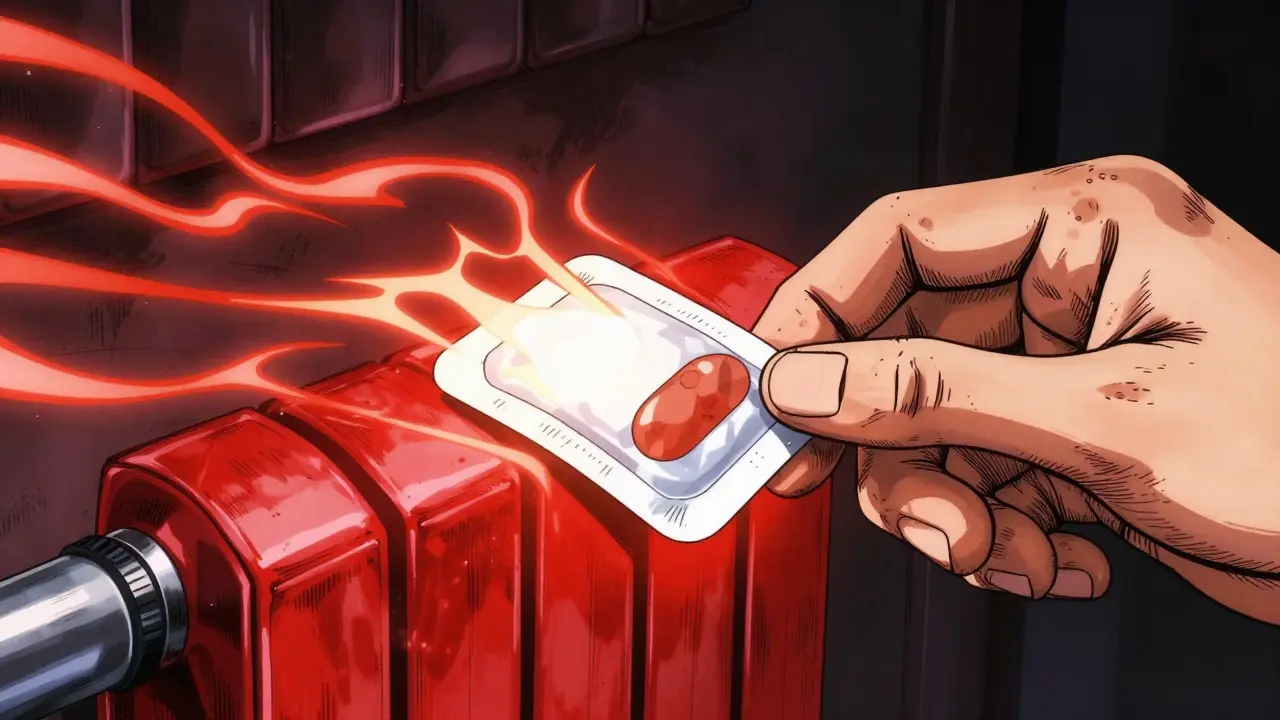
The biggest risk with patches is tampering. Some individuals attempt to extract the remaining medication from a used or active patch by cutting, chewing, or heating it. When you heat a fentanyl patch-say, by placing it near a radiator or using a hairdryer-you accelerate the chemical reaction, causing the patch to release its entire contents rapidly. Instead of a trickle of medication over three days, your body receives a massive bolus all at once. This can lead to respiratory depression within minutes.
Another critical issue is application site sensitivity. Applying a patch to an area of increased blood flow, such as directly over a muscle that has just been exercised, or covering it with a heating pad, increases absorption rates significantly. If you are prescribed a patch, never share it, even with family members who may have similar pain issues. Patches retain enough medication after removal to cause severe overdose in someone without tolerance, including children and pets. Always dispose of used patches by folding them sticky-side together and flushing them according to FDA guidelines or local pharmacy take-back programs.
Liquid Medications: Precision Is Life-Saving
Liquid opioid formulations are concentrated solutions or suspensions containing medications like morphine, oxycodone, or codeine, requiring precise measurement tools for safe administration. Liquids are often prescribed for patients who cannot swallow pills, such as elderly individuals or those with swallowing difficulties. While convenient, they introduce a high margin for error due to concentration variability and measuring inaccuracies.
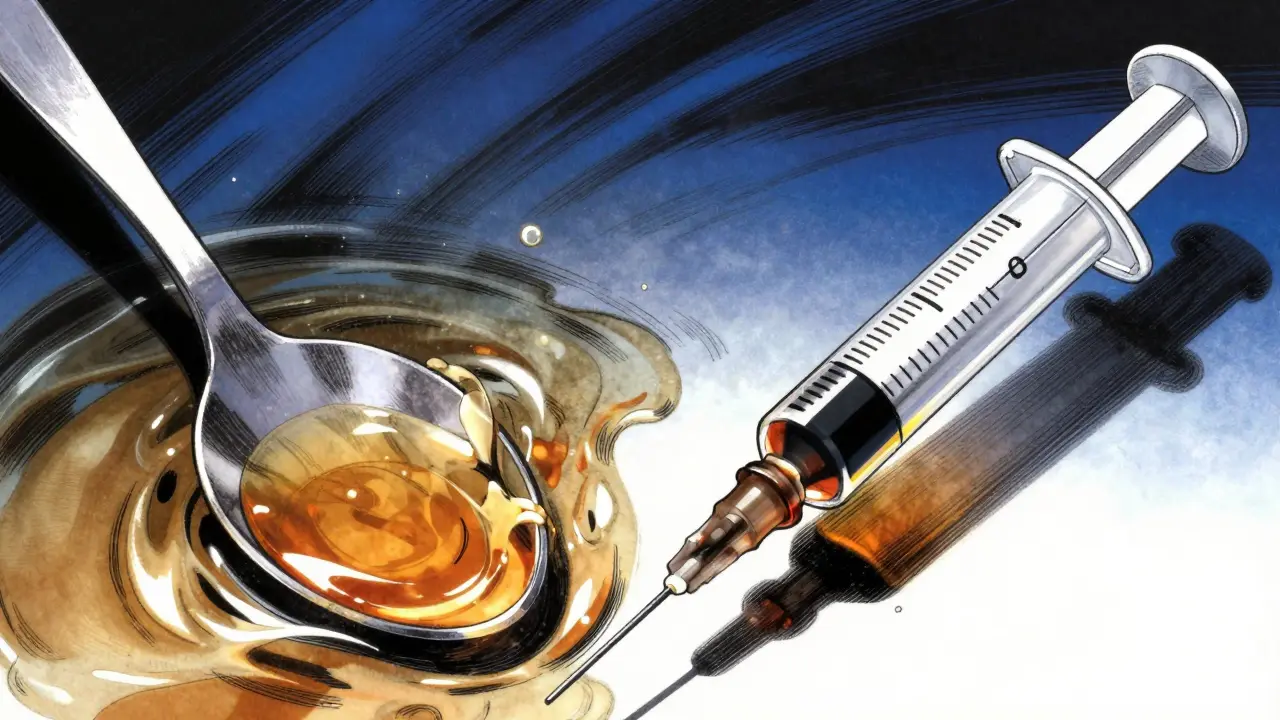
The most common mistake here is using household utensils. A teaspoon from your kitchen drawer is not a medical instrument. It can hold anywhere from 4 to 8 milliliters, whereas a medical teaspoon is exactly 5 milliliters. In concentrated liquid opioids, that extra 3ml could be the difference between pain relief and respiratory arrest. Always use the calibrated syringe or oral dosing cup provided with the prescription. If you lose it, ask your pharmacist for a replacement before refilling your meds.
Confusion also arises from similar-looking bottles. Many liquid opioids come in amber glass bottles with white caps, making them visually indistinguishable from cough syrups or other liquids. Labeling is crucial. Write the name of the drug and the date received on the bottle with a permanent marker. Never mix liquid medications with alcohol or other central nervous system depressants. Alcohol thins the blood and speeds up absorption, potentially turning a carefully measured dose into an overdose event. Keep all liquid medications out of reach of children; bright colors and sweet flavors in some pediatric formulations make them particularly attractive to curious toddlers.
Extended-Release Mechanisms: Do Not Break the Seal
Extended-release (ER) medications are tablets or capsules engineered with special coatings or matrices to dissolve slowly over 12 to 24 hours, maintaining consistent drug levels in the body. Brands like OxyContin, MS Contin, and XR formulations of various drugs rely on this technology. The goal is to provide around-the-clock coverage with fewer doses. However, this engineering is easily defeated, and doing so is extremely dangerous.
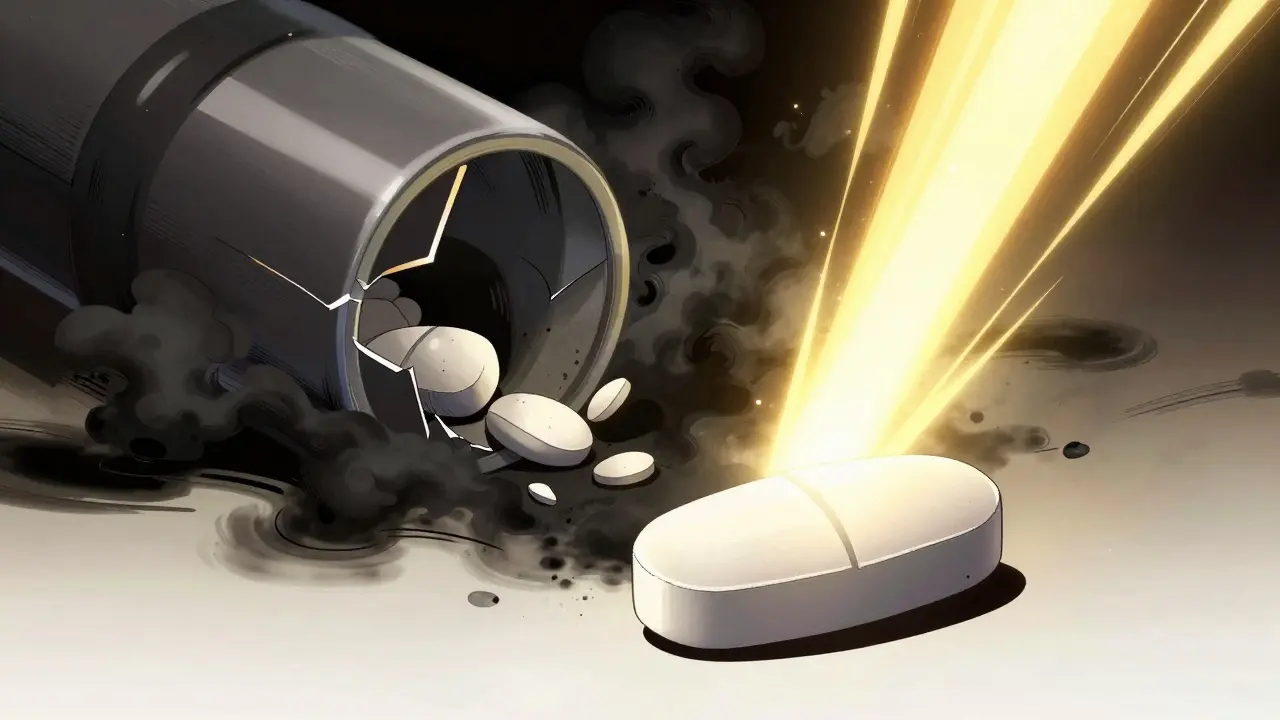
Crushing, chewing, or snorting an extended-release tablet destroys the time-release matrix. Imagine a sponge holding water. If you squeeze the sponge, all the water comes out at once. That is what happens when you crush an ER pill. You ingest the equivalent of two or three days' worth of medication in a single sitting. This sudden flood of opioids overwhelms the brain's respiratory centers, leading to slowed breathing, unconsciousness, and death.
Some users believe that splitting an ER tablet allows them to stretch their supply or adjust the dose. Unless the tablet has a score line specifically indicating it can be split-and even then, only if approved by your doctor-never break it. Splitting an unscored ER tablet can damage the internal structure, causing unpredictable release patterns. One half might release too fast, while the other releases too slow, leading to withdrawal symptoms followed by accidental overdose later. Always swallow these tablets whole with a full glass of water.
Naloxone: Your Emergency Brake
Naloxone is an opioid antagonist medication that temporarily blocks opioid receptors in the brain, reversing the effects of an overdose and restoring normal breathing. Whether you are managing patch, liquid, or extended-release medications, having naloxone on hand is non-negotiable. It is available as a nasal spray (Narcan) or injectable form in most pharmacies without a prescription in many regions, including the UK and US.
Here is where formulation matters critically. Naloxone works fast, but its duration is shorter than that of many long-acting opioids. For immediate-release drugs, one dose might suffice. But for extended-release medications or large patches, the opioid continues to enter the bloodstream long after the naloxone wears off. This phenomenon is called 'renarcotization.' The person may appear to recover, breathe normally, and even wake up, only to slip back into unconsciousness 30 to 90 minutes later as the naloxone fades and the remaining opioid takes effect again.
If you suspect an overdose involving an ER medication or patch, administer naloxone immediately. Then, call emergency services. Monitor the person closely. Be prepared to give additional doses of naloxone every 2 to 3 minutes until help arrives. Do not assume one dose is enough. In cases of heavy exposure, multiple doses are often required. Keep your naloxone kit accessible, not locked away. Check expiration dates regularly. Expired naloxone may lose potency, leaving you unprotected when seconds count.
Safety Protocols and Storage Best Practices
Prevention starts with environment. How you store your medications dictates whether they remain safe or become hazards. All opioid medications should be stored in a locked container, separate from other medicines. This prevents accidental ingestion by children, pets, or visitors who might mistake them for something else. A simple lockbox under the sink or in a bedroom drawer is sufficient.
Create a written safety plan. Include the names of your medications, dosages, and instructions on what to do in case of suspected overdose. Share this plan with trusted friends or family members. If you live alone, consider setting up check-in times with a neighbor or friend. Technology can help here too; smart home devices or wearable monitors can alert contacts if unusual activity-or lack thereof-is detected.
| Formulation | Primary Risk Factor | Key Prevention Strategy |
|---|---|---|
| Transdermal Patch | Heating or cutting to extract drug | Never apply heat; dispose properly folded |
| Liquid Solution | Inaccurate measuring (kitchen spoons) | Use only calibrated syringes/cups |
| Extended-Release Tablet | Crushing/chewing/snorting | Swallow whole; never alter physical form |
When to Seek Immediate Help
Recognizing the signs of overdose is vital. Look for pinpoint pupils, slow or stopped breathing, unresponsiveness, and clammy skin. If you see these signs, act quickly. Call emergency services immediately. Administer naloxone if available. Perform rescue breathing if you are trained and the person is not breathing. Do not wait to see if they 'wake up.' Time is tissue, and brain damage can occur within minutes of oxygen deprivation.
After an overdose event, even if reversed by naloxone, medical evaluation is essential. The person needs monitoring for renarcotization and assessment for underlying causes. Use this moment to reconnect with healthcare providers. Adjusting dosage, switching formulations, or exploring non-opioid pain management options may reduce future risks. Harm reduction is not about judgment; it is about keeping people alive and healthy.
Can I cut an extended-release tablet in half?
Only if the tablet has a visible score line and your doctor explicitly approves it. Cutting an unscored extended-release tablet can damage the internal matrix, causing the drug to release too quickly or unevenly, which increases overdose risk.
Why is heating a fentanyl patch dangerous?
Heat accelerates the chemical release of the drug from the patch. Instead of releasing medication slowly over 72 hours, a heated patch can dump its entire contents into your bloodstream rapidly, leading to acute respiratory depression and potential death.
What is renarcotization?
Renarcotization occurs when naloxone wears off before the opioid has fully left the body. This is common with extended-release medications. The person may appear recovered but then slip back into overdose as the remaining drug takes effect again. Multiple doses of naloxone may be needed.
Is a kitchen teaspoon accurate for liquid medication?
No. Kitchen teaspoons vary widely in volume (4-8ml). Medical dosing requires precision. Always use the calibrated syringe or oral dosing cup provided with your prescription to ensure you receive the exact prescribed amount.
How should I dispose of unused patches?
Fold the patch in half with the sticky sides together so the adhesive seals. Flush it down the toilet as recommended by FDA disposal guidelines for potent opioids, or take it to a pharmacy take-back program. Never throw loose patches in the trash where children or pets could access them.

Recent Posts
-
 Nitrofurantoin and Fertility: What You Should Know October 28, 2025
 -
 Exploring Ivermectin: Potential COVID-19 Treatment March 21, 2025
 -
 Hepatorenal Syndrome: How Liver Failure Causes Sudden Kidney Shutdown December 25, 2025
 -
 How and Where to Buy Prednisone Online Safely April 16, 2026