
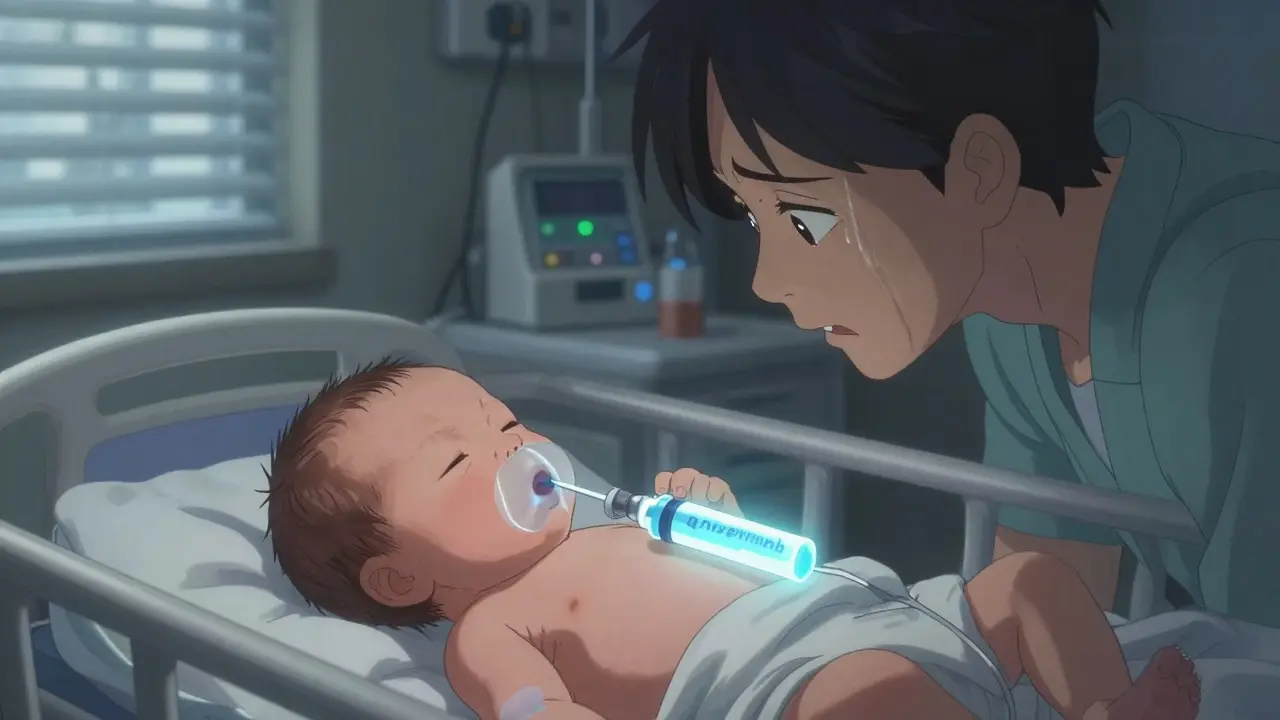
Every year, as winter settles in, a quiet but dangerous virus begins to spread - one that might seem like just a cold to healthy adults but can turn deadly for babies and older people. This is RSV - Respiratory Syncytial Virus. It’s not new, but in 2026, we have better tools than ever to fight it. And if you’re caring for a newborn, an elderly parent, or someone with health issues, knowing what RSV does and how to stop it could mean the difference between a few days at home and a hospital stay.
What RSV Actually Does to the Body
RSV starts like a common cold: runny nose, cough, low fever, sore throat. But for some, it doesn’t stop there. The virus attacks the small airways in the lungs, causing swelling and mucus buildup. In infants, those airways are tiny - as narrow as a straw. When they get blocked, breathing becomes hard, fast, and shallow. You might see the ribs pulling inward with each breath, or notice the baby struggling to feed because they can’t breathe and suck at the same time. In older adults, RSV doesn’t just cause lung problems - it pushes already weakened systems over the edge. Someone with heart failure or COPD might find their condition suddenly worse. Their oxygen levels drop. They get more tired. Their heart works harder. For many, this isn’t just an infection - it’s a trigger for a medical crisis. The virus spreads easily. It lives on doorknobs, toys, and phones for hours. A single sneeze can send it flying through the air. Kids pick it up at daycare. Grandparents catch it from a grandchild who doesn’t feel sick yet but is already shedding the virus. That’s why RSV peaks between December and January - when people are indoors, close together, and the air is dry.Why Infants Are at the Highest Risk
Babies under 6 months are the most vulnerable. Their immune systems haven’t learned to fight this virus yet. About 2 to 3% of all infants under 6 months will end up in the hospital because of RSV. That’s roughly 60,000 children in the U.S. every year. Premature babies, those born before 29 weeks, are three to five times more likely to need intensive care. Babies with heart defects or chronic lung disease face even higher risks - up to 20 times more likely to get seriously ill. Symptoms in infants aren’t always obvious. They might not have a fever. Instead, they become unusually quiet, stop eating, or breathe so fast you can count each one. Their lips or fingernails might turn blue. If you see any of this, don’t wait. Call your doctor immediately. The long-term effects can last years. Kids who were hospitalized with RSV before age 2 are more than four times as likely to develop wheezing or asthma by age 7. Studies show their lung function stays lower than peers’ well into adolescence. This isn’t just about surviving the infection - it’s about protecting their future breathing.Older Adults Are Being Hit Harder Than Ever
For decades, RSV was seen as a child’s illness. That changed in the last five years. Now we know: older adults are in serious danger. Each year, RSV sends 60,000 to 160,000 adults over 65 to the hospital in the U.S. and kills between 6,000 and 14,000 of them. The risk isn’t just about age. It’s about what else is going on in the body. Adults with COPD are over four times more likely to be hospitalized. Those with heart failure face nearly three times the risk. People over 75 stay in the hospital longer - nearly a week on average - and are nearly twice as likely to die from it. What’s worse? RSV often makes existing problems worse. Three out of four hospitalized older adults see their heart or lung condition get significantly worse. Nearly one in three ends up in the ICU. And after recovery, 42% struggle with basic tasks like bathing or dressing. One in four need to move to a rehab center or nursing home - something they didn’t need before getting sick.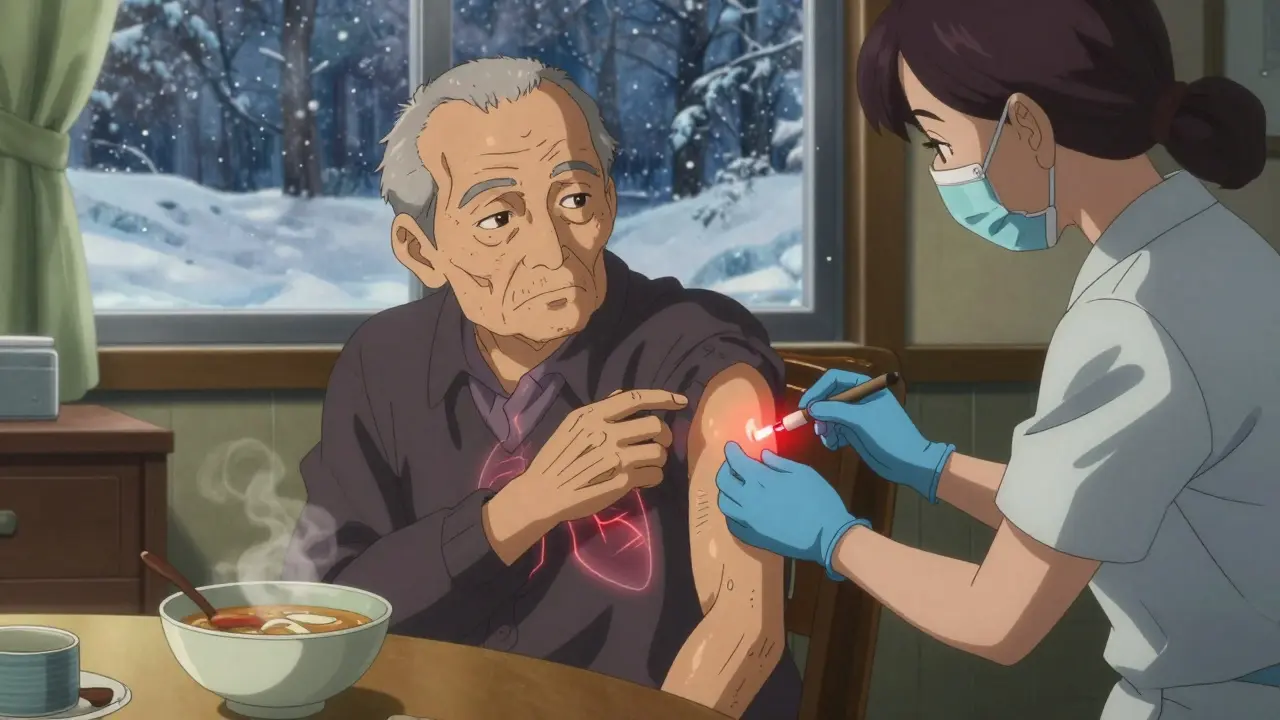
The Game-Changing Tools Now Available
For the first time in history, we have real ways to prevent severe RSV - not just treat it. For babies: A single shot called nirsevimab (Beyfortus™) was approved in mid-2023. It’s a monoclonal antibody - a lab-made protein that gives immediate, temporary protection. One dose lasts five months, covering the entire RSV season. It reduces the chance of hospitalization by 75%. The CDC now recommends it for all infants under 8 months entering their first RSV season. High-risk toddlers between 8 and 19 months also get it before their second season. For older adults: Two vaccines came out in 2023. GSK’s Arexvy and Pfizer’s Abrysvo. Both are given as a single shot. Arexvy cuts severe lower respiratory disease by over 82%. Abrysvo cuts it by 67%. These aren’t perfect - but they’re the best protection we’ve ever had. The CDC advises adults 60 and older to talk with their doctor about getting vaccinated, especially if they have heart or lung disease, live in a nursing home, or have other chronic conditions. For pregnant people: Abrysvo is also approved for use during weeks 32 to 36 of pregnancy. When a mother gets the vaccine, her body makes antibodies that pass to the baby through the placenta. This protects the newborn from birth through the first six months - a critical window when babies are most vulnerable and can’t yet get their own shots.What You Can Do Right Now
Even with new tools, prevention still starts with simple habits - especially in homes with babies or older adults.- Wash hands with soap for at least 20 seconds before touching a baby or an elderly person. Use hand sanitizer if soap isn’t available.
- Avoid kissing babies on the face. Even if you feel fine, you could be carrying the virus.
- Keep high-touch surfaces clean - doorknobs, light switches, phones, toys. Use an EPA-approved disinfectant that kills RSV.
- If someone in the house has a cold, wear a mask around infants and older adults. Keep them separated if possible.
- Don’t take babies to crowded places during peak RSV season (late fall to early spring). Avoid daycare if you can, especially for premature infants.
- Make sure older adults get their flu shot and pneumococcal vaccine. These won’t stop RSV, but they reduce the chance of other infections that can make RSV worse.
The Bigger Picture: Why This Matters Beyond Your Home
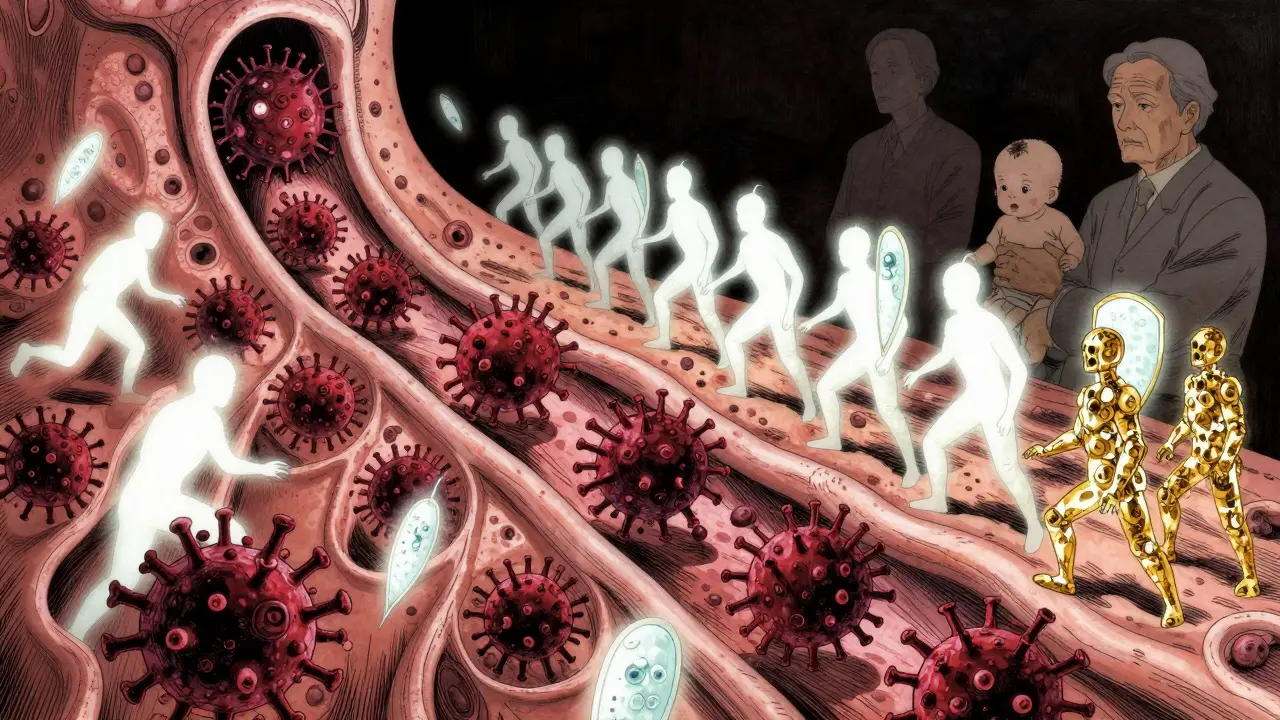
RSV doesn’t just hurt families - it strains the whole health system. In the U.S., it costs $1.7 billion in direct medical bills each year for children under five. When you add lost work time, caregiving, and long-term care, the total hits $7.8 billion. Globally, the gap is even starker. Over 97% of RSV deaths in children under five happen in low- and middle-income countries. In rural Kenya, one in 40 infected babies dies. In remote parts of Papua New Guinea, it’s one in six. The reason? No oxygen, no ventilators, no access to monoclonal antibodies or vaccines. The tools we have now - nirsevimab, the vaccines - are life-saving. But they’re expensive. Arexvy costs $295 per dose in the U.S. In many countries, that’s more than a month’s income. Until these tools become affordable and widely available, RSV will keep killing children who don’t need to die.What Comes Next
Research is moving fast. New antivirals like ALS-8176 are showing promise in trials, cutting viral load by 97%. Maternal vaccination is now a standard recommendation, and we’re learning how to better protect premature babies. By 2030, experts believe these tools could prevent up to 600,000 hospitalizations worldwide. But progress won’t be complete until access is fair. Protecting infants and older adults isn’t just about medicine - it’s about justice. Every child deserves a chance to breathe. Every older adult deserves to stay safe in their own home. If you’re a parent, grandparent, or caregiver - you’re not alone. Talk to your doctor. Ask about nirsevimab for your baby. Ask about the RSV vaccine for yourself or your loved one. Use the tools we have. And never ignore signs of trouble in a baby’s breathing or an older person’s sudden decline. RSV is still out there. But now, we have the power to stop it.Is RSV the same as the flu or COVID-19?
No. RSV, flu, and COVID-19 are all respiratory viruses, but they’re caused by different germs. RSV usually causes milder symptoms in adults but is more dangerous for babies and older adults than flu in some cases. Unlike flu, there’s no rapid home test for RSV - doctors usually diagnose it with a nasal swab. Symptoms can look similar: cough, fever, runny nose. But RSV is more likely to cause wheezing and trouble breathing in infants. Testing helps confirm which virus it is, especially in high-risk groups.
Can my baby get the RSV vaccine?
No, babies under 8 months don’t get the RSV vaccine - they get nirsevimab, which is a monoclonal antibody injection. It’s not a vaccine because it doesn’t train the immune system. Instead, it gives them ready-made antibodies to fight RSV right away. It’s given as a single shot before or during RSV season. Babies 8 to 19 months with certain health conditions can get it too. The vaccine is only approved for adults 60+ and pregnant people.
Is RSV dangerous for healthy adults?
Usually not. Healthy adults get mild cold-like symptoms - runny nose, sore throat, cough - and recover in a week or two. But even healthy adults can spread RSV to babies or older people without knowing they’re infected. That’s why handwashing and staying home when sick matters. You might feel fine, but you could be the one who brings the virus to someone who can’t fight it.
How long is someone contagious with RSV?
Most people spread RSV for 3 to 8 days after symptoms start. But babies and people with weak immune systems can keep spreading the virus for up to 4 weeks - even if they feel better. That’s why it’s risky to take a baby to visit relatives who just had a cold. The virus can linger in the body long after symptoms fade.
Do I need to get the RSV vaccine every year?
Right now, no. The RSV vaccines for older adults are single-dose shots, given once per season. Unlike flu shots, there’s no annual booster recommended yet. But scientists are studying whether future versions might need yearly updates. For now, one shot protects through the RSV season. Talk to your doctor about timing - it’s best to get it in early fall before the virus starts spreading.
Can RSV come back more than once?
Yes. You can get RSV multiple times in your life. The first infection is usually the worst. After that, your body builds some immunity, so later infections are milder - often just a cold. But older adults and people with chronic illnesses can still get severe RSV even after prior infections. That’s why vaccination matters, even if you’ve had RSV before.

Write a comment
Your email address will not be published.
Recent Posts
-
 BPH Symptoms: When to See a Doctor for Prostate Health September 28, 2025
 -
 Generic Drug Naming: USAN, INN, and Brand Name Basics Explained December 30, 2025
 -
 Natural Fever Remedies: Effectiveness, Safety & When to Use Them September 24, 2025
8 Comments
My nephew got RSV last year and spent 12 days in the NICU. We didn’t even know it was RSV until they did the swab. Don’t wait. Just get the shot.
Let me tell you something - I thought RSV was just a bad cold until my mom got it last winter. She was fine one day, then suddenly oxygen levels dropped, and she was in the ICU by midnight. I didn’t sleep for three nights. Now I clean every doorknob in the house like it’s a biohazard. That vaccine? I got mine the second it was available. No regrets.
Actually, the 75% hospitalization reduction stat for nirsevimab is misleading - it’s based on relative risk reduction, not absolute. In a population with low baseline hospitalization rates, that’s only a 1-2% absolute drop. Also, the vaccine efficacy for older adults drops to 40% in those over 80. Most people don’t realize that. And why are we not talking about the fact that monoclonal antibodies are cost-prohibitive in 90% of the world? This is a rich-country solution wrapped in feel-good marketing.
I’m a neonatal nurse, and I’ve seen RSV turn a healthy baby into a respiratory emergency in under 48 hours. Nirsevimab is a game-changer - we’ve had zero hospitalizations in our unit this season among infants who got the shot. It’s not perfect, but it’s the closest thing we’ve ever had to a shield. If you’re eligible, just do it. No drama. Just protection.
Oh honey, if you’re not getting your RSV shot before Thanksgiving, you’re basically playing Russian roulette with your grandma’s life. I mean, come on - we’ve got vaccines, we’ve got monoclonals, and you’re still letting your toddler kiss Uncle Bob who ‘just has a sniffle’? Please. You’re not being careful - you’re being negligent.
Interesting that the article doesn’t mention the long-term immunological implications of maternal vaccination. Antibody transfer via placenta is well-documented, but we still lack longitudinal data on whether this alters the infant’s natural immune development. I’d love to see a follow-up study tracking antibody persistence and subsequent RSV infections up to age five. Still - the clinical benefits are undeniable.
Wait… so the government pushed out these ‘vaccines’ right after the pandemic… and now they’re telling us to get them for babies AND pregnant women? Who’s funding this? Big Pharma? Who decided that monoclonal antibodies are safer than letting kids build natural immunity? I’ve read studies - RSV isn’t even the top killer of infants! Why are we panicking now? And why no public debate?!!!
Look, in the UK we’ve had RSV protocols for decades - we don’t need American hype to tell us how to protect our elderly. We’ve got the NHS, proper ventilation standards, and actual public health infrastructure. You Americans act like this is some groundbreaking discovery - we’ve been cleaning toys and isolating sick relatives since the 1980s. Also, your healthcare system is a joke. $295 for a shot? That’s robbery. We’d never let that happen here.