

Blood Thinner & Medication Risk Checker
Analysis Result:
Mixing a daily aspirin with other medications to thin your blood might seem like a good way to double down on heart protection, but it can actually create a dangerous situation. While one drug prevents clots, adding another doesn't just add to the effect-it multiplies it. This synergy often pushes the body's ability to stop bleeding past a breaking point, turning a simple bruise or a small cut into a serious medical emergency.
What Happens When You Mix These Medications?
To understand the danger, you first have to know that not all "blood thinners" work the same way. Aspirin is an antiplatelet agent that stops platelets from sticking together. It blocks an enzyme called cyclooxygenase-1, which basically tells your blood, "don't clump up here."
Then you have Oral Anticoagulants (OACs), which are often called "true" blood thinners. These include medications like Warfarin, Rivaroxaban, Apixaban, and Dabigatran. Unlike aspirin, these drugs interfere with the chemical clotting cascade in your blood plasma.
When you take both, you are attacking the clotting process from two different angles. Your platelets can't clump, and your proteins can't form the "mesh" needed to seal a leak. This is why blood thinners used alongside aspirin can double the number of bleeding incidents compared to using just one of these medications. It's like removing two different safety locks from a door; once something goes wrong, there is nothing left to stop the flow.
Where the Bleeding Actually Happens
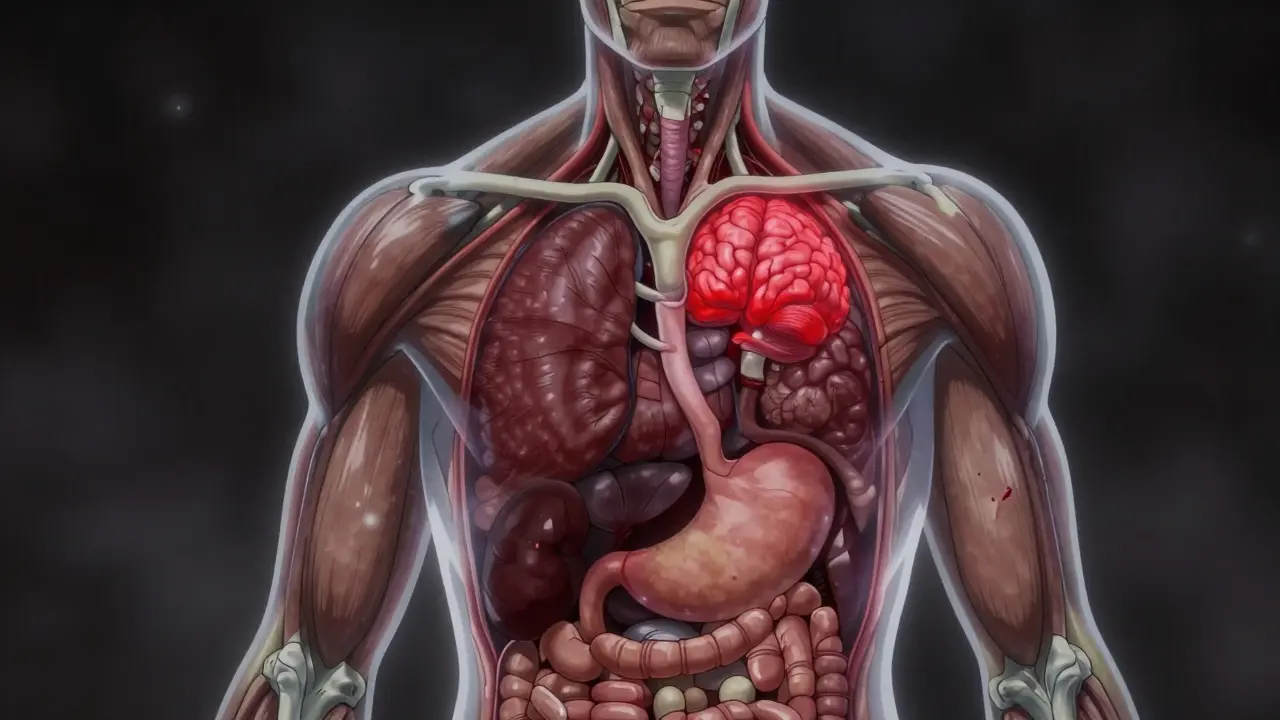
It isn't just about a slow-healing scrape on your arm. The most worrying risks are the "invisible" bleeds that happen inside your organs. Research shows that combining aspirin with anticoagulants significantly spikes the risk of hemorrhages in several key areas:
- The Gut: Gastrointestinal bleeding is over twice as likely. This often manifests as stomach pain or "tarry" black stools.
- The Brain: Intracranial bleeding is the most feared outcome, with risks jumping over three times higher. Even a minor bump to the head can lead to a brain bleed.
- The Lungs and Kidneys: Pulmonary and urinary tract hemorrhages also see a marked increase in frequency.
A striking example of this is found in the ASPREE trial, where 19,000 healthy older adults were studied. Those taking a daily 100mg dose of aspirin saw a 38% increase in traumatic brain bleeding compared to those taking a placebo. For people who are already on prescription anticoagulants, that risk curve climbs even steeper.
Comparing Different Combinations
Not all combinations are created equal. Some pairings are significantly more volatile than others. For instance, while some newer anticoagulants are safer, Rivaroxaban is noted as having one of the highest bleeding risks when paired with aspirin among the novel OACs.
It's also vital to look at over-the-counter pain relievers. Many people reach for an NSAID (Non-Steroidal Anti-Inflammatory Drug) for a headache while they are on a prescription blood thinner, not realizing they are adding fuel to the fire.
| Drug Combination | Estimated Risk Increase |
|---|---|
| Anticoagulant + Naproxen | 4.1-fold increase |
| Anticoagulant + Diclofenac | 3.3-fold increase |
| Anticoagulant + Ibuprofen | 1.79-fold increase |
Who Is Most at Risk?
While anyone taking these drugs needs to be careful, certain people are in a much higher danger zone. If you have high blood pressure (hypertension) or kidney disease, your blood vessels are already under stress, making them more likely to leak. People with existing bleeding disorders or those who have had a previous stomach ulcer should be extremely cautious.
Age is another huge factor. The National Institute on Aging generally advises against routine low-dose aspirin for healthy elderly patients. Why? Because as we age, our skin thins and our risk of falling increases. A fall that might cause a bruise in a 30-year-old can cause a life-threatening internal bleed in a 75-year-old who is taking both an antiplatelet and an anticoagulant.
Practical Safety Tips for Daily Life
If your doctor has decided that the benefit of this combination outweighs the risk-which sometimes happens with mechanical heart valves or severe cardiac conditions-you need to change how you handle daily tasks. You have to assume that your blood will not clot normally.
Start with your grooming habits. Throw away the disposable razors and switch to an electric shaver. Use a soft-bristle toothbrush to avoid gum bleeding. If you're into sports or DIY projects, wear protective gear. A small cut from a piece of glass or a slip of a screwdriver can become a prolonged bleeding event that requires a trip to the ER.
Regarding how you take your meds: the NHS suggests taking aspirin with food. This helps protect the lining of your stomach and reduces the chance of indigestion and ulcers, which are the primary starting points for gastrointestinal bleeds. Keep a close eye on your body for "silent" signs of bleeding, such as unusual bruising on your torso or arms, or a sudden feeling of extreme fatigue, which could indicate anemia from slow, occult bleeding.

The Path to Safer Treatment
Modern medicine is moving away from a "one size fits all" approach to blood thinning. Doctors are now using tools like the HAS-BLED score to predict who is most likely to bleed before they even write the prescription. In the future, we may see genetic testing for variants like CYP2C9 and VKORC1 to figure out exactly how a person's body processes drugs like Warfarin.
The goal is to move toward "personalized dosing algorithms." This means instead of a standard 100mg dose, your dose might be tailored to your specific genetic makeup and kidney function to find the sweet spot where you are protected from strokes but not at risk of a hemorrhage.
Can I take a baby aspirin if I'm already on a prescription blood thinner?
You should never do this without a direct order from your doctor. Even "baby" or low-dose aspirin can significantly increase the risk of internal bleeding when combined with anticoagulants. Your doctor will evaluate if your specific heart condition requires both drugs or if one is sufficient.
What are the warning signs of internal bleeding?
Watch for tarry or coffee-ground colored stools, blood in your urine, coughing up blood, or severe, unexplained bruising. You should also be alert for signs of a brain bleed, such as sudden confusion, severe headaches, or loss of coordination.
Is Rivaroxaban more dangerous with aspirin than other thinners?
Some data suggests that Rivaroxaban may carry a higher risk of bleeding when paired with aspirin compared to some other novel oral anticoagulants (NOACs), though this depends heavily on the patient's overall health and the dosage used.
Should I stop taking aspirin if I start a new anticoagulant?
Do not stop or start any medication without consulting your healthcare provider. Stopping aspirin abruptly can sometimes cause a "rebound effect" that increases the risk of a clot in certain high-risk patients. Let your doctor manage the transition.
Why do some people still need both aspirin and a blood thinner?
In specific cases, such as patients with mechanical heart valves or those who have recently had a stent placed after a heart attack, the risk of a fatal clot is so high that doctors accept the increased bleeding risk to prevent a stroke or heart attack.
Next Steps and Troubleshooting
If you are currently taking this combination, schedule a regular blood test to check your hemoglobin levels. This helps catch slow, internal leaks before they become a crisis. If you notice any new, large bruises or dark stools, contact your clinic immediately.
For those who are healthy and taking aspirin "just in case," it might be time to revisit the latest guidelines with your GP. For many, the risk of a fall-related brain bleed now outweighs the minimal stroke prevention benefit of low-dose aspirin.

Write a comment
Your email address will not be published.
Recent Posts
-
 How to Buy Cheap Generic Bupropion Online Safely and Save Money September 24, 2025

10 Comments
I actualy work in a clinik and see this all the time. Peopl just take whatever they find in the cabnet without checkin with their dr first. It is so importent to follow those guidelines about the electric razor too!!
Big Pharma just wants us on a cocktail of drugs so they can sell the 'cure' for the side effects they created in the first place! Wake up people! They tell you it's 'personalized dosing' but it's really just a way to track our genetics and keep us dependent on their synthetic sludge while the real natural cures are suppressed by the state!
Imagine actually believing that a 'soft toothbrush' is the solution to a systemic failure of the medical industrial complex 🙄. This is just a fancy way of saying 'good luck not bleeding out because your doctor forgot how to prescribe basic meds' 🤡.
It is honestly laughable that some people still struggle with the basic concept of synergistic effects, but then again, most people just coast through life without ever questioning the molecular alchemy they ingest daily. You have to realize that the body isn't just a machine where you swap parts, it's a fluid dynamic system where a single Aspirin can act as a catalyst for a total systemic collapse if you're already on an anticoagulant, and frankly, if you can't grasp the sheer volatility of the clotting cascade, you probably shouldn't be managing your own meds anyway because the hubris of the self-medicating amateur is exactly why ERs are overflowing with avoidable internal hemorrhages.
Definitely a high-risk scenario here. When you're dealing with a dual-pathway inhibition-hitting both the platelets and the coagulation cascade-your hemostatic plug is basically non-existent. It's a total nightmare for the patient if they take a tumble. Just stay safe and keep that communication open with your care team folks!
This whole thing feels like a delicate dance on a razor's edge, doesn't it? A tiny pill, a small slip, and suddenly the river of life is flowing where it shouldn't. It's a wild, terrifyingly precise chemical ballet happening inside us.
My uncle went through this and it was a disaster!! 😱 Only in America do we let people get this confused about their meds 🇺🇸🇺🇸. Absolute tragedy! 💔😭
It's good that we are moving toward personalized medicine. It gives a lot of hope to people who are scared of these side effects.
The sheer audacity of suggesting that a 'soft-bristle toothbrush' is a sufficient preventative measure for a potential intracranial hemorrhage is simply quaint. One must maintain a certain level of intellectual rigor when discussing pharmacology, rather than relying on these pedestrian tips that offer a mere facade of safety.
It is a travesty that such risks are overloooked in our great nation. Proper medical oversight is the only way to ensur the safety of the American people. This is laughtable.